
The Kia EV4 isn’t exactly a wallflower. The fifth electric vehicle from the Korean brand (and the first that’s not an SUV) cuts an imposing figure from any angle.
A medium sedan in an age where the breed is on life support is certainly a bold move from Kia. But then, everything about the Kia EV4 is daring, not least of all its polarising styling – all angles, flat planes and an unusually long rear overhang.
The EV4 joins a growing list of medium electric sedans in Australia, a segment long headlined by the Tesla Model 3. Mazda recently launched its 6e while the Polestar 4 and BYD Seal 6 bolster a segment long thought to be on its way to extinction. But now, the Kia EV4 is the latest green shoot in the once-dominant medium sedan field.
Three variants make up the range, priced from $49,990 for the entry-level Air to $64,690 for the bells-and-whistles EV4 GT-Line.
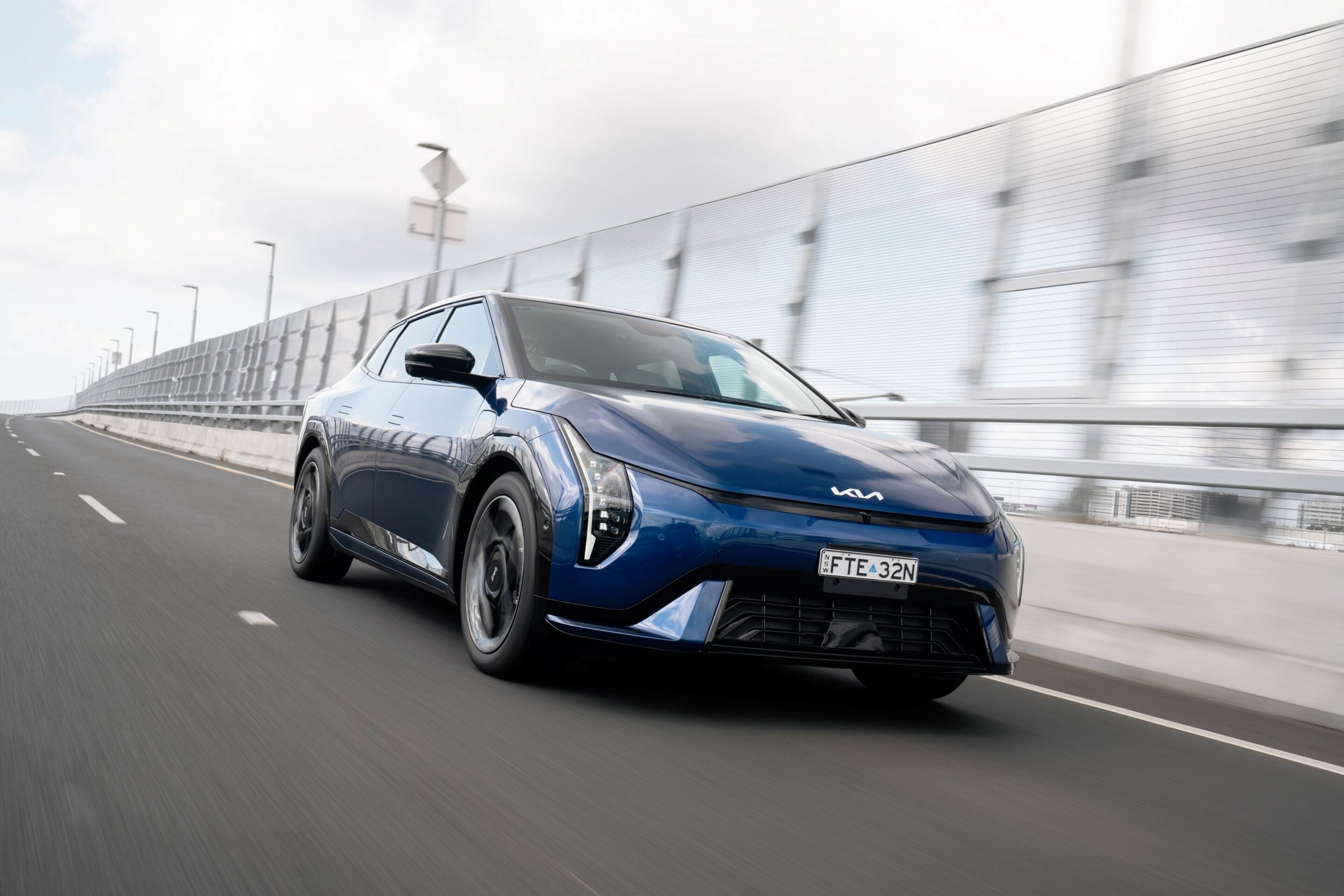
But it’s the mid-spec Earth on test here that is arguably the sweet spot in the range. Its sticker price of $59,190 before on-road costs plonks the Earth in the middle of the fight, more affordable than similarly specced Tesla Model 3 and Polestar 4, but more expensive than Mazda 6e and BYD Seal, all of them, arguably, more conventionally attractive.
But beauty is in the eye of the beholder, as the saying goes. It’s what’s underneath that counts, right? And it’s under its angled skin where the EV4 brings its conventional electric car A-game.
Built on the brand’s E-GMP platform, the EV4 Earth packages an 81.4kWh nickel-cobalt-manganese (NMC) battery with a single 150kW/283Nm electric motor driving the front wheels.
Driving range is a claimed 612km, which is more than handy, although a maximum DC charge rate of 135kW and 31 minutes for a 10-80 per cent top-up feels a step behind.
The EV4 Earth’s list of standard kit is healthy, with a few notable omissions. Highlights run to 19-inch alloy wheels, heated front seats, striking cloth and faux-leather seat trim, the now obligatory array of screens and phone-mirroring options, dual-zone climate control, inbuilt sat-nav and a comprehensive suite of advanced driver assist and safety technologies.
Inside, the Earth’s cabin is in stark contrast to its bulbous body. It is, in a word, sensational, and especially in this mid-spec trim.
The light-grey synthetic leather seats contrasted by dark fabric inserts and lime green accents look stunning and lend the cabin a light and airy ambience.
Only the driver’s seat is power-adjustable which seems like penny-pinching in a car costing almost $63,000 on the road. But the seating position is good, and the seat itself is comfortable, nicely supportive and cushioned for longer drives.
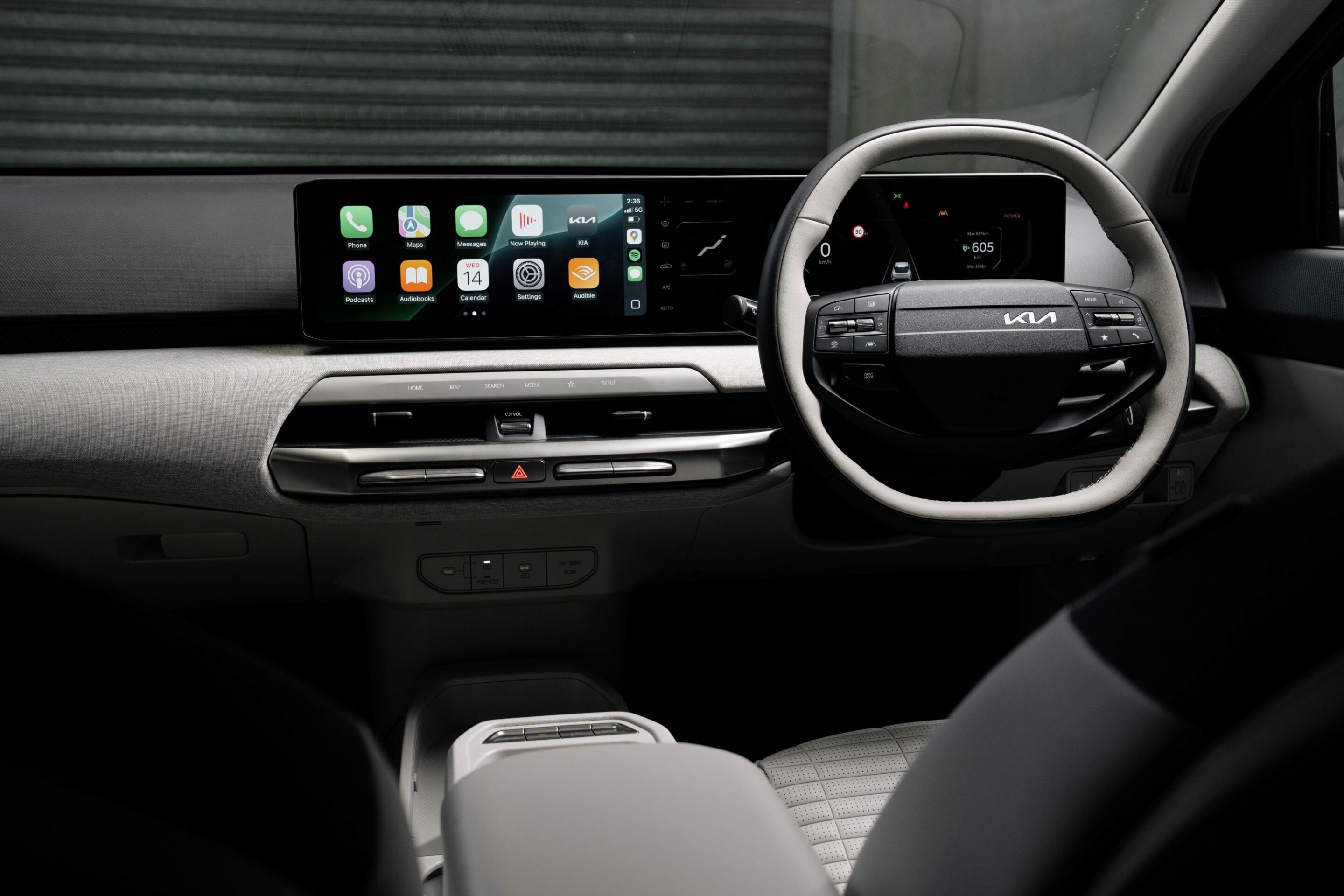
Kia’s single wide-frame screen dominates the beautifully cloth-trimmed dashboard. It hosts the EV4’s infotainment system, a separate – small – panel for climate controls, and the digital driver display.
Kia’s tech setup is a good one, easy to navigate and responsive to inputs. I’d love a bit more configurability for the driver display and the small section of the screen reserved for climate controls is partially obscured by the steering wheel, not ideal for adjusting on the move. But points to Kia for a small array of shortcut buttons (and a volume scroller) on the dash giving easy access to the most commonly used functions.
Second-row comfort is excellent, with a nice amount of room down low for feet, knees and legs. Headroom can be a bit tight for taller occupants, a combination of the high set of the back seats and the EV4’s sloping roofline. But visibility is good and the overall ambience remains breezy thanks, again, to the lovely two-tone interior trim.
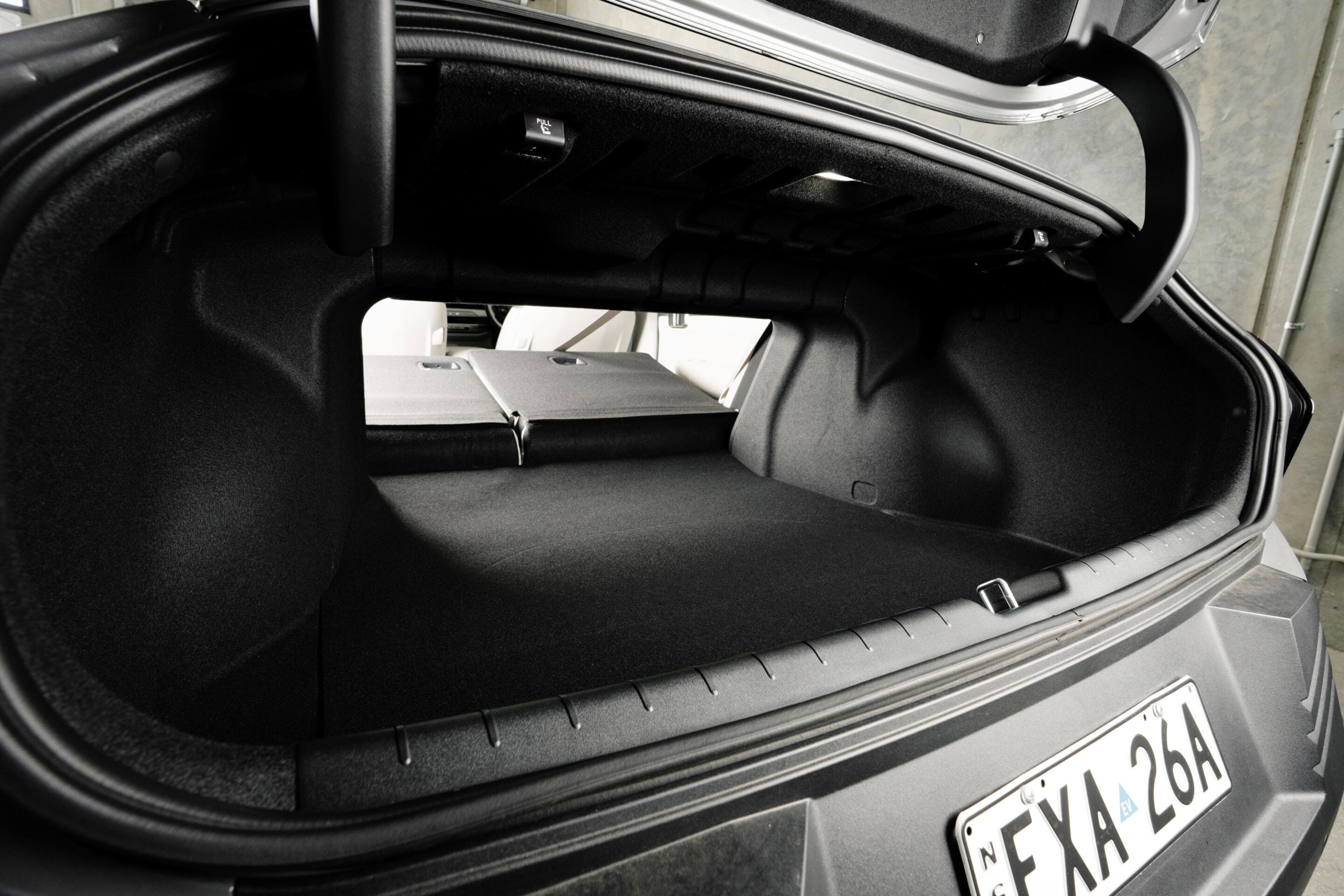
Boot space is generous at 490L with a low load lip providing easy access. There’s space under the floor for charging cables but you get a tyre inflation kit instead of a spare wheel. There’s no extra under-bonnet storage, owing to the EV4’s lone electric motor living up front and driving the front wheels.
And it’s in the driving where the EV4 deserves high praise. This isn’t an electric car that accelerates away at warp speed. Instead, acceleration is spritely without being breathtaking. A 0-100km/h claim of 7.8 seconds isn’t especially quick, but it’s enough to ensure the electric sedan easily keeps up with the flow of traffic. Arguably, it’s how it moves from 0-60km/h that’s more important, and here the EV4 is no slouch, moving away briskly from standstill before settling into an easy lope.
The star of the EV4 show is unquestionably its excellent ride and handling package. Kia’s local suspension tuning division, led by Graeme Gambold, has done a remarkable job in fettling the chassis for our conditions. Ride comfort is excellent, the 1912kg sedan gliding over everyday road detritus with composure and grace.
Kia’s tinkering has resulted in a chassis that absorbs bumps and lumps with alacrity while remaining nicely composed during cornering.
The steering is accurate, if a little on the light side. Some heft can be added by selecting Sport (one of four drive modes available, plus an individual setting) which also brings more urgency from the throttle, giving the EV4 a sportier mien than it says on the spec sheet. The brakes do a good job of retarding speed with no discernible transition between regenerative and friction braking. There are several levels of regeneration, including single-pedal driving, that harvest the energy from braking to pump back into the battery.
The EV4’s safety systems are well-calibrated with no overly eager intrusions. The over-speed warning can chime away a little too eagerly, but it can be silenced with a long press on the steering-wheel-mounted volume dial. If only other carmakers would follow Kia’s lead.
The EV4 Earth is frugal too. Kia claims the mid-sizer will use its electrons at a rate of 14.9kWh/100km. After a week tackling everyday driving scenarios from peak-hour traffic to weekend urban driving and a decent stint on the motorway at 110km/h, we returned an indicated 13.4kWh, giving credibility to the Kia’s 612km driving range claim. It’s not often we get to say that.
So there’s plenty to like about the Earth. Sure, its design won’t be to everyone’s taste, and for many buyers how a car looks is just as important as how it drives. But get past its angular profile, the EV4 makes a decent fist of being a mid-sized electric car without trying to rewrite the rulebook.
Not especially fast, nor slow, the EV4 trades the breakneck acceleration of headline-grabbing electric cars for things that really matter – composed road manners and a real-world driving range that does, at least from our testing, what it says it will.
And it’s the mid-spec Earth variant here that’s our pick of the three-model line-up, its genuine 600km-plus of driving range married to a well-resolved chassis and an interior that feels properly special. It’s a welcome addition to the slowly swelling ranks of medium electric sedans in Australia.
Specs
| Price | $59,190 plus on-road costs |
|---|---|
| Drivetrain | Single electric motor |
| Transmission | Single-speed, front-wheel drive |
| Power | 150kW |
| Torque | 283Nm |
| 0-100km/h (claim) | 7.8 seconds |
| Battery size | 81.4kWh (NMC) |
| Range | 612km (WLTP) |
| Energy use (claim) | 14.9kWh/100km |
| Energy use (as tested) | 13.4kWh/100km |
| Peak charging speed | 11kW (AC) / 135kW (DC) |
| 10-80% DC charge time (claim) | 31 minutes |
| Dimensions (l/w/h/wb) | 4730/1860/1480/2820mm |
| Boot capacity | 490L |
| Spare wheel | Tyre inflation kit |
| Kerb weight | 1912kg |
| Warranty | 7 years, unlimited km (car) / 7 years, 150,000km (battery) |
| Servicing costs | $1308 five years or 75,000km |
This story first appeared in the October 2026 issue of Wheels magazine, now on sale. Subscribe here and gain access to 12 issues for $109 plus online access to every Wheels issue since 1953.
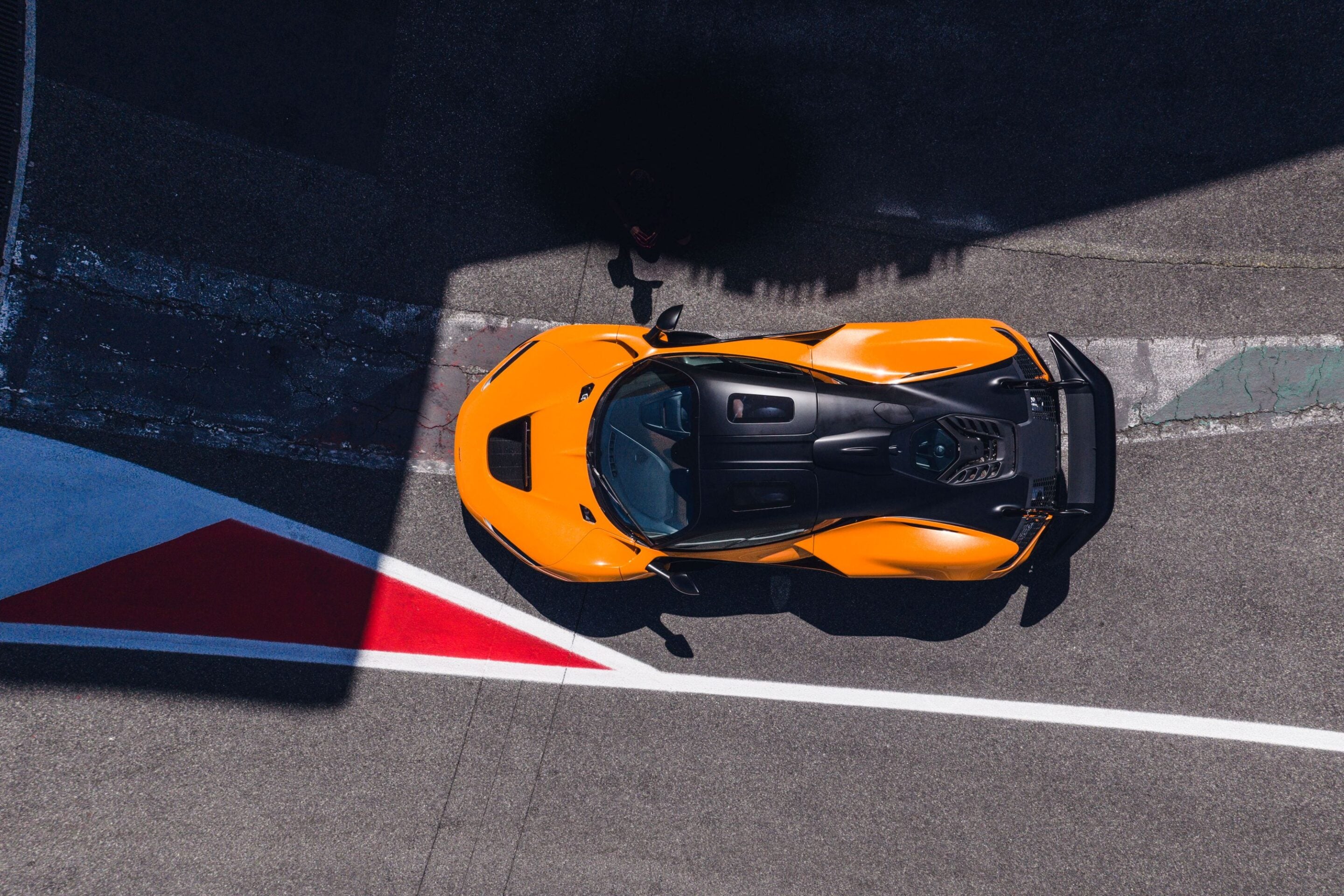
New trademark filings by McLaren point to the marque adopting a new way of naming its supercars, hypercars – and possibly its upcoming debut SUV – after years of giving them monikers consisting of one, two or three letters and a number.
Documents registered with the United Kingdom Intellectual Property Office and revealed by CarBuzz show that McLaren has opted for words instead of the previous formula, with trademarks for the names Remuera and Muriwai. That appears to be a major break with handles like P1, W1, 650S and MP412C.
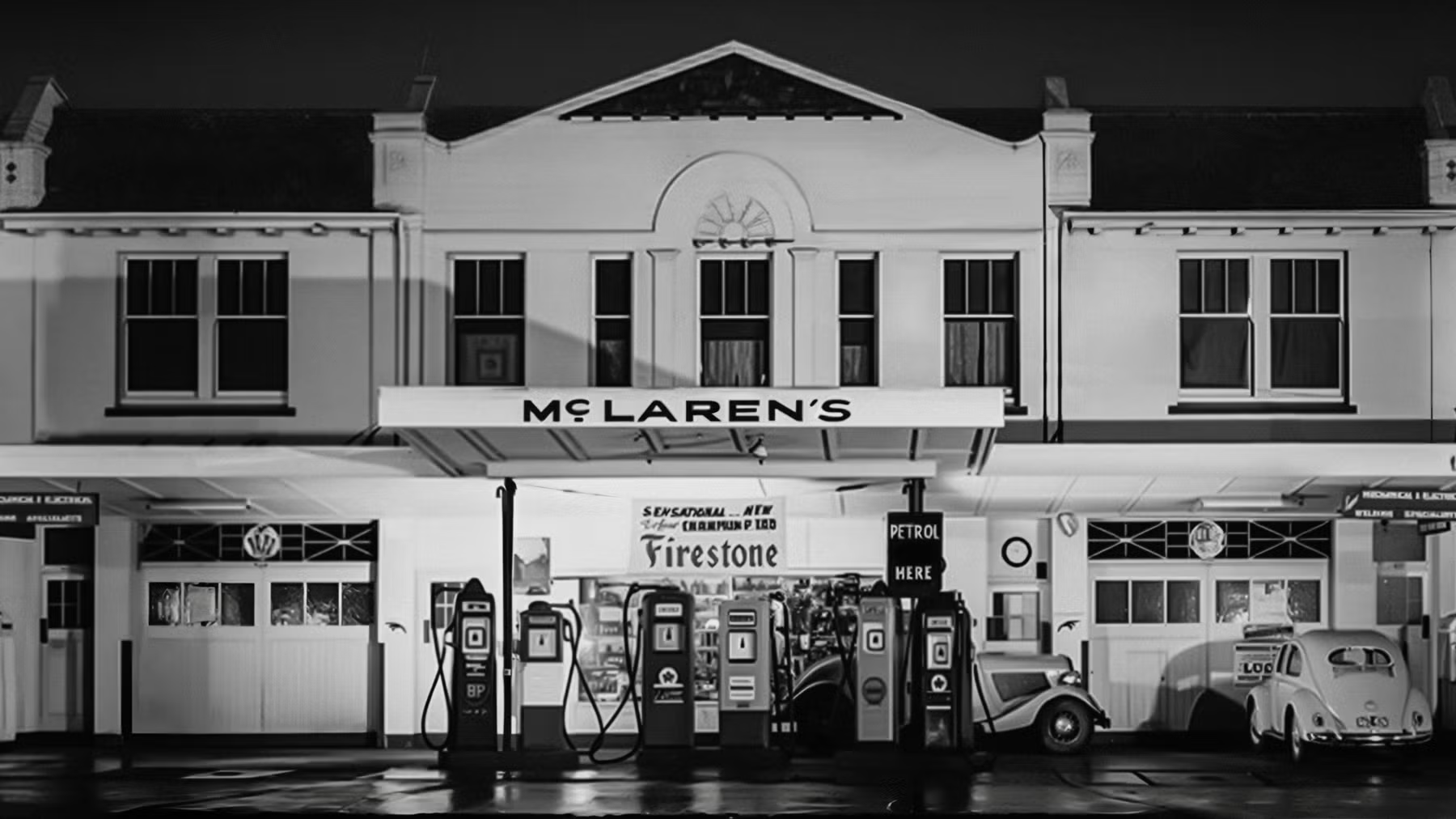
The two new titles are far from randomly selected. Both hark back to Kiwi company founder Bruce McLaren, who hailed from Remuera, in Auckland’s south-eastern suburbs, where his family had its famous garage (pictured below).
Muriwai is a town on the west coast of the country’s North Island, close to Auckland. It’s where Bruce made his competitive racing debut aged just 15, entering his homemade Austin Ulster in a beach hillclimb event. It meant so much to him that he named the mansion he built in England after it.
The historic Kiwi influence behind the two names dovetails with the new McLaren logo, which was unveiled recently as part of a huge and wide-ranging shake-up for the supercar maker. Gone is the familiar “Speedmark” brand symbol, replaced with a far more clean and subtle treatment with the typeface taken straight from the lettering that was printed on the awning of the McLaren family garage in Remuera.
That change came hot on the heels of McLaren announcing that it will produce its first SUV as part of an immense expansion in its operations. The $943 million program will include new supercars, in-house engine production, expanded carbon-fibre manufacturing and the creation of a second assembly plant in the UK.
While it’s far too early to expect any concrete details on the SUV, which was first rumoured more than four years ago, the marque has promised that it will adhere to its philosophy of creating razor-sharp, lightweight vehicles.
The new model will reportedly feature two conventional rows of seats and four doors in a first for McLaren, and will target rivals like the Lamborghini Urus and Aston Martin’s DBX. The brand has ruled out sharing an architecture with another manufacturer and it will instead sit on a bespoke McLaren platform.
Pitting an icon of the hot hatch genre against an electric crossover hi-po SUV might not seem like an obvious comparison.
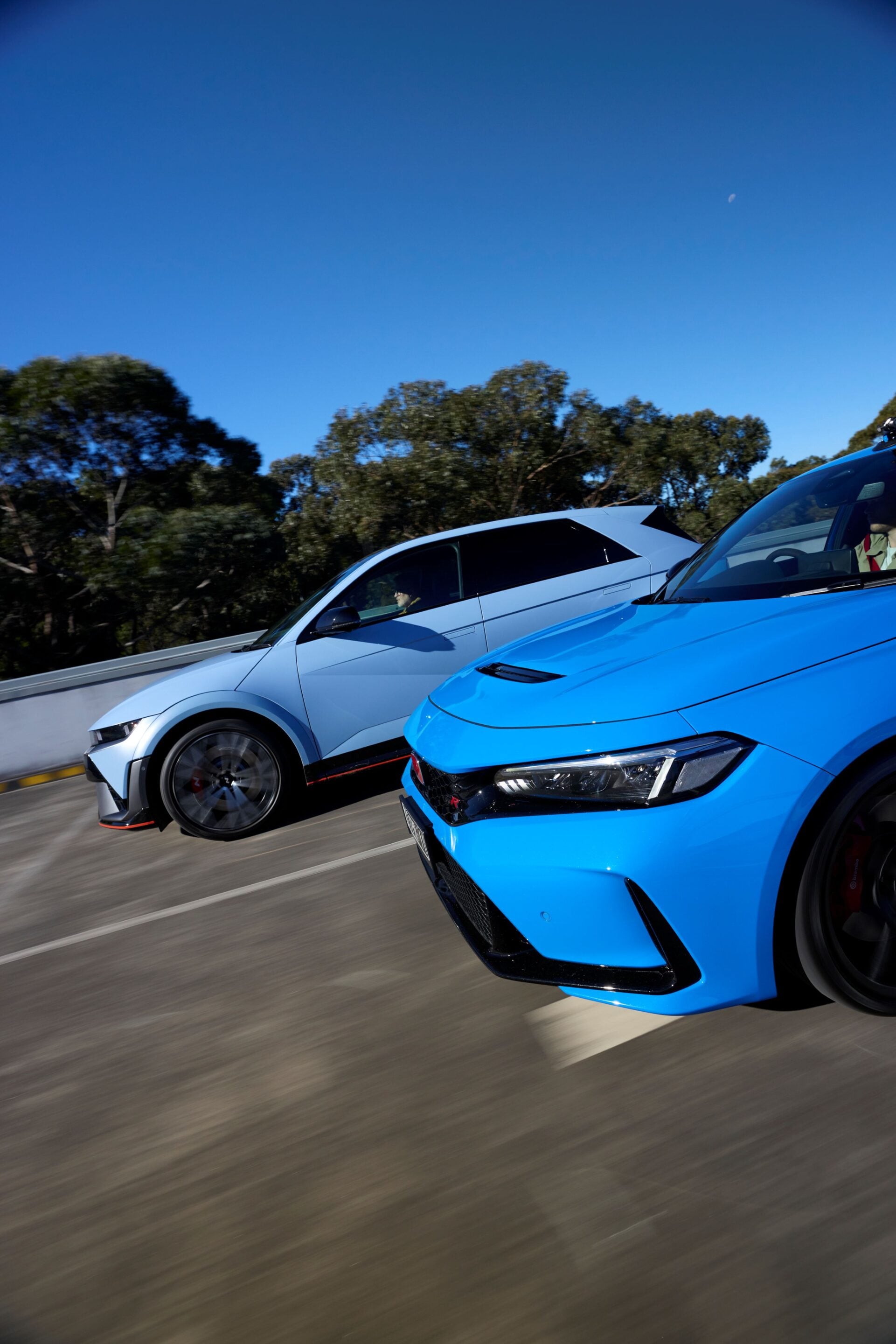
And yet, that’s exactly what we’ve done here with the Honda Civic Type R and Hyundai Ioniq 5 N. One is decidedly antediluvian, the other a glimpse into the future.
And yet both seek to answer the same question of what makes a truly great performance car, one that promises and then delivers driving enjoyment and engagement in a way fewer and fewer cars today can.
If anything, the two cars here are proof that there is no simple ‘one-size-fits-all solution’ when it comes to performance motoring.
But can an electric upstart, one that has rewritten the rulebook of what an EV can be, really match it with one of the greats of the hot hatch world? There’s only one way to find out.
The contenders
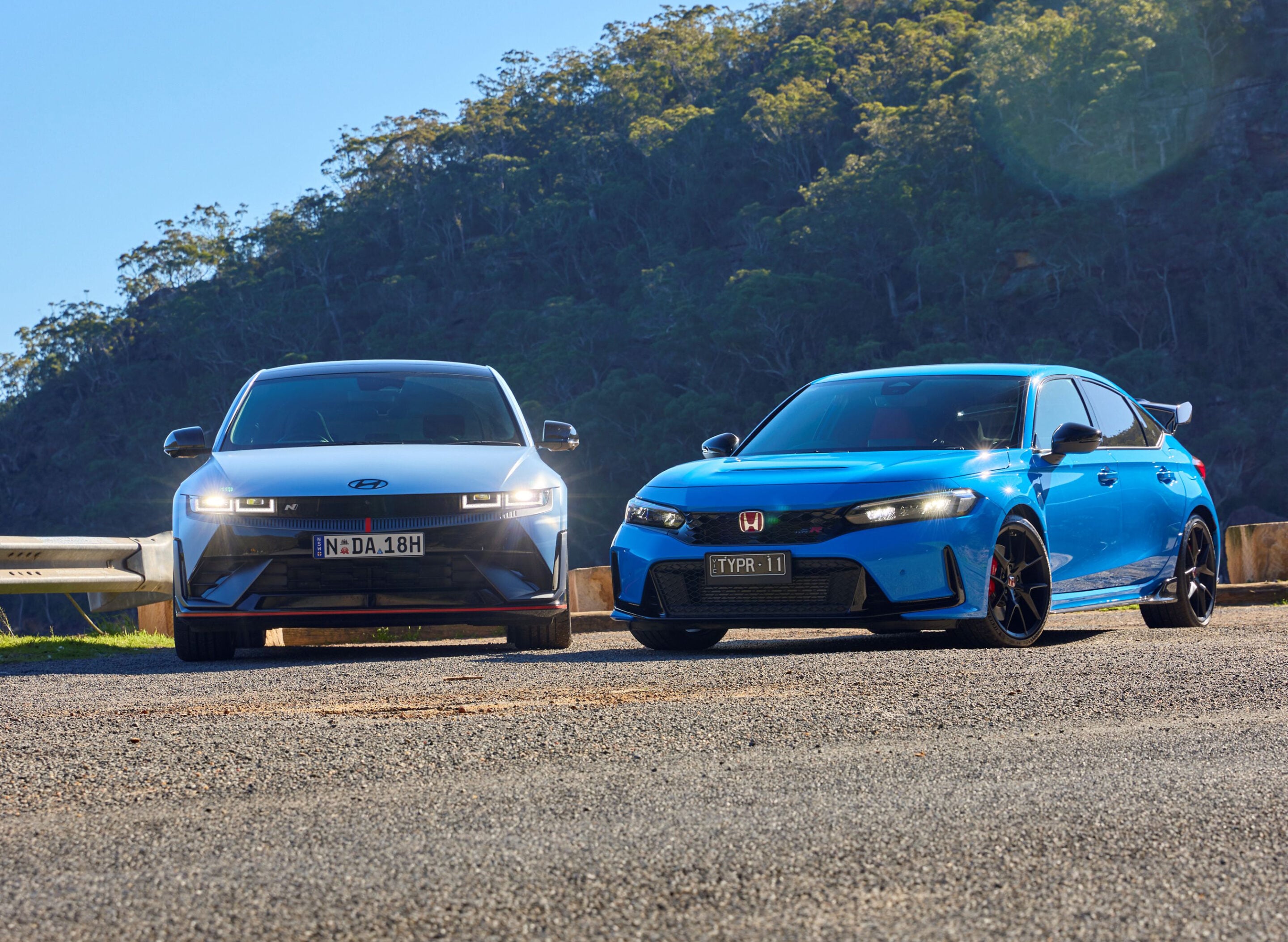
Our two combatants couldn’t be more different. In the new-age corner, the battery-electric Hyundai Ioniq 5 N redefines what constitutes a modern performance car.
More than just fast in a straight line, the Ioniq 5 N brings a breadth of ability that few EVs can match. It was revelatory when launched in 2024, a battery-powered statement of intent, proof that an EV could be more than simply fast out of the blocks. Instead, Hyundai’s tech wizards ensured the Ioniq 5 N looked, felt and sounded like a genuine driver’s car. We were impressed enough to award it 2024-25 Wheels Car of the Year.
On the other side of the fence, creating drivers’ cars out of otherwise ordinary commuters is engraved in Honda’s DNA. Nothing typifies this more than the Honda Civic Type R which through six generations has defined, then honed, the Japanese brand’s razor-sharp focus on performance.
Australia has had an intermittent love affair with the Type R, the first example of Honda’s pocket-sized powerhouse not making its way here until 2007. It proved underwhelming, a naturally-aspirated hot hatch swimming against the turbocharged tide.
It wasn’t until the arrival of the fifth generation in 2017 that Australia finally had a Type R with a turbocharger that could really hold its own against an armada of rivals from Europe and Korea. We were smitten.
Today’s Civic Type R sells out in Australia almost as soon as they’re driven off the boat from Saitama, Japan. A recent batch of 100 cars was accounted for before they even left those shores. That didn’t stop us snaffling one for this comparison between an old school, turbo-petrol powered, manual hot hatch and a new age, battery-electric driven crossover SUV that reshapes the conversation around what the future of performance cars looks like.
Pricing
Honda hasn’t been afraid to stretch the limits here. When the sixth-gen Type R launched here in 2023, it wore a driveaway price of $72,600, already at the upper end of the hot hatch segment.
Fast forward to today, and that sticker now reads $85,000 driveaway, although updates and the inclusion of that striking Modulo carbon-fibre rear wing as standard (it was previously a $5300 option) go some way to mitigating the move by Honda Australia’s accountants.
On paper, the Hyundai Ioniq 5 N, priced from $114,918 before on-road costs – translating to around $123,000 driveaway (in NSW), according to the Korean brand’s online calculator – is no match for the Civic Type R it’s up against here.
But this isn’t a comparison based on price. Instead, this is a celebration of two very different engineering solutions to the question of what makes a great performance car. A driver’s car.
Both answer the question, but how each arrived at the solution is vastly different.
Performance recipes
Two wildly different approaches underpin our two rivals.
In the Honda corner, a 235kW/420Nm 2.0-litre turbocharged four-cylinder is matched with a deliciously old school six-speed manual transmission sending all of that engine’s VTEC glory to the front wheels.
Zero to a hundred? A claimed 5.4 seconds, which is put in the shade by the Ioniq 5 N but faster than the Golf GTI and Hyundai i30 N.
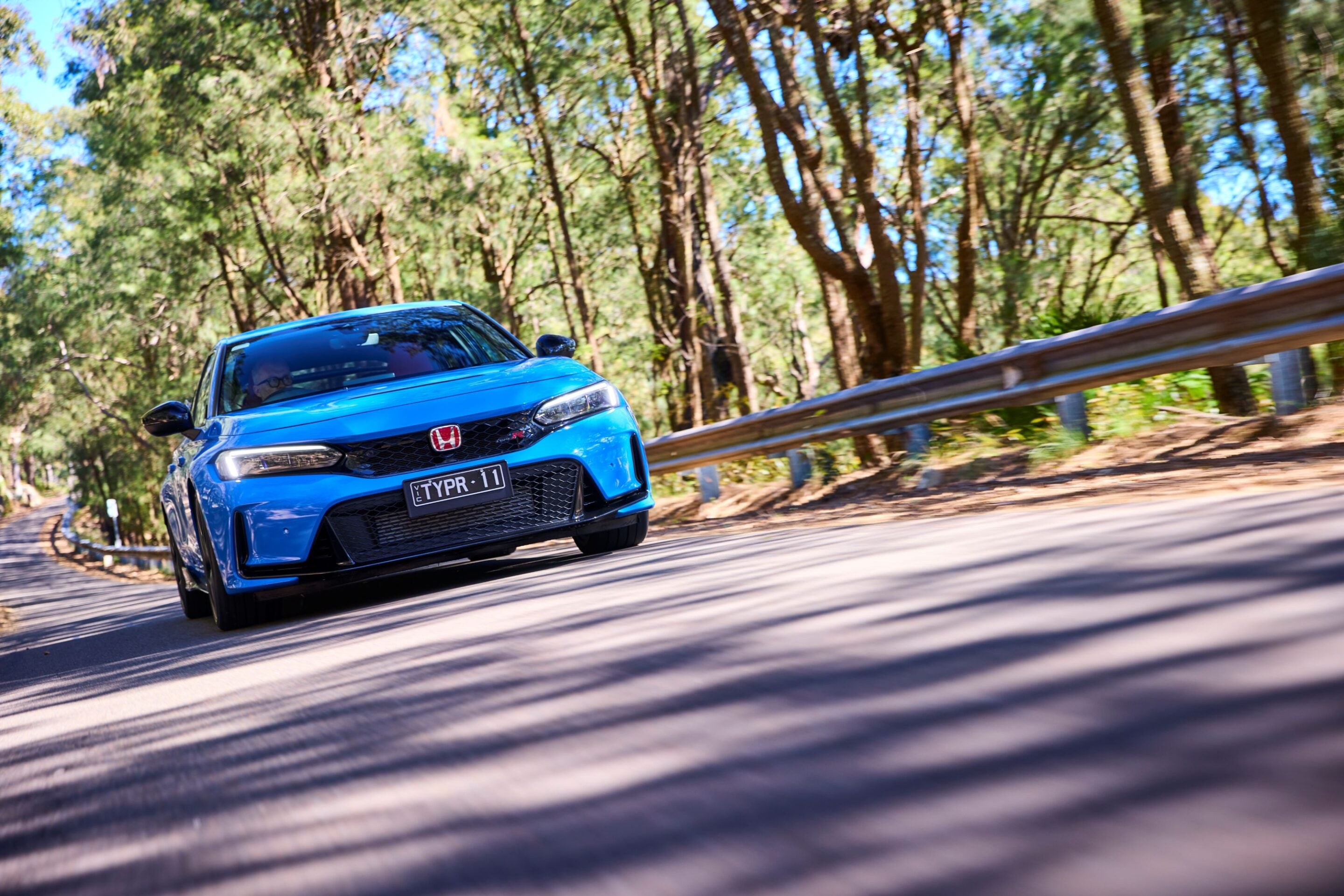
Purists might decry the Type R’s front-wheel drive platform, but Honda deserves praise for doggedly resisting the prevailing trends, eschewing the modernity of dual-clutch automatics and all-wheel drive. This Type R is as pure as it gets in 2026.
The gearbox is, in short, a work of art. Six close ratios accessed via a stubby gear lever through a gate that’s rewardingly tactile is a lesson in how to do a manual transmission right. Add in a rev-matching system that electronically blips the throttle on downshifts, or allows for flat-shift upshifts, and you have the hallmarks of a finely tuned driver’s car.
But more than just an engine and gearbox, Honda’s clever chassis engineers have come up with a package – thanks in part to the clever helical limited-slip differential at the front axle – that not only all but eliminates the inherent torque-steer of a front-wheel drive car, but brings prodigious levels of grip and stability during more adventurous driving and cornering.
The adaptive suspension – dual-axis MacPherson struts up front and independent multi-link out back – prioritises performance over comfort, i.e. it’s always firm under wheel, but how firm depends on the selected drive mode. There are four of ’em – Comfort, Sport, +R and Individual – that alter the chassis, throttle response, steering and enhanced engine sounds.
If the Honda is about purity of performance, then Hyundai’s electric approach is, at first glance, little more than trickery. Yes, elements such as fake engine sounds and fake gear shifts look, on paper at least, like the Korean carmaker has tried to gloss over an electric car’s inherent soullessness.
But – and it’s a huge but – what Hyundai’s N division has actually done, and with great success, is instill the 5 N with character and fun, as well as a driveability that will leave you grinning for weeks. There’s even an explicit mode for that – N Grin Boost.
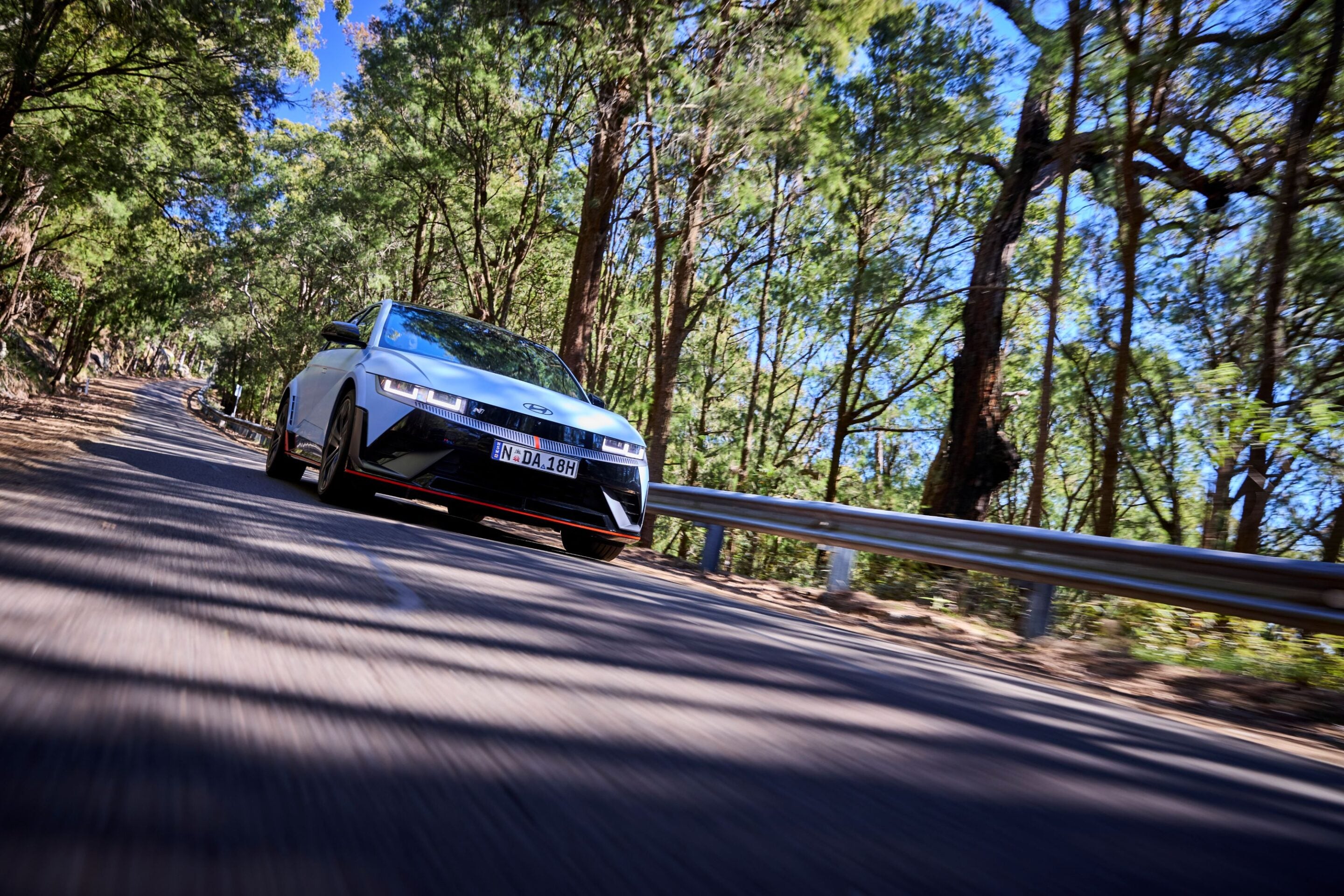
The raw numbers are gobsmacking. Two electric motors combine for 448kW, 740Nm and 0-100km/h in 3.5 seconds. Hit the N Grin Boost button and outputs jump to 478kW and 770Nm, shaving 0.1s off the benchmark sprint.
There are other numbers: 80-120km/h is over in a scarcely believable 1.9s while the standing start to 400m (the old quarter-mile drag) takes just 11.7 seconds, or 11.5 with N Grin Boost activated.
While that might seem commonplace in today’s EV landscape, where even humble hatches offer supercar-like straightline acceleration, it’s what Hyundai has done under the skin that truly sets the Ioniq 5 N apart from almost every other electric vehicle on the market.
It’s not enough to extract stupendous power and torque from the electric motors. The 5 N needs to be able to use its headline numbers in a meaningful manner, in a way that leaves you in no doubt that this is indeed a car that can be driven with verve.
The bodyshell has been strengthened with additional welds and glue, the suspension mounts reinforced to accommodate a wider track and new arms, bushes and springs, as well as three-stage adaptive dampers. An electronic limited-slip rear diff governs the rear motor and bigger brakes – 400mm up front and 360mm rear – enhance and improve stopping power.
Outside, the 5 N sits lower than its regular Ioniq 5 stablemate, with a new front bumper and rear diffuser that not only look racy, but help keep the crossover SUV stuck to the ground. A rear spoiler, mounted atop the tailgate, reduces lift.
The sum of all these parts is a compellingly fun electric performance car, one that bucks the trend of fast but anodyne EVs that fall over once the big questions are asked of them.
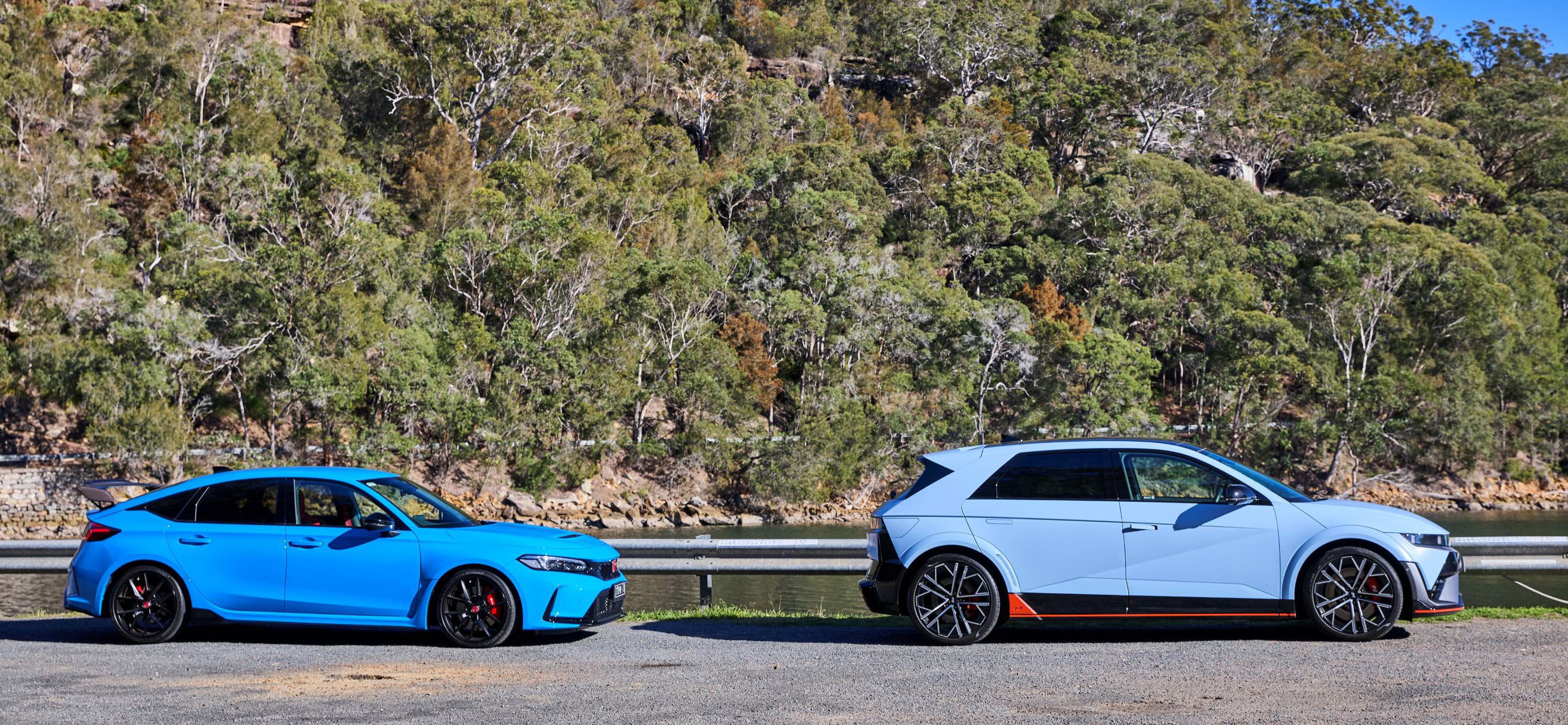
Hyundai on the road
The key to winning this test will come down to an almost mystical and intangible metric: driver engagement. Can these two deliver the thrills enthusiasts hanker for, a connection between driver, machine and the road ahead? Is there a purity of purpose to be found in these two vastly different performance cars?
To find out, we headed to our favourite stretch of tarmac on the outskirts of Sydney, where the roads are largely empty and the cup of promises filled to the brim.
And it’s immediately apparent that both, despite their inherent differences, are fun even in the most mundane of commuter settings.
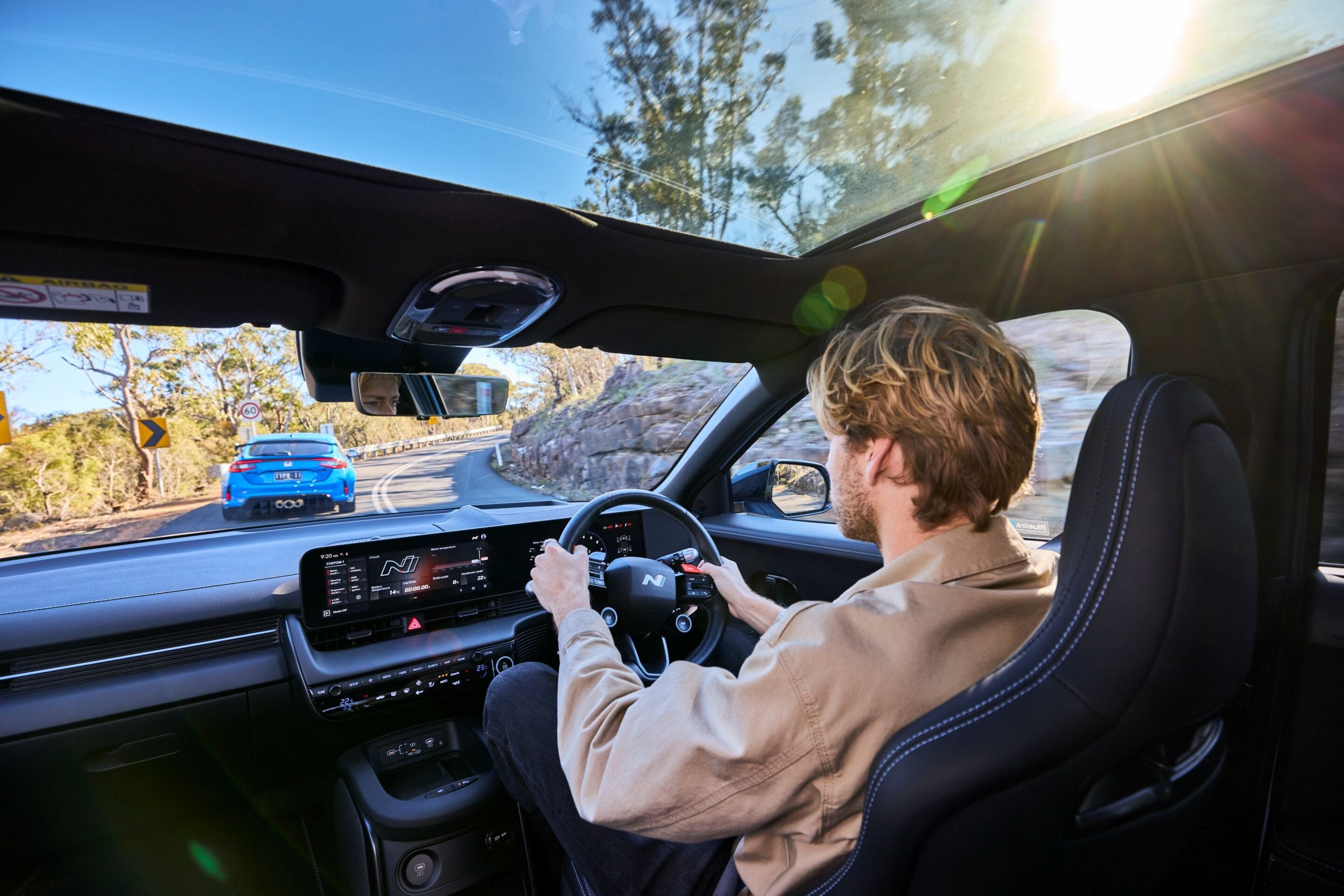
The Hyundai, with all its gizmos and gadgets switched off for the trundle to our favourite spot, behaves pretty much like an everyday electric car. It’s quick off the mark, quiet and composed on the road, and comfortable inside.
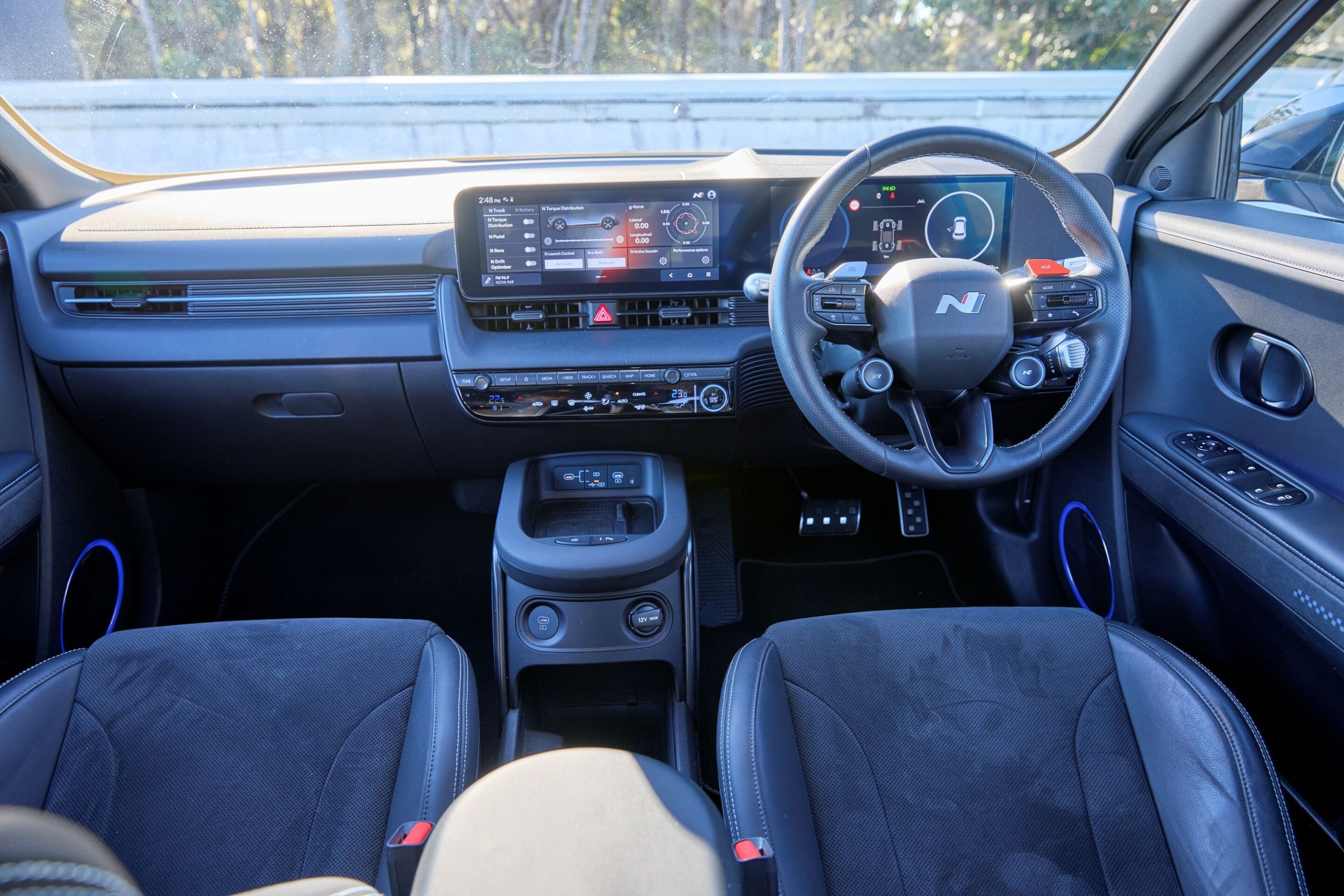
The 5 N’s cabin feels special enough with swathes of alcantara and leather, including on the manually adjustable sports seats. The seats sit lower in the 5 N compared to the pews of the regular Ioniq 5. And they’re heated and cooled too.
Contrast blue N stitching throughout enhances the sporty vibe inside while the unique-to-5 N perforated leather steering wheel feels reassuringly meaty in-hand.
It acts as the drive-centric nerve centre of the 5 N with buttons and switches for N Grin Boost, three regular drive modes – Eco, Normal and Sport – as well as two customisable N buttons where you can create your own personalised shortcuts to unleash everything the 5 N has to offer with a single press of a button. Our tip? Set one up for the ultimate in performance, the other to bring everything back to Nana levels for the comfortable drive home.
Not that you’ll want to head home after exploiting the 5 N’s prodigious abilities. Park your notions that EVs are a one-trick pony, that they can go fast in a straight line and not much else.
‘They’re heavy, cumbersome, lacking character, soulless, blah blah blah’ are common epithets surrounding EVs. In the case of the 5 N, they’re also wildly wrong.
Yes, it’s a heavy car, at 2.2-plus tonnes, but such is its breadth of engineering that you barely notice. If anything, the 5 N’s handling feels like it’s been brought up on a steady diet of Ozempic, seemingly shedding the kilos at an alarming rate to arrive at a point where its cornering ability, its road-holding, its slingshotting out of hairpin bends is as good as any combustion-engined car unencumbered by the weight penalty of an 84kWh lithium-ion battery riding shotgun.
Simply, the 5 N can explode out of the blocks, hustle through corners, remain frighteningly fast and flat through long sweepers, all while body control is kept neatly in check.
Grip? There’s masses of it, with trick diffs, sticky Pirelli P Zero rubber, and beautifully tuned suspension all working together to keep things straight ahead.
That’s not to say there isn’t some playfulness, because there most assuredly is, the 5 N happy to squirm at the rear if too much is asked of it mid-corner. But it’s easy to control with confident steering inputs and the delicate dance between the brake pedal and accelerator.
And what about N’s much-vaunted e-Shift? It all sounds a bit gimmicky on paper, and to some extent it is. But it also brings a level of engagement to the EV experience sorely lacking in this, the most modern and new age of segments.
In short, e-Shift simulates a traditional eight-speed sports transmission via paddle-shifters on the wheel. But the magic trick here is that the N’s boffins have done an incredible job of making it feel as realistic as possible. It works in conjunction with synthesised engine sounds (which sound a bit fake), the pairing replicating a very real and very tactile combustion car.
Upshifts are met with a bang and a jolt in the seat, while running out to the completely arbitrary ‘8000rpm redline’ will see the needle bounce off the tacho with the commensurate loss in acceleration. Downshifts elicit the same pops and crackles on overrun you’d expect from an i30 N.
It all sounds a bit silly, and the synthesised sounds, try as they might, cannot replicate the real rumble and roar of combustion. But what the setup does do, and by the trailerful, is deliver driver engagement in a meaningful and tangible way. It’s terrific.
Honda on the road
If the Ioniq 5 N is the current pinnacle of the performance EV brigade, then the Civic Type R sits at, or very near, the summit of the hot hatch mountain.
Few can match its fulsome performance. Yes, there are faster hot hatches, and more affordable too, but there’s something inherently ‘right’ about the Type R, about how it makes you feel behind the wheel.
And it starts with the cabin, a sea of red alcantara that looks at once garish, yet suitably purposeful. Special. Red is everywhere – seats, carpets, seatbelts, stitching, even the Honda badge on the steering wheel.
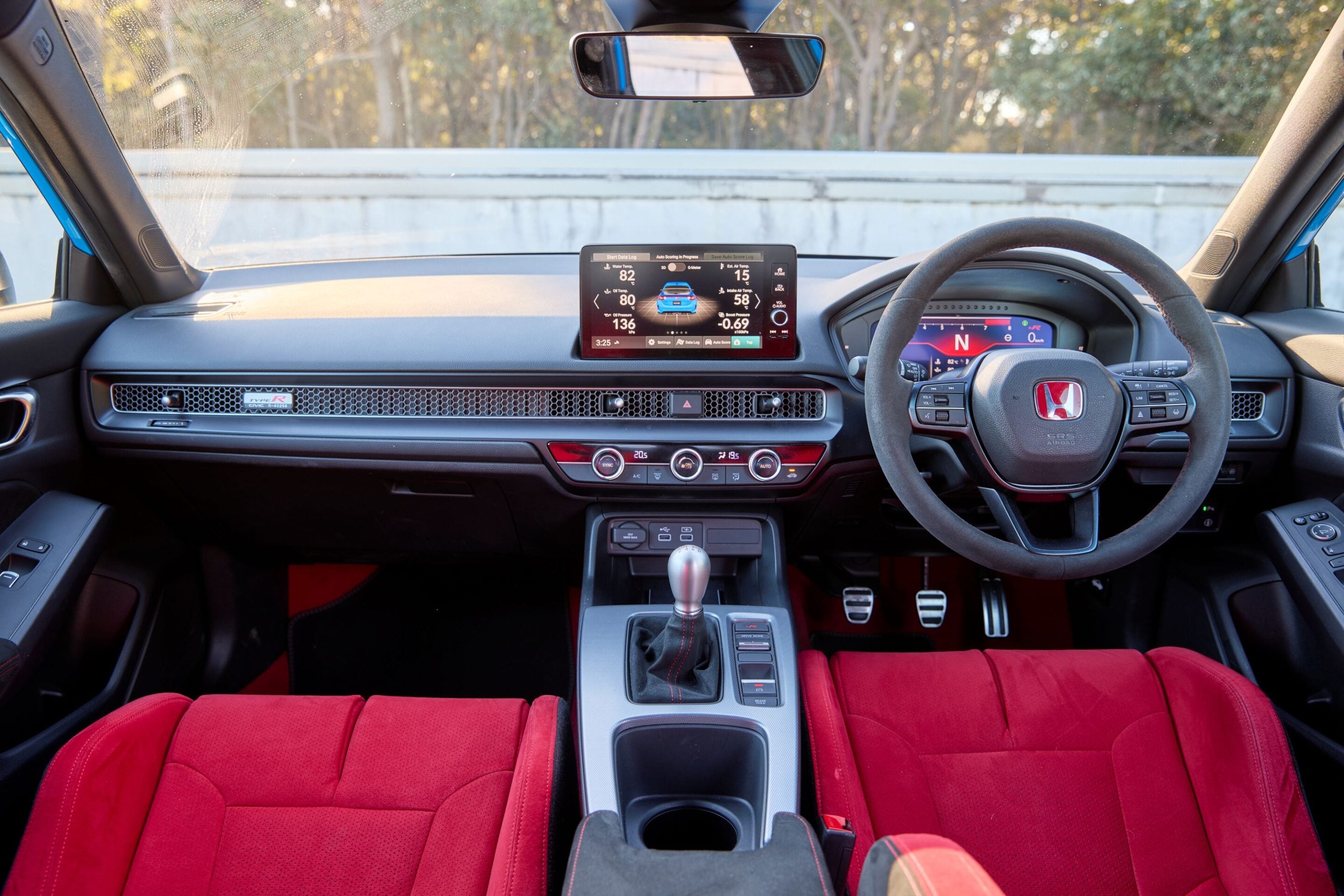
The front seats are supremely supportive, with generous side bolsters (that you clamber over) holding you snugly in place. They sit low in the cabin, manually adjustable and without any of the refinements – such as heating – one might expect from a car costing $85k. But it matters not one jot when ensconced firmly behind the wheel. Neither does the fact that the Type R is strictly a four-seater – this is a car best enjoyed alone.
It’s an easy car to drive at socially acceptable speeds. The six-speed manual gearbox is a work of art, even in traffic, with an easy clutch and oh-so-satisfyingly precise throw through the stubby, cool-to-the-touch, milled aluminium gear lever. It’s a tactile reminder of something we have – almost – lost.
The ride is on the firm side, even with the three-stage dampers in their most comfortable settings. But it’s not so harsh as to leave you questioning your automotive life choices.
The payoff comes once you escape the city’s clutches, where the roads are sparsely populated and the twists and turns beckon like the Sirens’ call.
Here, the Civic’s precision and polish come to the fore in a beautifully balanced and harmonious dance of combustion and chassis brilliance that brings elevated levels of confidence to the driving experience.
The 2.0-litre turbo-four, which can tend to drone a bit in the ’burbs, comes into its own as the revs climb beyond 5000rpm when unleashed on a rural backroad.
Fast, yes, but the Type R’s true genius lies underneath where its sophisticated front-wheel drive engineering offers fluent and composed handling. Firm, also yes, but at no time does the Type R stray off its given line. It simply dances around corners and hunkers down for the slingshot to the next.
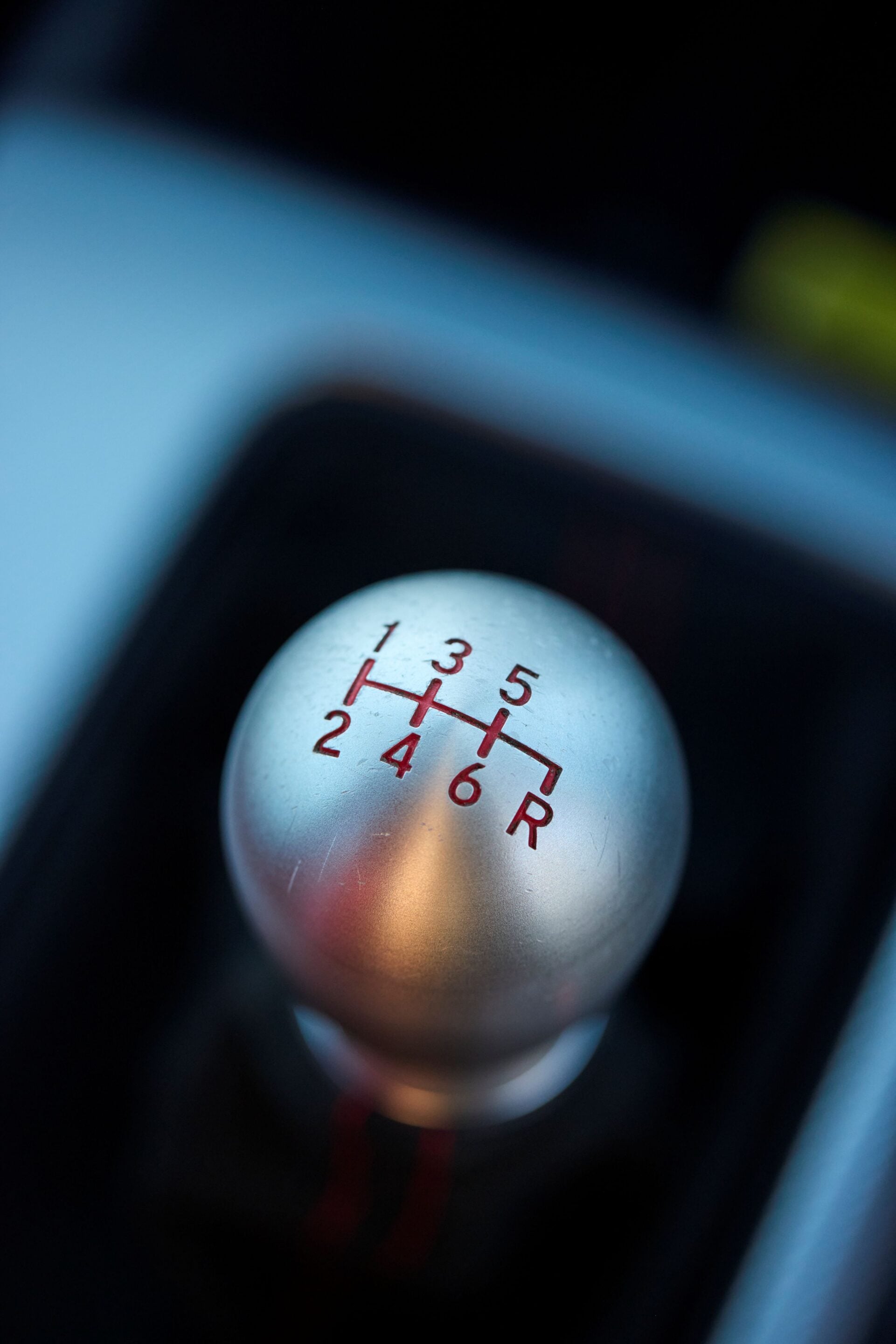
The shift action of the gearbox is a mechanical work of art. You can actually feel the linkages slotting into place through your left hand, wonderful and utterly enthralling. Joy of driving? It’s right there in the palm of your hand.
Drive modes alter the Type R’s characteristics noticeably. You might be tempted by the balls-out +R but it’s best saved for the racetrack. It’s too much for the open road, where the firmness of the dampers results in an uncomfortable and bone-jarring ride. Sport mode is enough, a positive blend of comfort and performance that will sate even the most ardent drivers.
There’s a tremendous amount of grip on offer, too. The sticky Michelin Pilot Sport 4S rubber, dual-axis front suspension and helical limited-slip front differential combine to produce choreographed precision in corners. The back end can step out if pushing a fraction too hard, but it’s easily countered and entirely predictable.
It’s the stuff of purity, a soulful dance of engineering and driver input that serves to remind us there is a simple pleasure in driving simply for the love of it.
The verdict
This isn’t really about winners and losers. It’s about the joy of driving, about what a modern performance car can be when the engineering planets align and some left-field thinking creates something truly marvellous.
Both cars deliver on the promise of driver engagement. They just come at it from a different angle.
Hyundai’s approach is novel and groundbreaking, so much so that other brands – BMW, for one – are adopting similar philosophies. It’s genuinely fun to drive, a performance car first, EV second. Playful, powerful and wonderful, the Hyundai Ioniq 5 N is a triumph of engineering.
But it’s the simplicity and purity of the Honda Civic Type R that wins here. It’s charmingly visceral and tactile, a vastly entertaining throwback to another era of motoring.
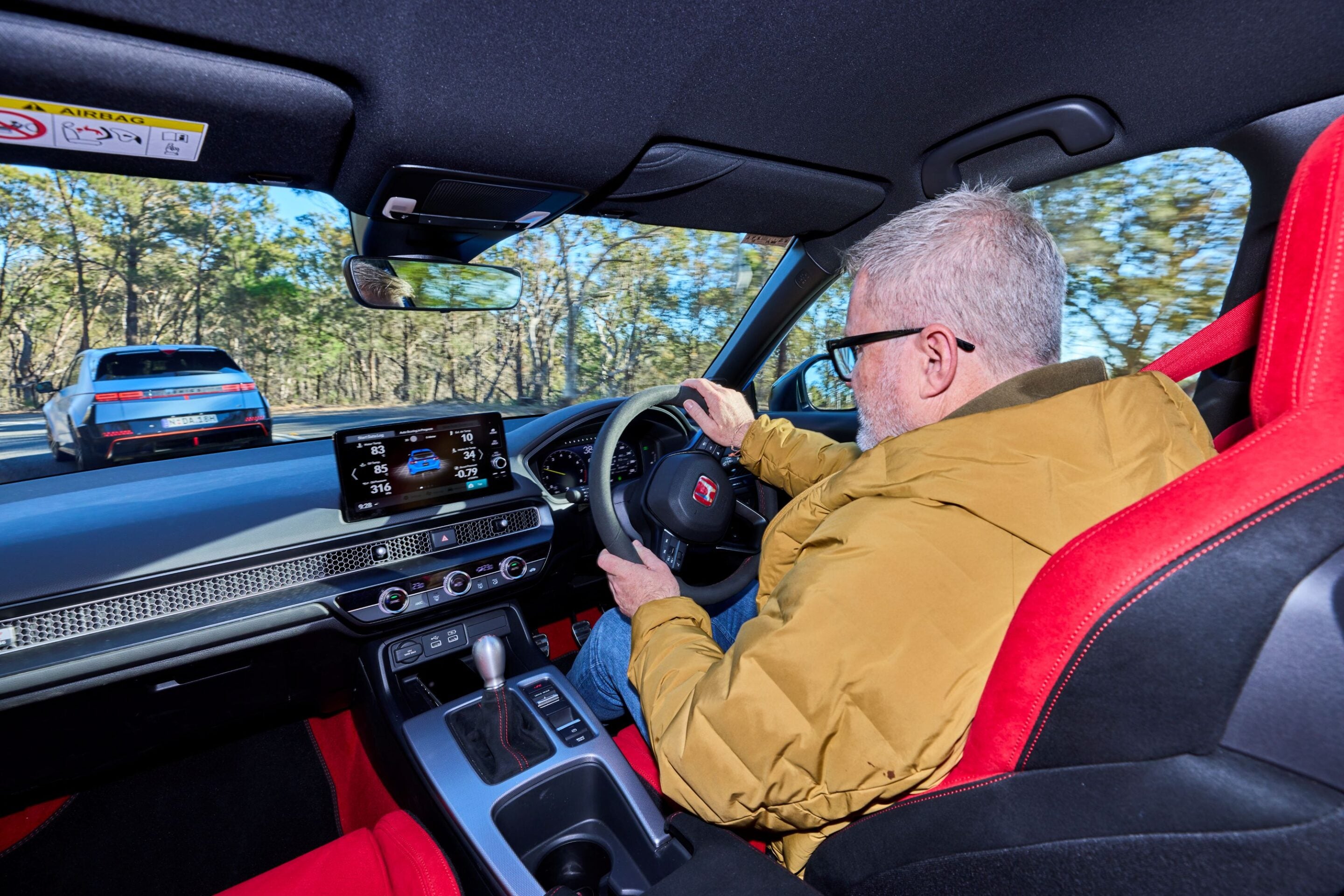
It rewards confidence with an uncompromising focus on handling and its manual gearbox is nothing short of a masterpiece. The Civic Type R is almost certainly the greatest hot hatch of its generation and arguably, of all time.
Specs
Honda Civic Type R
| Price | $85,000 driveaway |
|---|---|
| Engine | 2.0-litre turbocharged 4-cylinder petrol |
| Power | 235kW @ 6500rpm |
| Torque | 420Nm @ 2600-4000rpm |
| 0-100km/h | 5.4s |
| Transmission | 6-speed manual, front-wheel drive |
| Wheel size | 19-inch |
| Spare wheel | Tyre repair kit |
| Claimed fuel consumption | 8.7L/100km |
| Fuel type/tank size | 95 RON premium unleaded / 47L |
| Dimensions (l/w/h/wb) | 4606/1890/1407/2735mm |
| Boot capacity | 410L (rear seats up) / 1212L (rear seats folded) |
| Kerb weight | 1429kg |
| Warranty | 5 years/unlimited km |
| Servicing costs | $995, 5 years/50,000km |
| Overall rating | 9.0 |
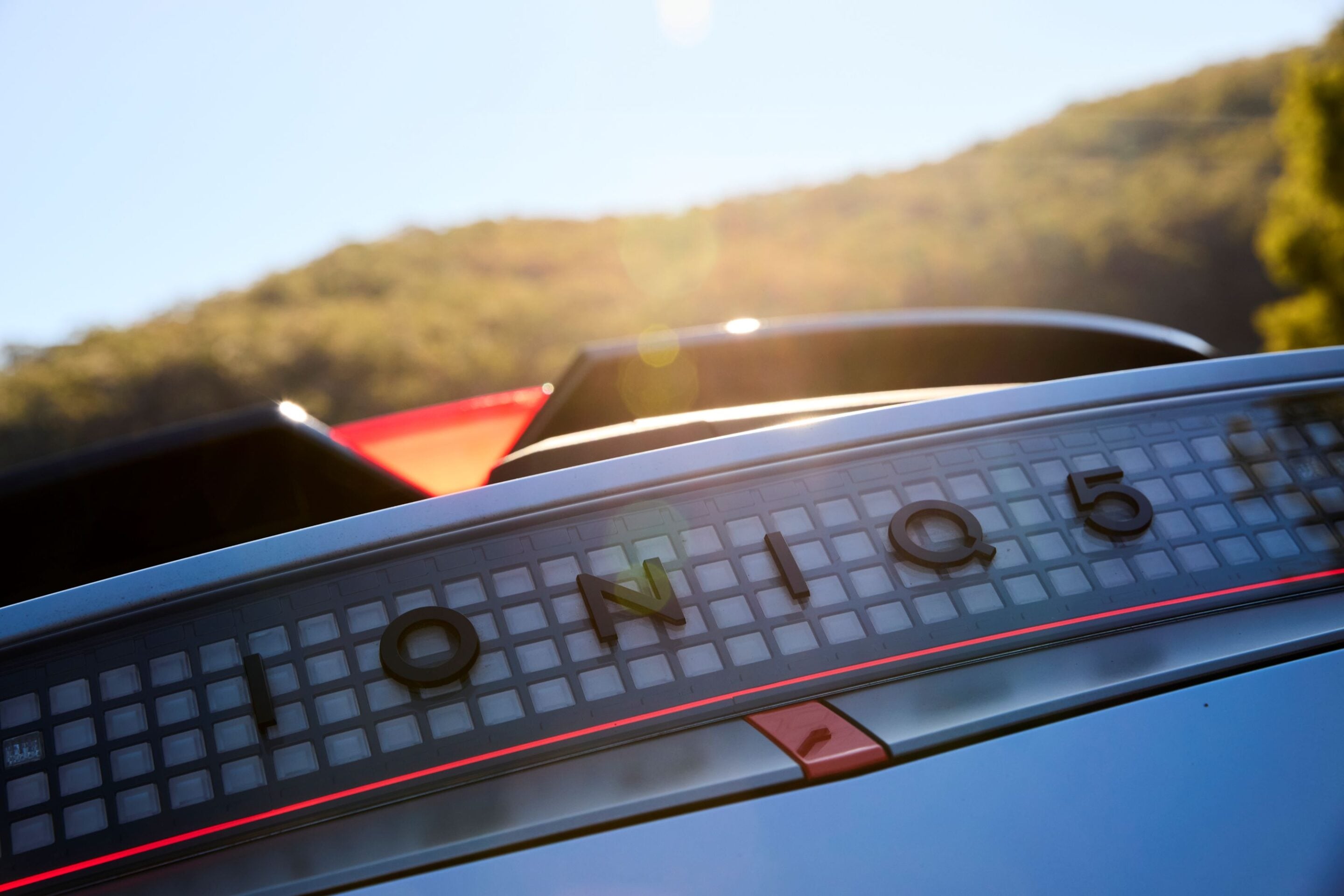
Hyundai Ioniq 5 N
| Price | $114,918 driveaway |
|---|---|
| Drivetrain | Two electric motors |
| Combined power | 448kW (478kW with boost) |
| Combined torque | 740Nm (770Nm with boost) |
| 0-100km/h | 3.5s (3.4s with boost) |
| Transmission | Single-speed front and rear, all-wheel drive |
| Wheel size | 21-inch |
| Spare wheel | Tyre repair kit |
| Battery size | 84kWh |
| Driving range | 448km (claimed, WLTP) |
| Claimed energy consumption | 21.2kWh/100km |
| Dimensions (l/w/h/wb) | 4715/1940/1585/3000mm |
| Boot capacity | 480L (rear seats up) / 1540L (rear seats folded) |
| Tare mass | 2230kg |
| Warranty | 7 years/unlimited km (car) / 8 years/160,000km (battery) |
| Servicing costs | $2029, 6 years/90,000km |
| Overall rating | 8.7 |
This story first appeared in the October 2026 issue of Wheels magazine, now on sale. Subscribe here and gain access to 12 issues for $109 plus online access to every Wheels issue since 1953.
The Toyota Celica in its mildest version was always a bit of a poseur’s car, a sporty-looking coupe that traded on style over some much-needed substance.
Launched in the dying days of 1970, the original Celica sat atop the humble Toyota Carina’s platform, the two models developed alongside each other.
More showpony than pony car, the Celica found a willing audience in those after a sporty-looking two-door with Toyota reliability and engineering underneath.
It wasn’t particularly fast, but it was comfortable and managed to turn heads thanks to its well-resolved design.
It wasn’t until the first front-wheel drive Celica hit the road in 1985 that Toyota’s erstwhile sports car really came of age, a proper driver’s car that, while not setting any land speed records, proved dynamically adept and engaging to drive.
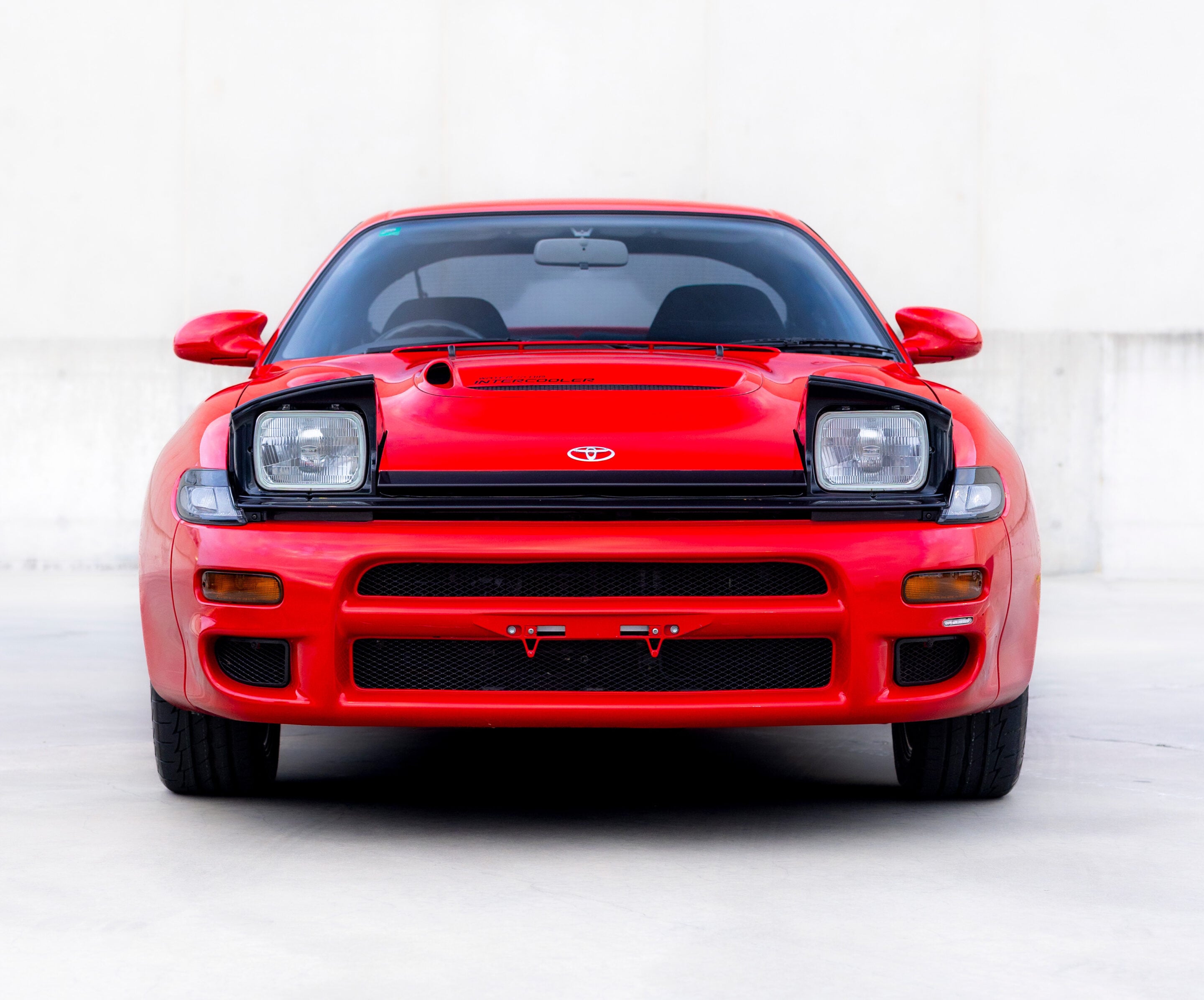
But Toyota’s reputation for building solid, reliable but ultimately staid and conservative cars was never too far away. Something was needed to change the public’s perception. And that something came in 1986 with the release of the first Celica GT-Four, a homologated, turbocharged four-wheel drive that transformed the Celica into a genuine sports car and a World Rally Championship (WRC) contender.
Incidentally, although often annotated as Celica GT4, the correct nomenclature is GT-Four, the entire
ensemble an acronym of Grand Touring Fulltime On-road Uniquely Responsive. Only Toyota could get away with this word salad.
Making its WRC debut in 1988, it didn’t take long for Toyota’s newest rally weapon to hit its straps, with the great Finn, Juha Kankkunen, chalking up the Celica’s first win in Australia in 1989, to help the brand to second overall in the manufacturer’s championship.
By 1990, Toyota was on top of the world, with Carlos Sainz taking the WRC title while Toyota finished just behind Lancia in the race for the manufacturer’s crown. Suddenly, the Celica GT-Four was hot property, both in the dirt of the WRC and on the road.
The original ST165 Celica GT-Four was never officially sold in Australia. Instead, we had to wait for the launch of Toyota’s second-gen homologation special, the ST185, which landed in dealerships in March 1990. And we were smitten.
With a list price of $42,910 (incidentally, exactly on the luxury car tax threshold at the time), buyers were treated to a world-beating, rally-bred bundle of raucousness that demanded to be driven like Sainz at the Acropolis to extract maximum enjoyment.
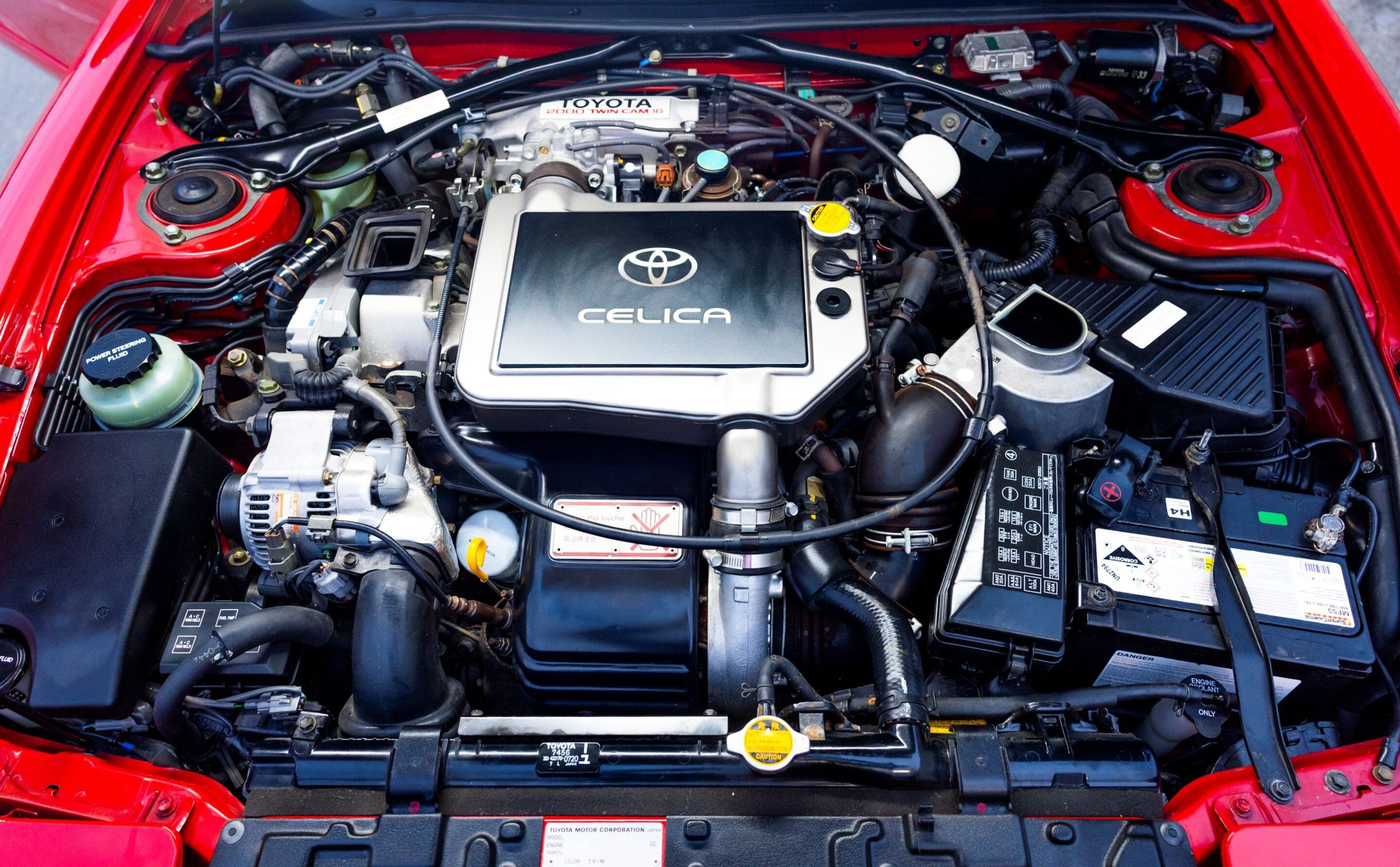
Power came via Toyota’s 3S-GTE 2.0-litre turbocharged-four, developed in conjunction with Yamaha. It made 153kW at 6000rpm and 281Nm, peaking at 3200rpm. At the time, it was the most powerful 2.0-litre engine ever sold in Australia.
The secret to extracting that much power involved higher-lift cam profiles and a compression ratio of 8.8-to-1. To cope with the demands of the twin-entry turbocharger, Toyota strengthened the 3S-GTE’s block, and added a beefier intercooler that summoned air directly from the deliciously aggressive bonnet scoop.
The small but powerful turbocharger was fed by exhaust gases that entered the turbo-housing via a two-channel exhaust manifold, the resulting pulses improving turbo response.
A five-speed manual transmission delivered the 2.0-litre’s power to all four wheels, a setup that involved more than a touch of mechanical ingenuity.
Up front, a transaxle that incorporated the transmission itself, the front- and centre diffs, along with a hypoid transfer gear sent drive along the ST185 three-piece prop shaft back to the Torsen rear diff. If that all sounds a bit complicated and a touch fragile, Toyota engineered the drivetrain to ensure that each of the three individual differentials could handle the full-power onslaught of the turbo-four.
Keeping the GT-Four on the road and straight ahead was the work of MacPherson struts and coil springs, both front and rear, while heavier anti-roll bars kept body roll in check.
Wheels put the hottest Celica to date through its paces in our April 1990 issue, lauding the all-paw’s chassis refinements and simple driveability.
“It sure works, because the GT-Four sits far flatter and more confidently than the [regular SX Celica] and, apart from a slightly lumpy ride, is not much less comfortable,” we wrote. “The Four also tracks and turns in more crisply, and its speed-sensitive power rack and pinion steering has excellent weighting and pretty good feedback once at speed.”
There was much consternation about the fifth-generation Celica’s rounded and softer design when it launched in 1989. Edges had been smoothed while body panels curved gently, a distance removed from its predecessor, which was all angles and straight lines.
But Toyota applied solid reasoning behind the new shape, with the fifth-gen’s designer Makoto Oshima revealing that the curved sheetmetal improved body strength when compared with the flat metal panels of its predecessor (which Oshima was also responsible for). That extra strength allowed for thinner and lighter sheetmetal to be used for some of the Celica’s body work.
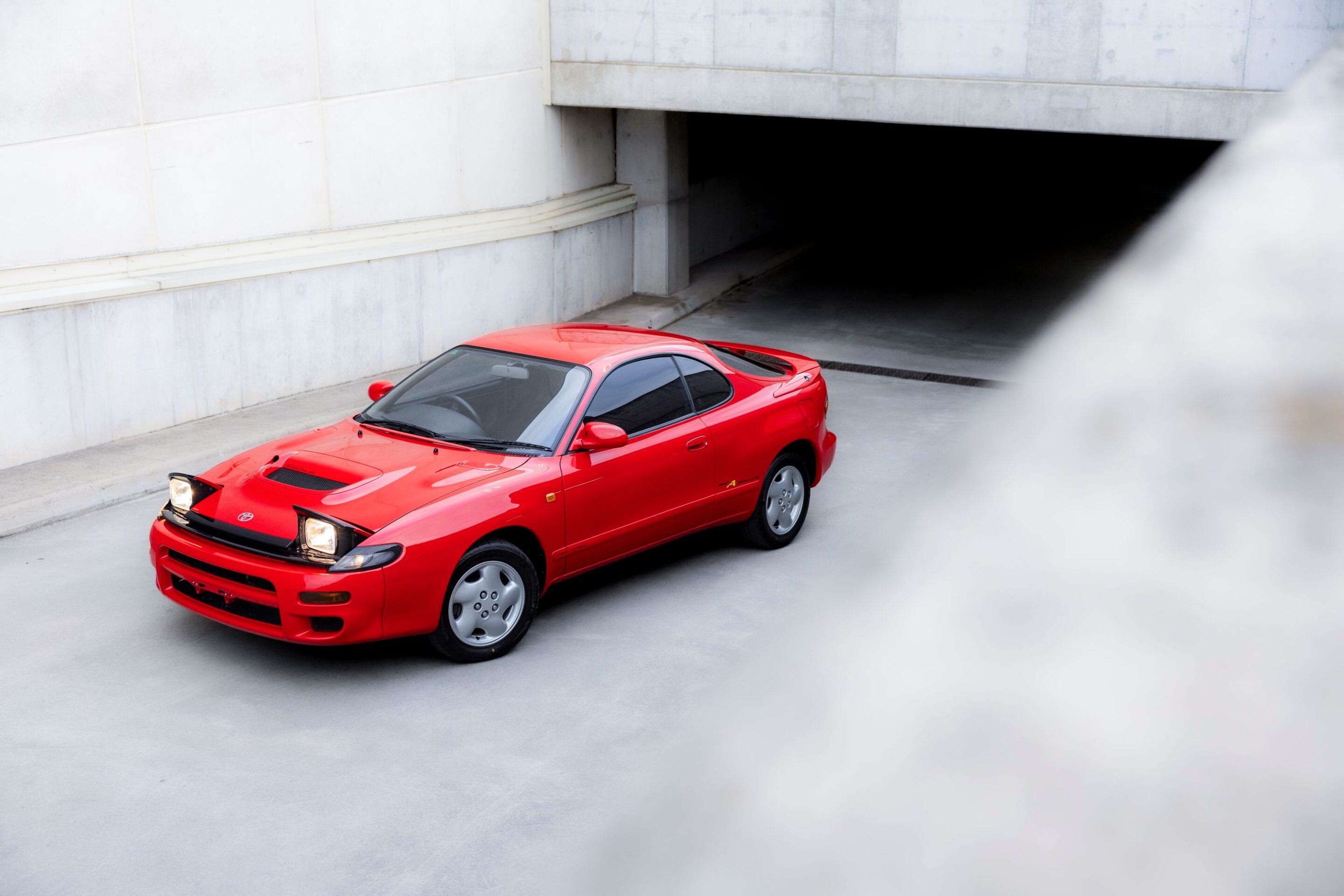
It might have looked soft in regular trim, but once Toyota’s homologation team had finished with it, the Celica GT-Four looked like a different beast, highlighted by a new front spoiler, that imposing bonnet scoop, extended wheel arches housing bigger and wider 15-inch alloy wheels, and larger brake discs to improve stopping power. It looked aggressive and purposeful, like something Carlos Sainz could drive around the streets of his hometown, Madrid, without embarrassment.
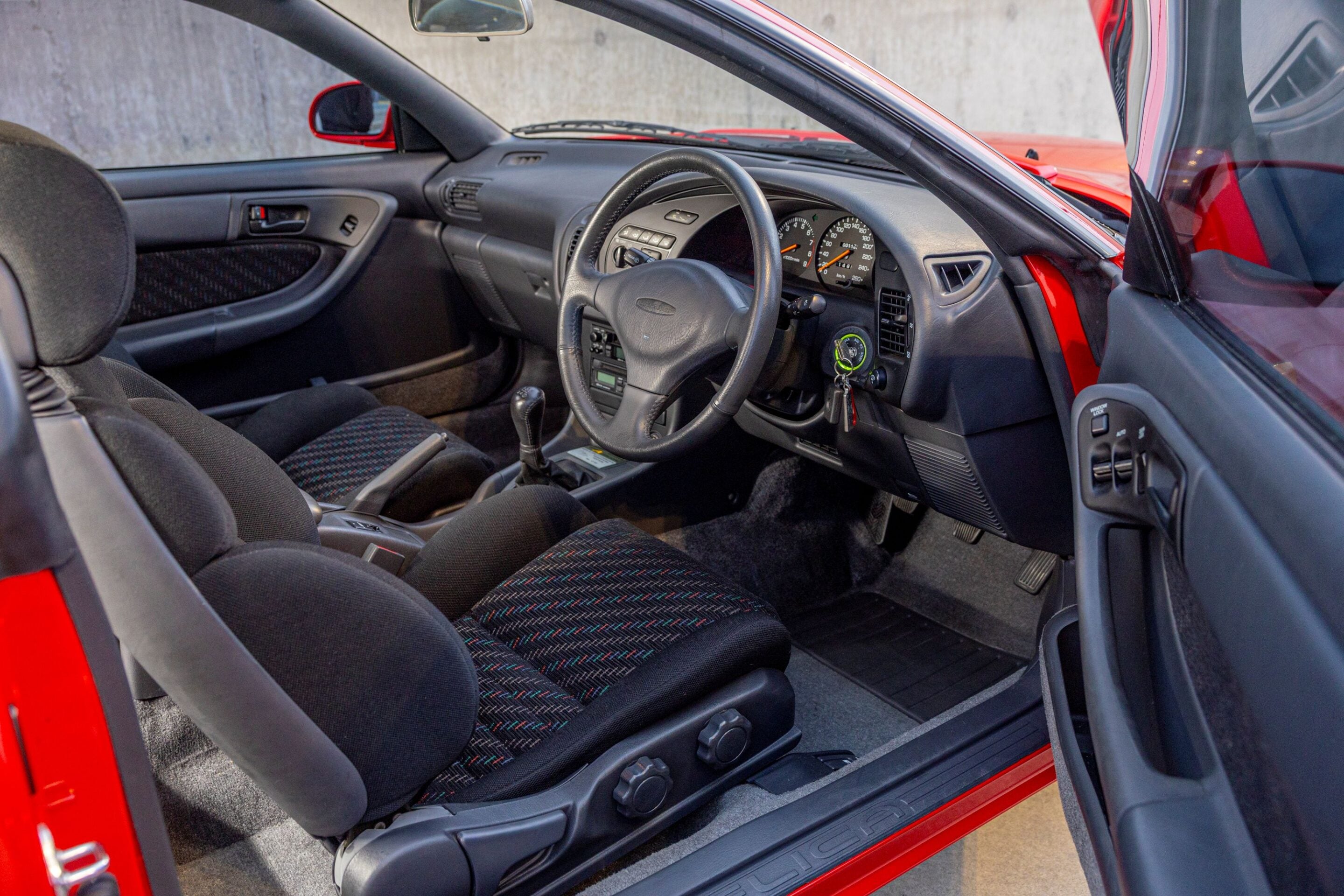
We loved the GT-Four’s performance back in April 1990, praising its straightline speed, deft handling and braking abilities.
Toyota claimed a 0-100km/h time of 6.9 seconds and the standing-quarter in 15 seconds flat. That might not seem especially fast today, but it was properly quick for 1990.
“It’s fully able to relate this performance to the real world, too, getting deeply into corners under its excellent brakes… and rocketing back out again with barely a trace of wheelspin or torque steer, even in the wet,” we wrote. “On tight hairpins, in particular, the GT-Four would understeer, but not really in the ploughing manner of most 4WD road cars. It was merely a great chassis telling us we’d gone too fast.”
That twitchiness, manageable as it was, coupled with a gearbox that “fairly romps through its five manual ratios” resulted in a car that was “busy” to drive. A driver’s car, in other words. No higher compliment could be paid to a vehicle of the GT-Four’s ilk.
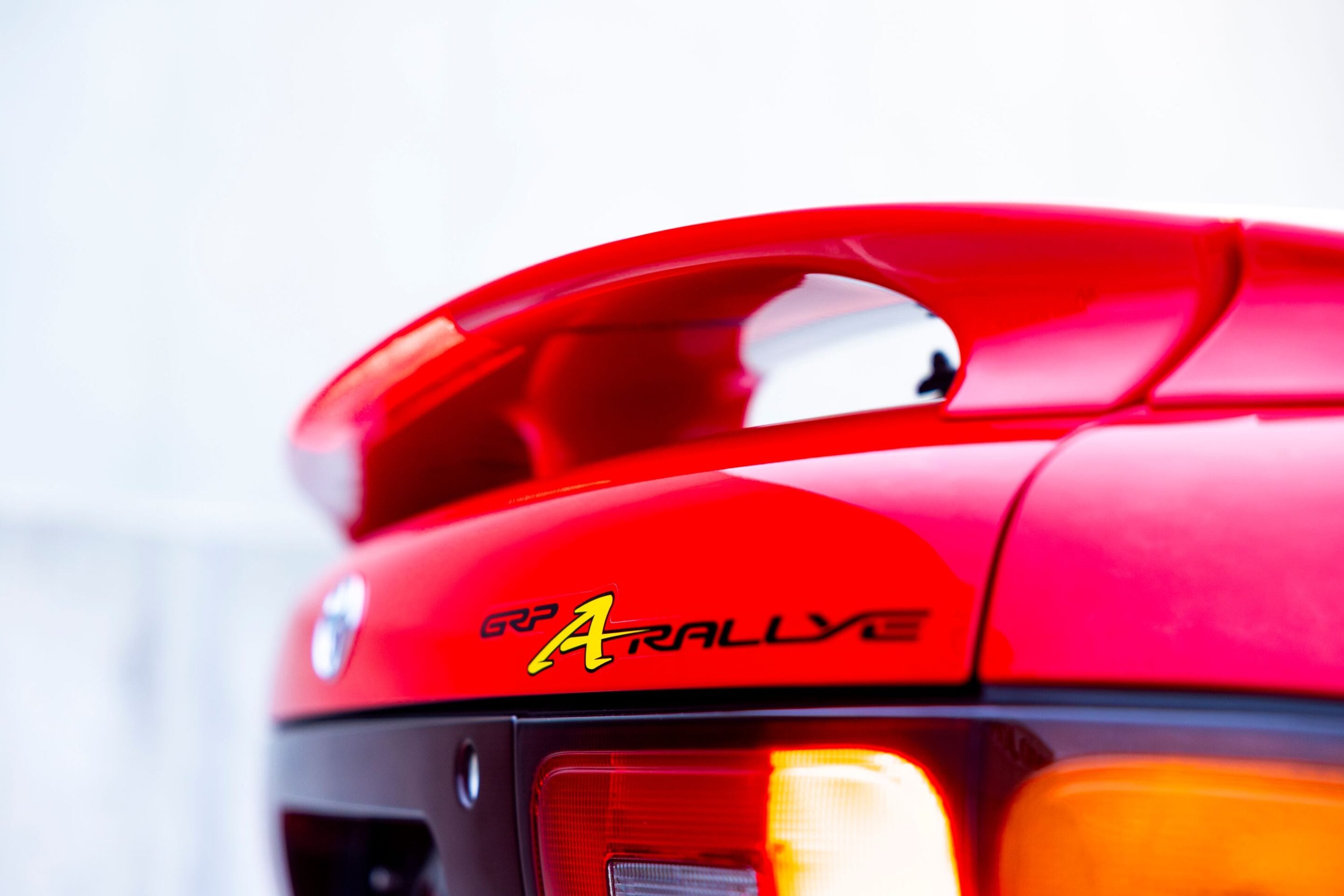
Toyota upped the ante in 1991, launching the Celica GT-Four Group A Rallye Edition, which brought competition upgrades, both mechanically and visually. Production was limited to 5000 cars, as per the FIA’s homologation rules for competition at the time, with just 150 earmarked for Australia, where it was sold and marketed as – and take a deep breath here – Toyota Celica GT-Four Group A Rallye World Rally Champion Carlos Sainz – Signature Edition. In Japan it was simply known as the GT-Four RC (Rally Competition).
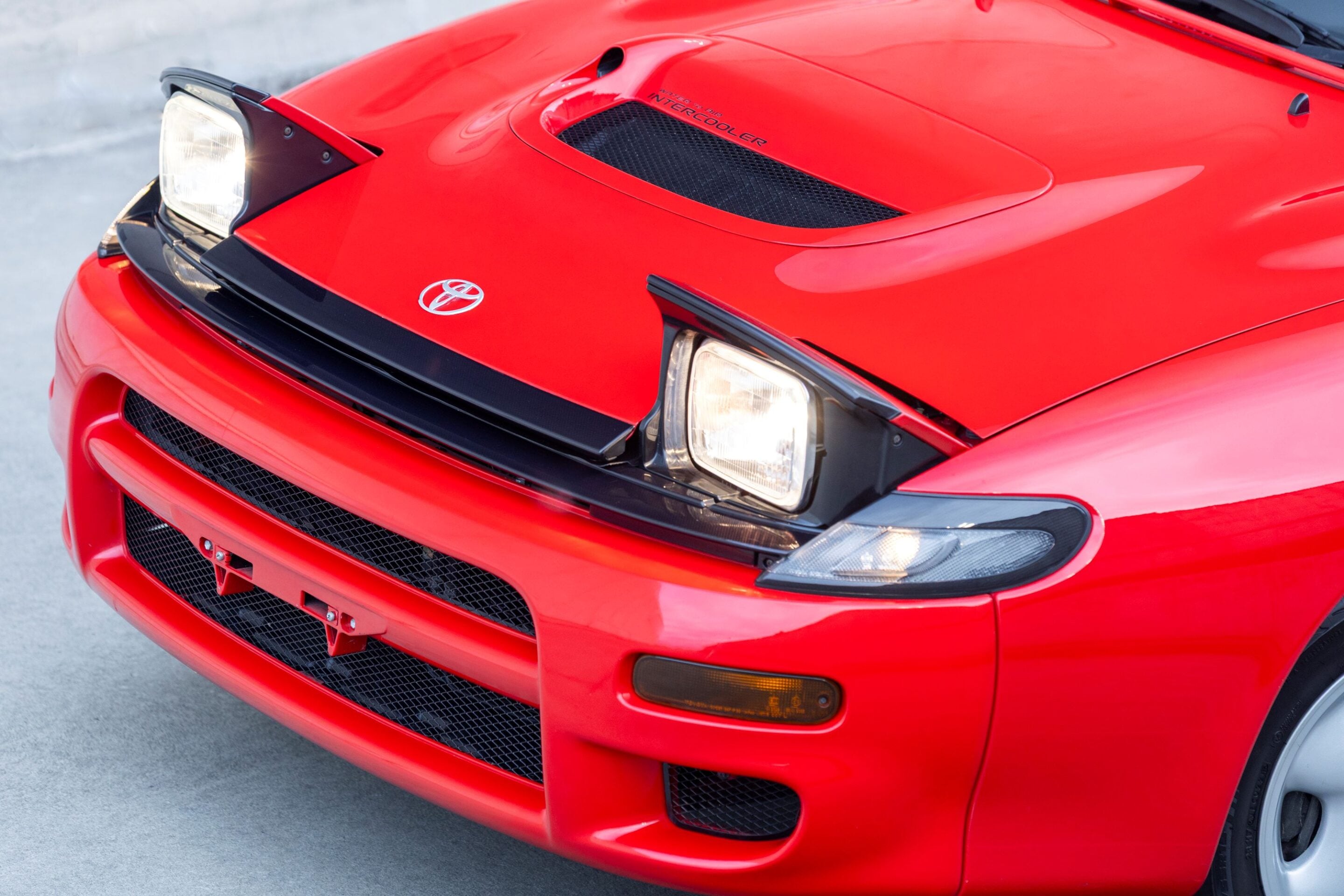
While there was no power increase, the GT-Four Group A Rallye swapped out the incumbent’s air-to-air turbo intercooler for a more efficient water-to-air setup.
An additional oil cooler was added while a redesigned bonnet now featured a huge air vent designed to expel hot air from the turbo while a small round scoop channelled cooling air to the cambelt housing, addressing a problem found on older models where the housing would sometimes melt during high-performance driving such as… well, rallying. There was also a new front bumper with larger air intakes to further optimise airflow and cooling to the GT-Four’s internals.
A new gearbox – internal code E151F – brought shorter ratios while revised engine mapping upped boost and improved the GT-Four’s torque curve.
Out in the forests and gravel, there was no stopping the Celica, which romped to three straight WRC drivers’ titles – Sainz, Kankkunen and Didier Auriol – and two consecutive manufacturers’ championships in 1993-94.
Toyota was clearly on a rally roll and the launch of the new ST205 Celica GT-Four in 1994 brought with it even greater expectations of success.
Visually, the ST205 forged a new identity sitting on a longer platform (by 10mm) and with a wider track both front back, up 35mm and 50mm respectively. A new nose, with quad headlamps replacing the older model’s pop-up lights, lent the ST205 a mean face, a toughness backed up by significant power and torque bumps, now rated at 178kW at 6000rpm and a meaty 320Nm peaking at 4000rpm. Zero to 100km/h was a shade quicker at 6.6 seconds while the standing quarter was over in 14.9 seconds.
A change to the WRC’s homologation rules meant Toyota had to only produce 2500 cars to comply with the rules. Of those, 177 made their way to Australia with a lofty price tag of $81,690 when new. Even then, niceties like air conditioning ($2382) and an electric sunroof ($2000) remained optional items.
Wheels pitted the new ST205 GT-Four against a trio of like-minded turbocharged all-wheel drive monsters – Holden Calibra Turbo 4×4, Mitsubishi Lancer GSR, and Subaru Impreza WRX – in our August 1994 issue, and it came dead last. The caveat here is that 1994’s four-way comparison was focussed on the road, with the Mitsubishi taking the spoils.
But it wasn’t all bad news for the GT-Four, with the judges singing its praises loud and high.
“This is a car heavy to handle, sometimes coarse, always noisy, and very easy for pedestrian drivers to question,” we wrote. “But get it out where the going’s good, or bad, and the Celica’s an object lesson in what rally-bred performance and handling are all about. With awesome potential exploited, it’s a stirring experience.
“Worth the money? That depends on your view; but what is sure is that until someone else offers such a ballsy limited-production rally-replica for less money, the Group A Rallye is the best of its specialised, compromised kind.”
Ballsy the ST205 GT-Four might have been, but its future legacy was derailed in 1995 following a WRC cheating scandal that saw Toyota stripped of its 1995 championship points and banned from the sport for 1996.
Toyota was found to have breached the FIA’s regulations around turbo restrictor plates with a clever device that essentially bypassed the mandatory restrictor, allowing for greater airflow to the engine, thereby boosting the GT-Four’s outputs by as much as 30-35kW. The ingenuity of the device was that it was completely undetectable by WRC scrutineers, with then FIA President Max Mosley calling it “the most sophisticated and ingenious device I have ever seen in 30 years of motorsport”.
The scandal rocked world motorsport and left Toyota bloodied, but not cowed. After sitting out the 1996 season following its ban, the Japanese giant returned in 1997 with an all-new WRC-spec Corolla, winning the manufacturer’s championship in 1999 before bowing out of the sport.
It returned in 2017 with the GR Yaris and has gone on to add a further six drivers’ and manufacturers’ crowns to its tally.
Far from ruining the legacy of the GT-Four, the cheating scandal only added to its mythology, a car that through three generations showed that the Japanese giant was more than just a maker of sensible cars.
Our Celica GT-Four
The stunning car featured on these pages is a rare breed. Owned by Frank Gazzara, the ST185 GT-Four Group A Rallye is one of just 150 Carlos Sainz Signature Editions produced for the Australian market.
Produced in September 1991, build number 072 has been in the same family since it was bought new from Melbourne City Toyota in January 1992 for $51,795. Frank’s father, Natale, was the original owner, his name embossed on the original commemorative build plate.
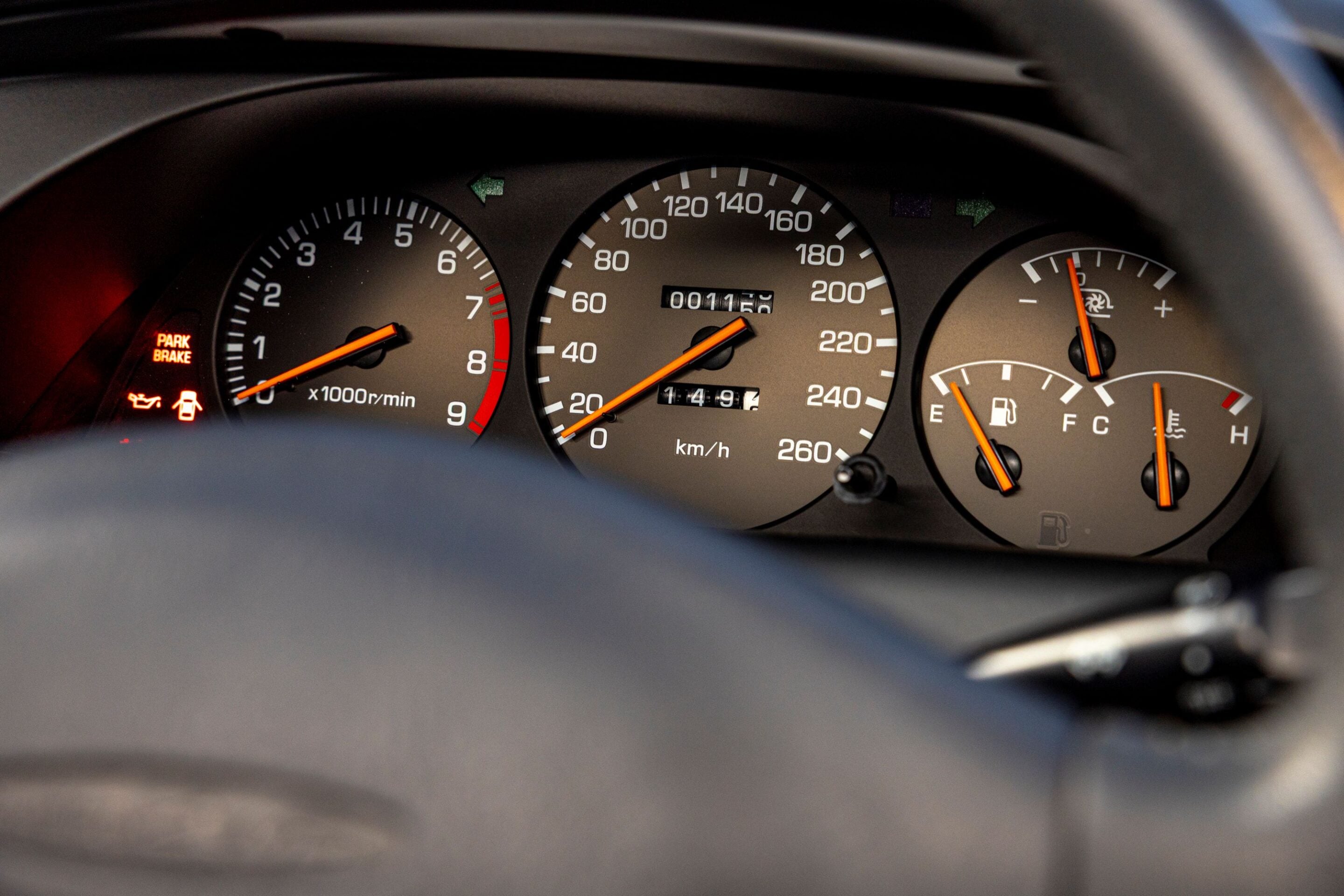
With a remarkable 1152km on the odometer, it’s arguably one of the lowest-kilometre GT-Fours in existence today.
“I first saw this model at the Melbourne Motor Show and immediately fell in love with the car,” Frank tells Wheels. “I inherited this prestigious car from my father in 2023, and it remains a registered motor vehicle.”
While it has spent most of its life garaged, Frank does admit to taking the rally-bred Celica for the occasional drive.
“It still drives with plenty of power and feels much like a new car,” he says, adding that other than regular maintenance, no major restoration work has been carried out on the 37-year-old GT-Four.
“My mechanic has inspected the vehicle and believes it remains in exceptionally good original condition and drives like a new car,” he tells Wheels.
The stunning Super Red (code 3DE5) example is currently for sale and comes with a swag of documentation verifying the car’s history and provenance. Anyone interested can email us at [email protected] and we’ll put you in touch with Frank.
Specs
| Model | 1991 Toyota Celica GT-Four Group A Rallye |
|---|---|
| Engine | 1998cc turbocharged four-cylinder (3S-GTE) |
| Power | 153kW @ 6000rpm |
| Torque | 275NM @ 3200-4800rpm |
| Transmission | 5-speed manual, four-wheel drive |
| 0-100km/h | 6.9 seconds |
| 0-400m | 15 seconds |
| Wheels | 15-inch alloys |
| Dimensions (l/w/h/wb) | 4410/1745/1300/2525mm |
| Kerb weight | 1446kg |
| Power-to-weight ratio | 110kW/t |
| Price (new) | $51,795 |
This story first appeared in the October 2026 issue of Wheels magazine, now on sale. Subscribe here and gain access to 12 issues for $109 plus online access to every Wheels issue since 1953.
Australian electric vehicle sales reported by Tesla and Polestar continued their strong 2026 run in September, with combined deliveries rising almost 20 per cent compared with the same month last year.
New figures from the Electric Vehicle Council (EVC) show the two brands delivered 5854 battery-electric vehicles during September, up from 4899 a year earlier.
Tesla accounted for the overwhelming majority, delivering 5654 vehicles – a 21.3 per cent year-on-year increase – while Polestar slipped 15.3 per cent to 200.
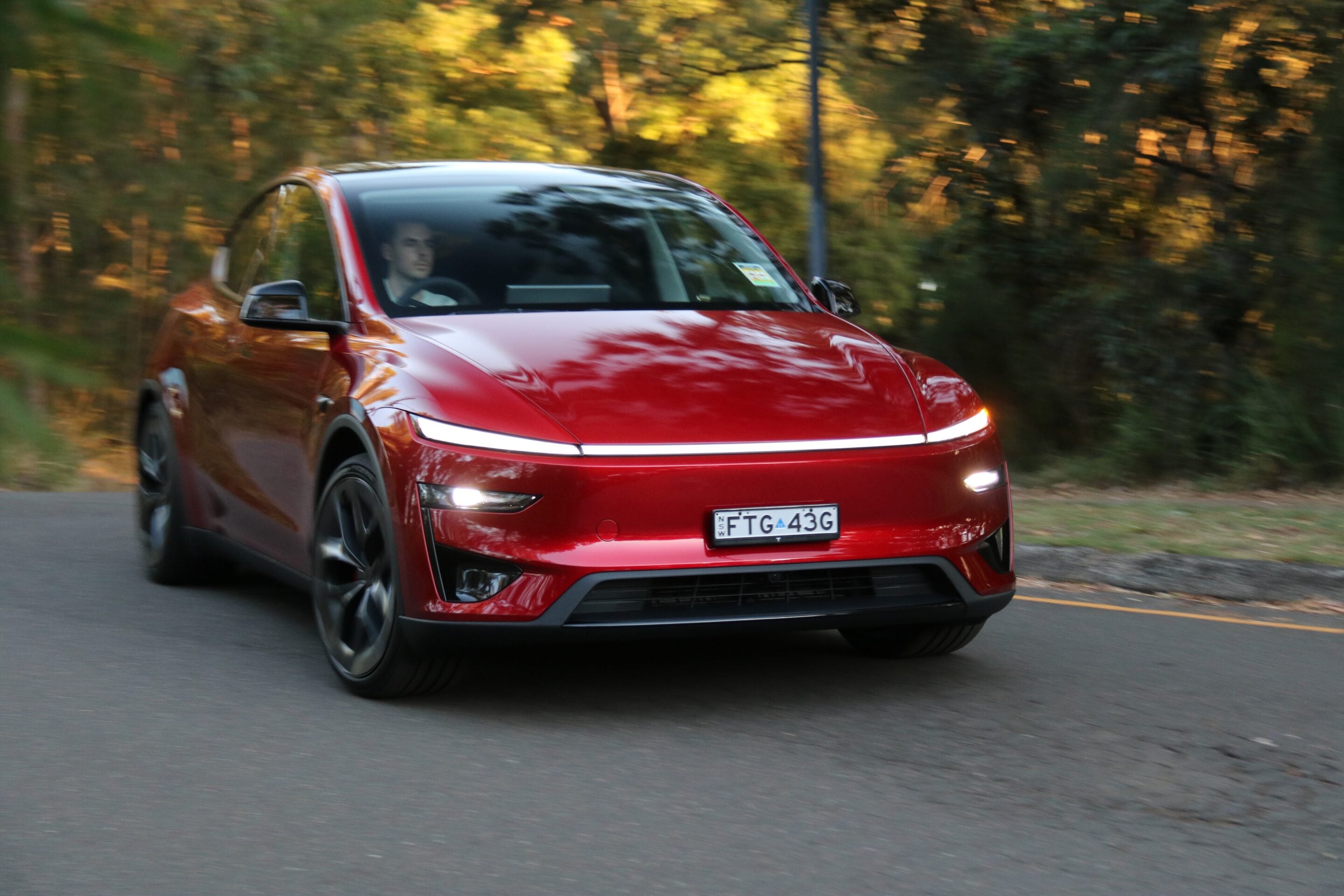
The Tesla Model Y remained the dominant vehicle, recording 4476 deliveries during September, up 14 per cent from 3927 last year. It accounted for more than three-quarters of all Tesla and Polestar vehicles included in the EVC report.
Model 3 sales rose more sharply, jumping 60 per cent to 1178 deliveries. The increase comes as Tesla expands the sedan’s Australian line-up, this week announcing a new entry-level Model 3 priced below $46,000 before on-road costs.
Year-to-date figures reveal an even stronger rebound. Tesla and Polestar have recorded a combined 43,386 deliveries to the end of September, up 76.9 per cent from 24,521 during the same period of 2025.
Tesla has driven that increase, climbing 84.1 per cent to 41,705 vehicles. Model Y deliveries have more than doubled, rising 108.4 per cent to 35,930.
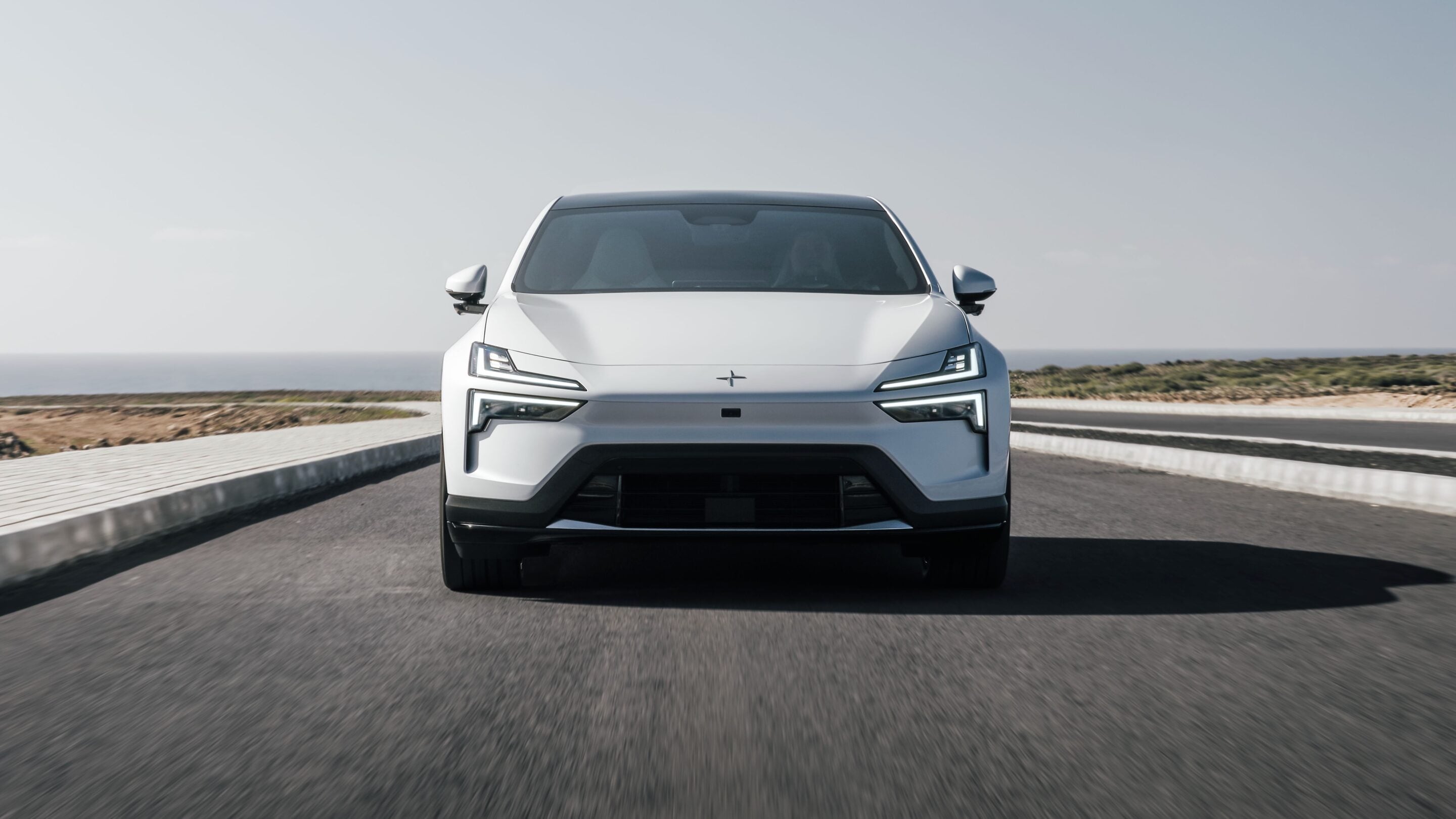
Polestar has moved in the opposite direction, with its year-to-date total down 10 per cent to 1681 vehicles. Its Polestar 4 (above) is up 10 per cent, but Polestar 2 and 3 deliveries have declined.
Growth has also been recorded across every state and territory. The Northern Territory posted the largest percentage increase at 113.3 per cent, followed by Queensland at 88.3 per cent and NSW at 83.5 per cent. Even Western Australia, the slowest-growing market, rose 45.7 per cent.
The EVC figures cover Tesla and Polestar only and should not be interpreted as representing Australia’s entire EV market. Sales are recorded when vehicles are delivered rather than when they are ordered.
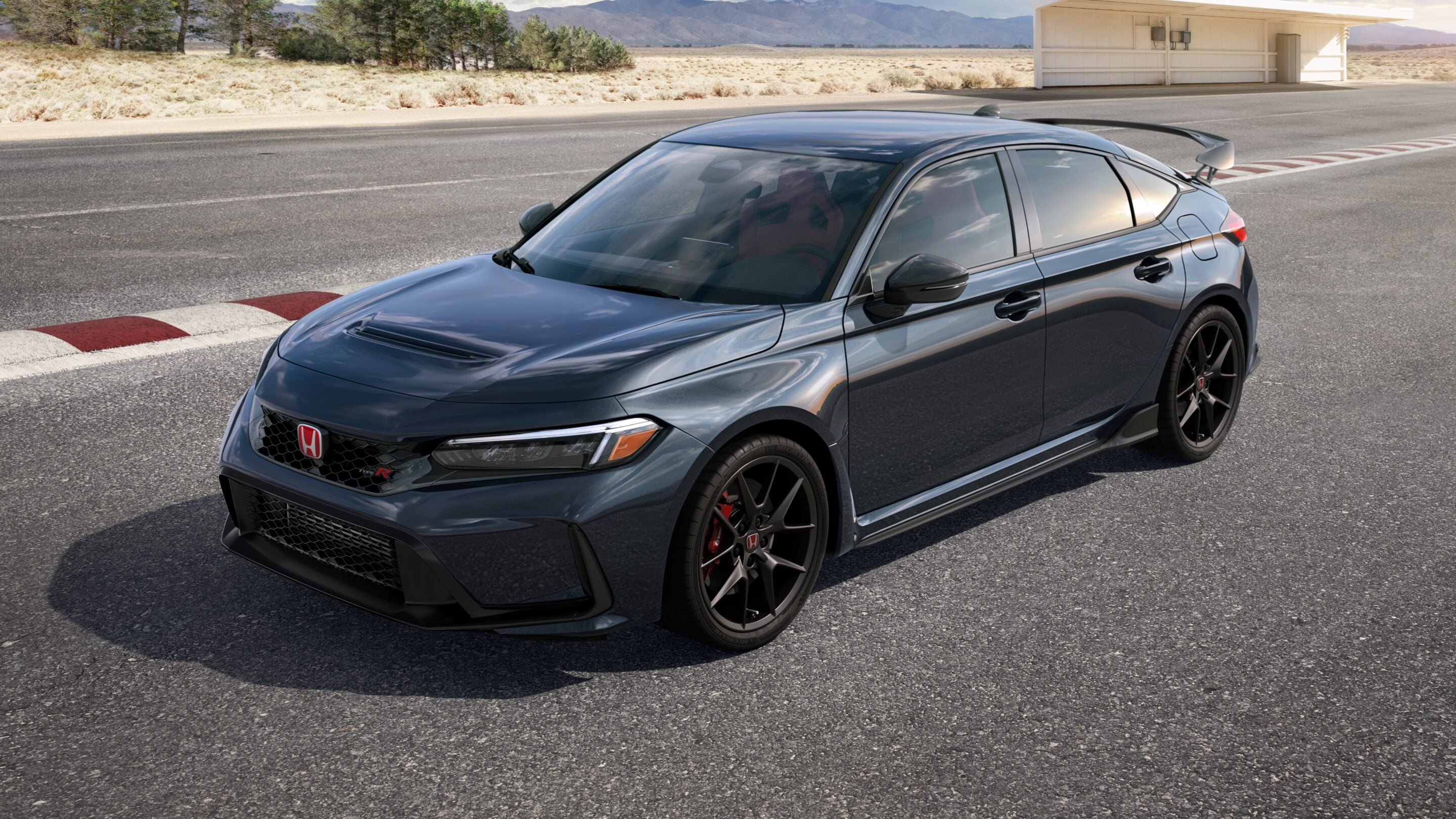
The Honda Civic Type R has received a host of updates for 2027, bringing subtle styling changes, even sharper driving dynamics and more creature comforts to the Japanese brand’s flagship hot hatch. Revealed in the United States, the updated FL5-generation Civic Type R arrives as the nameplate celebrates its 30th anniversary. Australian timing and specifications for the refreshed model are yet to be announced.
Honda hasn’t chased additional power for the update and the turbocharged 2.0-litre four-cylinder engine continues unchanged, producing 235kW of power and 420Nm of torque, and sending power exclusively to the front wheels through a six-speed manual transmission and limited-slip differential.
Instead, Honda has concentrated on making the Type R sharper to drive.
The adaptive suspension has received revised damping in its most aggressive +R mode, which Honda says improves the car’s ability to follow the road while reducing bouncing and impact harshness. The rev-matching system has also been recalibrated to respond more quickly during downshifts. According to Honda, brake pedal feel has also been addressed, with a new spring added to the pedal linkage to reduce free play and provide a more direct response.
There are functional changes outside with a redesigned front bumper incorporating a larger grille opening to improve airflow and engine cooling, while a deeper front splitter is claimed to increase downforce.
However, you’ll need a keen eye to pick the new model from the existing Type R. A new Meteorite Gray Metallic paint colour joins Championship White, Boost Blue Pearl and Sonic Gray Pearl in the US.
Perhaps more noticeable are the changes inside, where Honda has attempted to make the Type R a nicer place to spend time. For the first time, its heavily bolstered red front suede seats are heated, and the dashboard and upper front door panels are now trimmed in suede, while the dashboard gains a new diamond-pattern insert.
There are also darker finishes for the aluminium gear knob, centre console and door handles, along with black air vent and climate control knobs and an auto-dimming rear-view mirror.
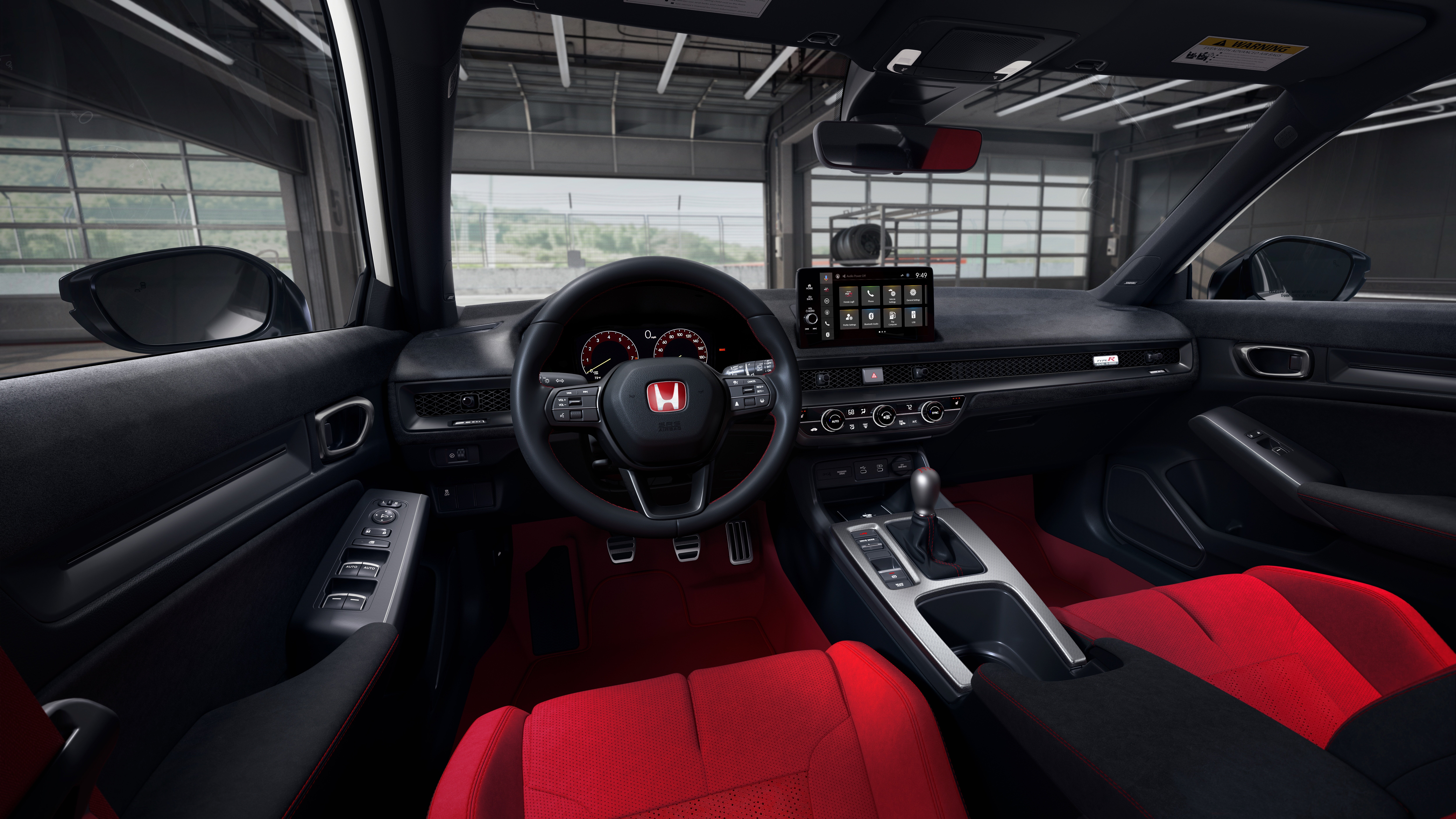
Technology has also been upgraded with Google Built-In – including Google Maps, access to the Google Play Store and Gemini AI assistance – as well as Alexa integration and two new USB-C ports. Honda has also updated its Honda Sensing active safety suite, including improved adaptive cruise control and lane keeping assistance, while automatic post-collision braking is newly standard.
The refreshed Civic Type R will reach US dealerships this month, priced from US$48,695 before destination charges, with an Australian launch yet to be confirmed.
It’s taken Toyota Australia a long time to start selling plug-in hybrids locally, which was an unusual move for the company that has made the drivetrain massively popular the world over. Until recently, buyers wanting to plug in had to choose an electric bZ4X, but that changes with the new-generation RAV4 PHEV.
But Toyota hasn’t simply added a bigger battery to one of Australia’s favourite medium SUVs. It makes up to 227kW of grunt, boasts more than 110km of claimed electric driving range and offers 50kW DC fast charging capability, meaning that the plug-in version is both the most powerful and potentially most fuel-efficient RAV4 we’ve ever been offered locally.
However, the regular RAV4 hybrid is already very fuel efficient, and it’s also considerably cheaper, so does plugging in make the RAV4 better? Let’s find out…
How much does the RAV4 PHEV cost to buy?
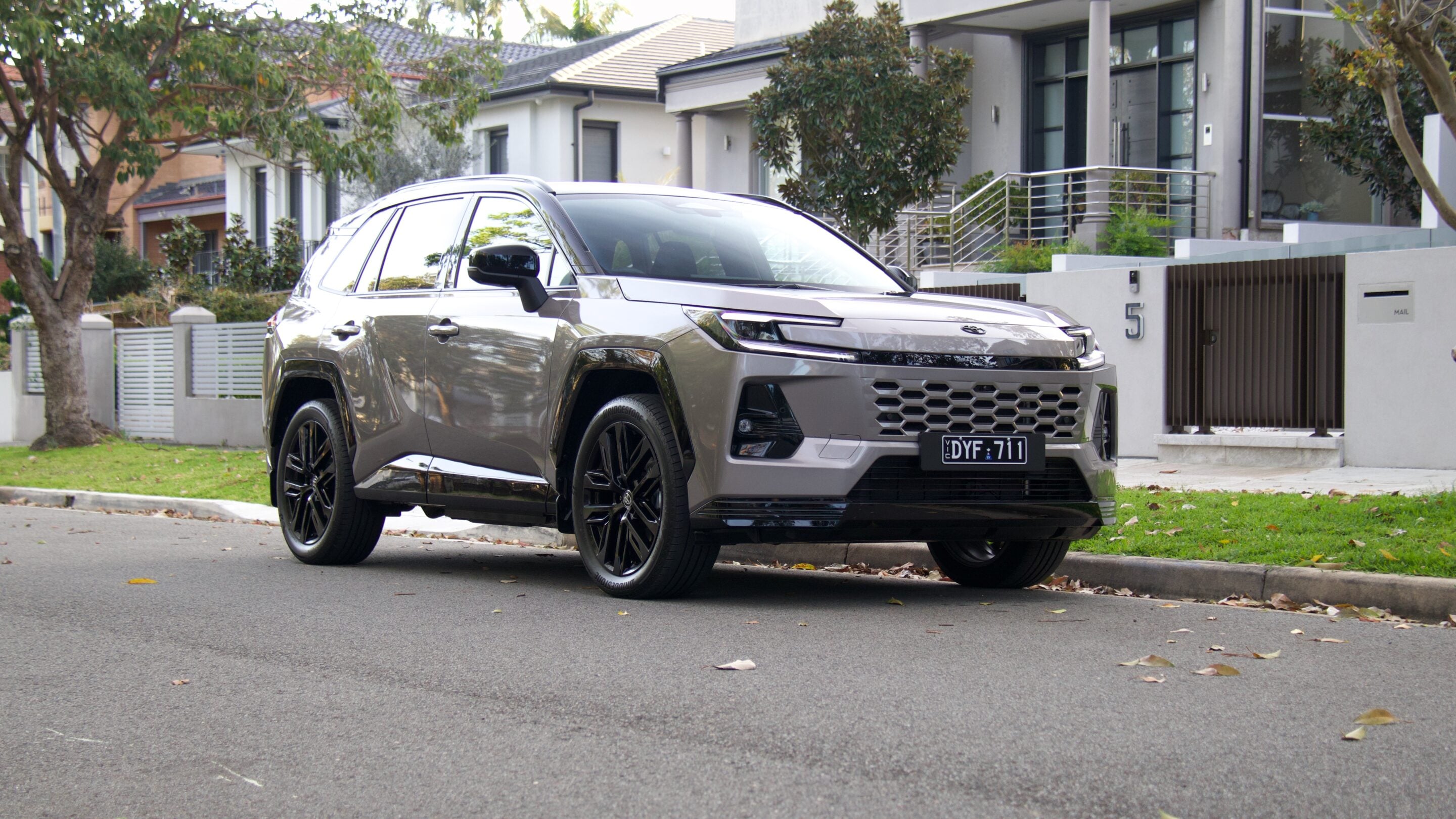
So far, only three plug-in hybrid variants of the RAV4 are offered in Australia, and they all sit in the upper part of the range. The RAV4 XSE PHEV – currently the cheapest PHEV model before the new GXL PHEV launches early next year – starts at $59,515 before on-road costs in front-wheel drive form, while the all-wheel drive version tested here costs $64,015 +ORC, or around $70,000 once on-road costs are included.
That makes the AWD PHEV $4500 more expensive than the XSE AWD Hybrid, while sitting just $2325 beneath the flagship $66,340 GR Sport PHEV AWD. While there are some plug-in hybrid rivals around the same price, like the Mitsubishi Outlander PHEV Aspire ($66,790 +ORC), there are plenty of Chinese medium SUV rivals charging at least $20,000-$30,000 less.
At least the XSE is well equipped. Standard equipment includes 20-inch black alloy wheels, LED lighting, a 360-degree camera, two-tone exterior paint, a sunroof, heated and ventilated front seats, electric front seat adjustment with driver’s seat memory and a tasteful suede and synthetic leather trim with blue stitching.
On top of the XSE hybrid, the PHEV adds larger brakes to account for its extra weight, and a 1500-watt inverter and household-style outlet in the luggage compartment. That allows the RAV4’s sizeable battery to run appliances when camping or away from mains power. There’s a full list of standard features at the bottom of the page.
It’s certainly not what you’d call cheap, especially when the RAV4’s starts at $45,990 +ORC, but the XSE PHEV offers more than just a drivetrain change – it’s significantly quicker than the hybrid and also feels as though it should have had this drivetrain when it was launched earlier in the year.
How practical is the RAV4 XSE PHEV?
One of the biggest compliments you can pay the PHEV is that it remains a RAV4, which makes it one of the most spacious medium SUVs that you can buy. Sure, there are rivals that offer more clever storage solutions or bigger boots, but one of the most appealing things about it is that it’s so easy to fold the seats down and throw in some bulky shopping – and the PHEV doesn’t change that.
There’s plenty of space up front, good outward visibility and loads of useful storage dotted around the cabin, like the dual trays on the dashboard. There’ are ‘s also a pleasing amount of physical buttons located around the cabin, though the lack of physical air-conditioning controls is annoying. The quality isn’t quite befitting of the price, either, with plenty of disappointingly hard materials around the cabin, including on the dashboard.
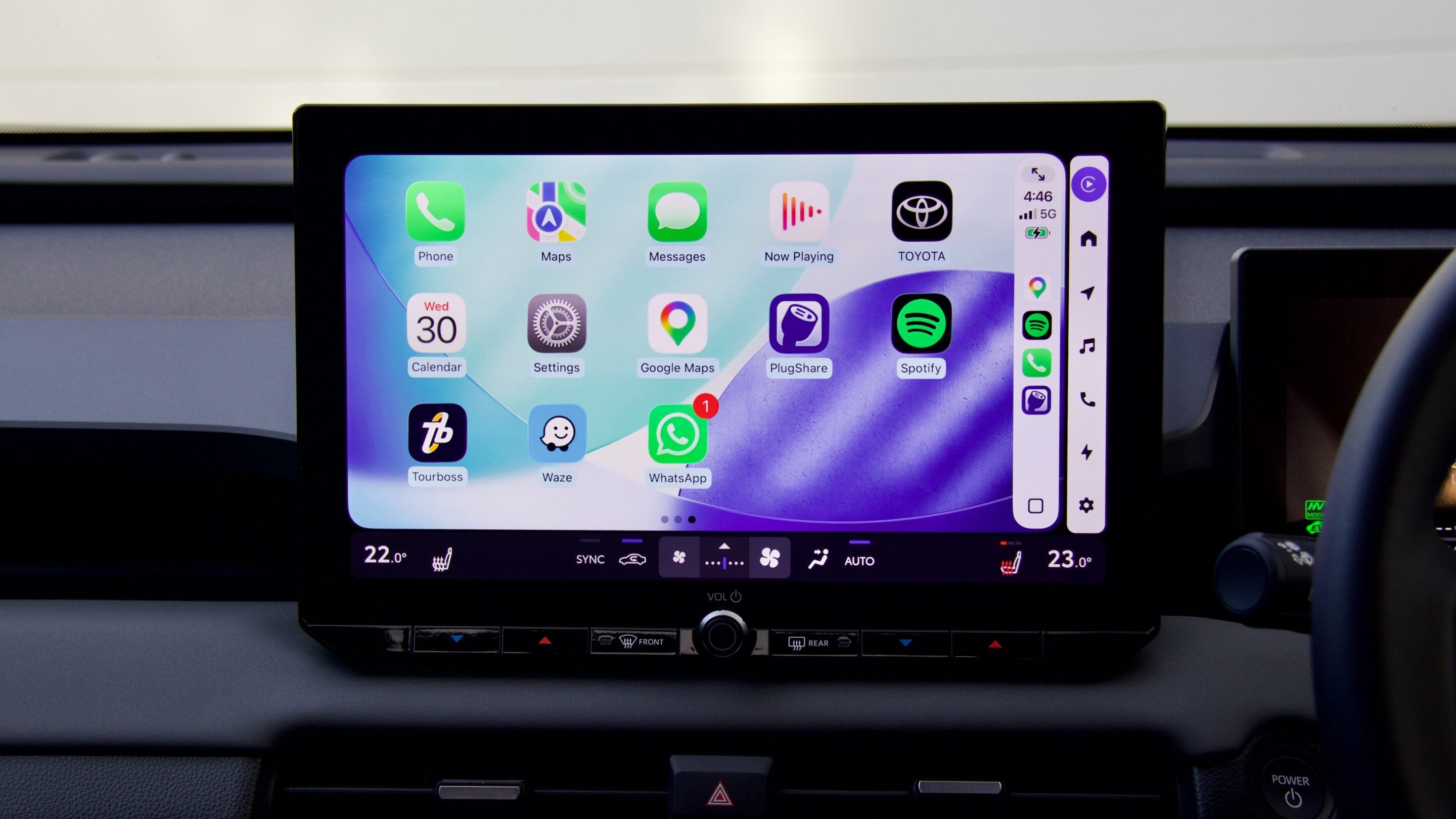
However, Toyota has also made a welcome leap forward with the new-generation model’s technology, addressing one of the biggest weaknesses of its predecessor. A 12.9-inch touchscreen features with the brand’s new ‘Arene’ software, and it’s bright, fast and easy to use. Features include wireless Apple CarPlay and Android Auto, sat-nav with live traffic, AM/FM/DAB+ digital radio and online services for access to apps like Spotify and weather.
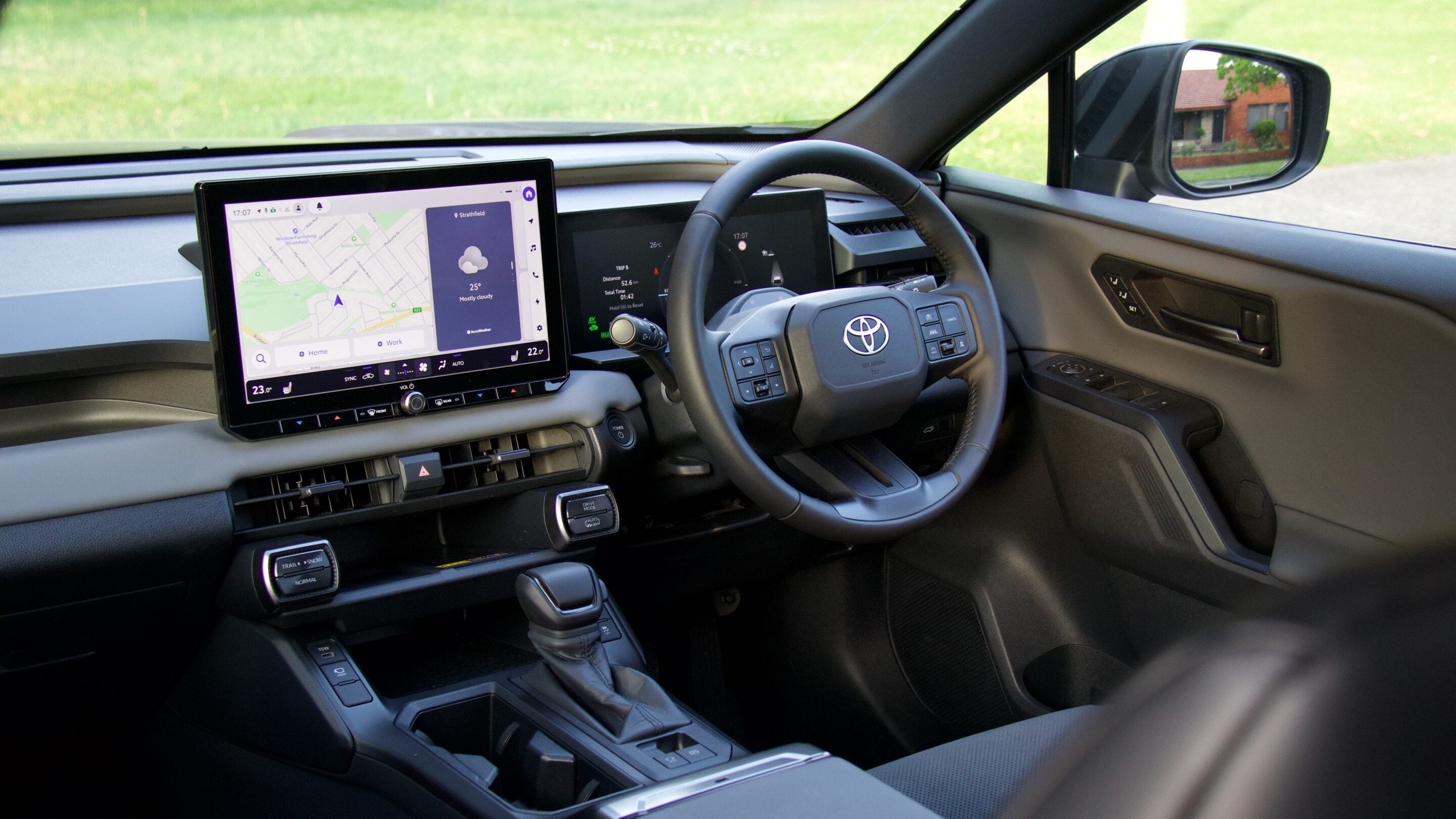
Front-seat comfort is generally good, with supportive and firm seats featuring as standard. The rear is similarly accommodating, and families will find it not only practical but easy to enter, exit and enjoy. There’s ample legroom and headroom for adults, a relatively flat floor and wide-opening doors, while air vents, map pockets, door pockets and two USB-C charging ports help make the second row family friendly.
The only place you see the PHEV RAV4’s practicality dip below the hybrid’s is in the boot, where it has no underfloor storage. As a result, the boot capacity is 655 litres (that’s measured to the roof, unlike most manufacturers that quote to the parcel shelf) with the rear seats up. Toyota Australia doesn’t quote a figure for the rear seats but it looks like it would sit at around 1800 litres, which is healthy for the segment. Impressively for a PHEV, there’s still a spare wheel, with a space-saver sitting underneath the boot floor.
How far can the RAV4 PHEV travel on a charge?
Here’ i’s where the PHEV makes its strongest case for itself. A 22.7kWh lithium-ion battery gives the front-wheel drive XSE an official electric range of 121km on the WLTP cycle, while the more powerful AWD model tested here can reportedly travel 113km before needing to call on its petrol engine.
For many Australian commuters, 113km is enough to cover several days of driving without burning any petrol at all, and impressively, we achieved 110km of electric driving before the battery ran out. Of course, that will depend on your driving style, but we didn’t use any hypermiling techniques to arrive at that figure.
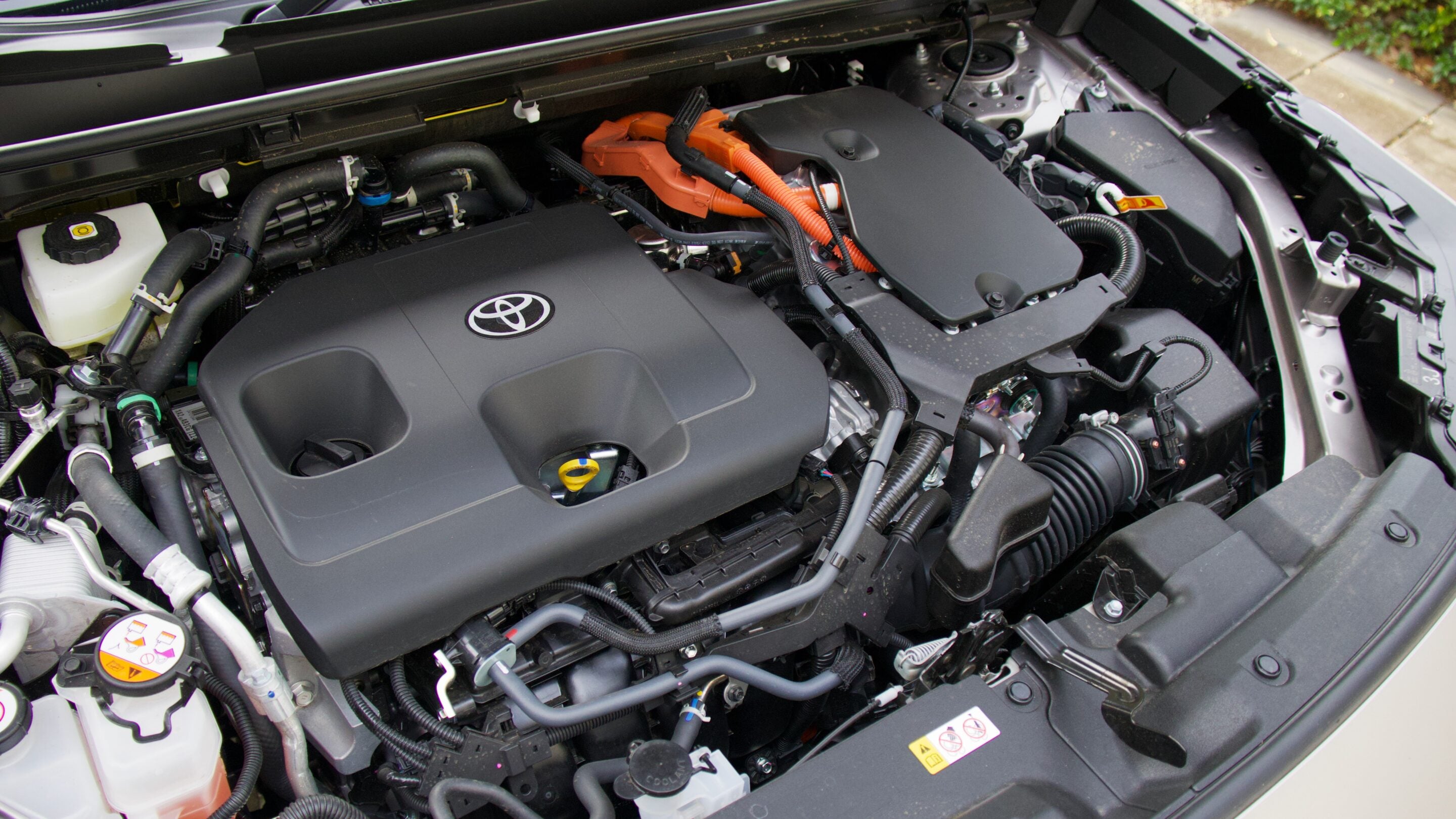
Unlike some plug-in hybrids, the RAV4 also supports DC fast charging. Its maximum rate of 50kW isn’t going to trouble an EV, but it adds useful flexibility on longer journeys as it can be charged from 10 to 80 percent in as little as 28 minutes – enough time for a lunch break while heading out of town. AC charging is supported at up to 11kW using three-phase power.
Once the battery’s usable EV charge is depleted, you aren’t left dragging around a big battery with an inefficient petrol engine doing all the work. The RAV4 effectively reverts to operating like one of Toyota’s familiar hybrids and in hybrid mode, we landed in the mid-5L/100km range, which isn’t far off the consumption for a RAV4 hybrid. That’s not bad considering the extra weight and performance of the PHEV.
How fast is the RAV4 PHEV?
Very, at least by RAV4 standards, as the range hasn’t had a truly powerful model in Australia since the 200kW 3.5-litre V6 models sold from 2007 until 2013. The front-wheel drive XSE combines its 2.5-litre naturally aspirated four-cylinder petrol engine with an electric motor for a healthy 201kW combined output, but choose the all-wheel drive and there’s a second e-motor on the rear axle for a keen combined output of 227kW, which is good enough for a claimed 5.8-second 0-100km/h time.
In everyday driving, the RAV4 PHEV feels quite effortless. Its e-motors are powerful – the front one outputs 151kW/272Nm alone, or more grunt than a hybrid RAV4 in total – with the rear adding 41kW/123Nm. Torque is instant, even at higher speeds, and refinement is exactly what you’d expect. If you want more performance, the petrol engine can be called on for more grunt and it gives the RAV4 PHEV surprisingly serious overtaking ability.
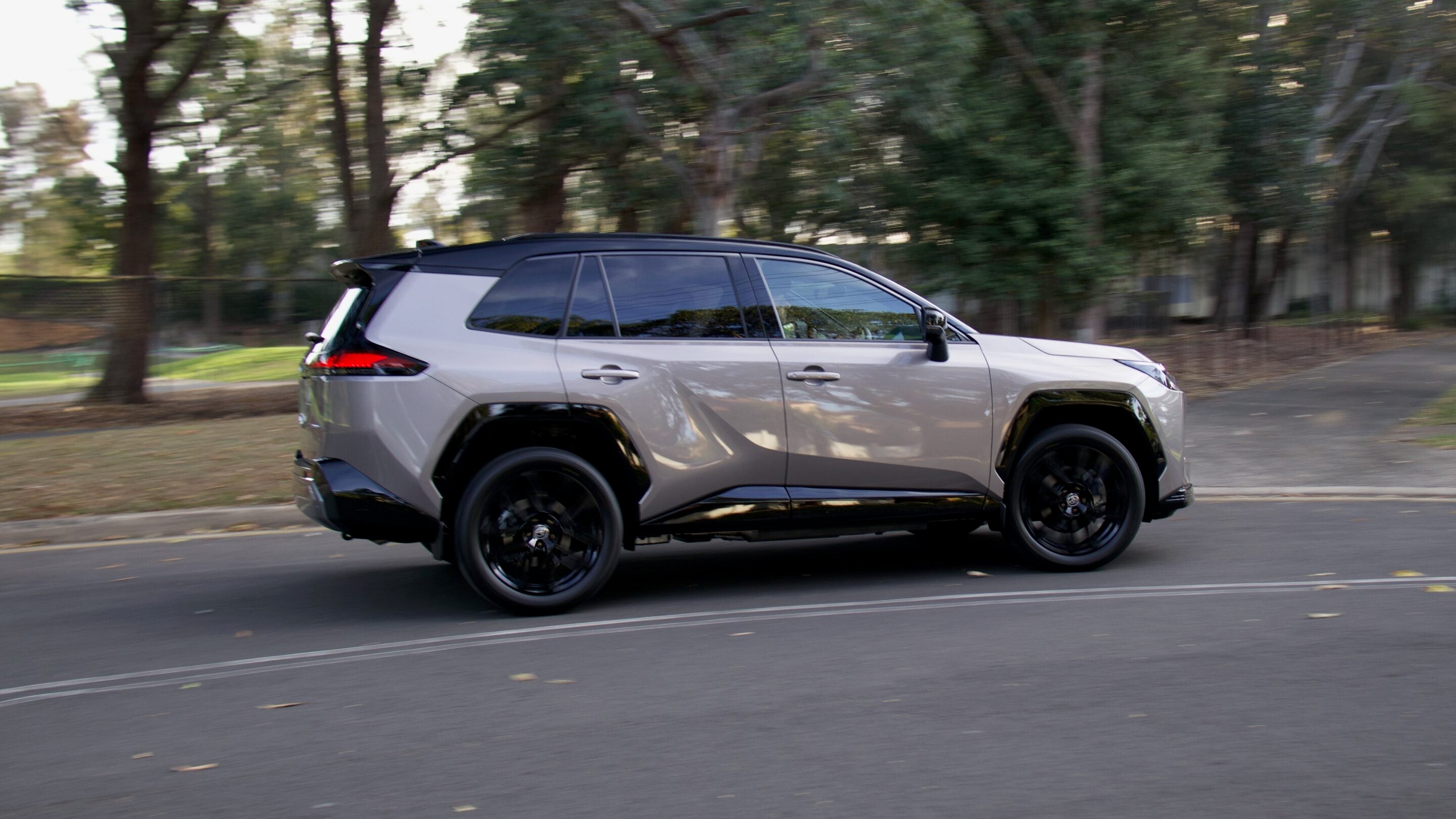
It’s definitely not a sports car, however. As you’d expect for a RAV4, it’s set up primarily for comfort, and it does well here. You can feel the PHEV’s extra 285kg on the road and it’s a bit stiffer in its ride quality, though it’s still comfortable and easy to steer. Those wanting a bit more dynamism will have to spend the extra $2325 to get to the GR Sport with its meatier steering, 20mm-wider track, sportier suspension and so on.
As with other Toyota products, the RAV4 PHEV’s active safety features are mostly well tuned and feel much less hyperactive than what we’ve seen from most Chinese brands. However, the driver monitoring system in our test car was infuriatingly sensitive and would ding at you for even looking at the driver’s display (which is, ironically, also where its scoldings appear). A less sensitive system or one that was able to be defeated permanently would be more in line with the RAV4’s easy vibe.
How much does the RAV4 PHEV cost to service?
Helping the PHEV’s cause is the fact it offers the exact same service and warranty package as the hybrid. The standard warranty is five years/unlimited km for the car and up to 10 years/unlimited km in total for the EV battery if an annual health check is performed at a Toyota dealership. The drivetrain warranty can also be extended to seven years in total if serviced through the Toyota dealership network.
As for service costs, the RAV4 PHEV is the same as the hybrid at $325 per year for the first five years/15,000km (whichever comes first) for a five-year/75,000km total of $1625. That’s quite low in today’s market, though the flip side is that there’s no roadside assistance as standard – buyers must pay a minimum of $99 annually for it, or use another provider.
Should I buy a Toyota RAV4 XSE PHEV?
Yes, it’s expensive to buy and the RAV4 hybrid can be so economical that the PHEV’s extra cost would be difficult to justify for some customers. But view it as more than just a way to save even more fuel, and we think it’s definitely more justifiable. The claimed 113km electric driving range is impressive in today’s market, it can charge relatively quickly for a PHEV and the 227kW of peak combined power means that it’s surprisingly rapid.
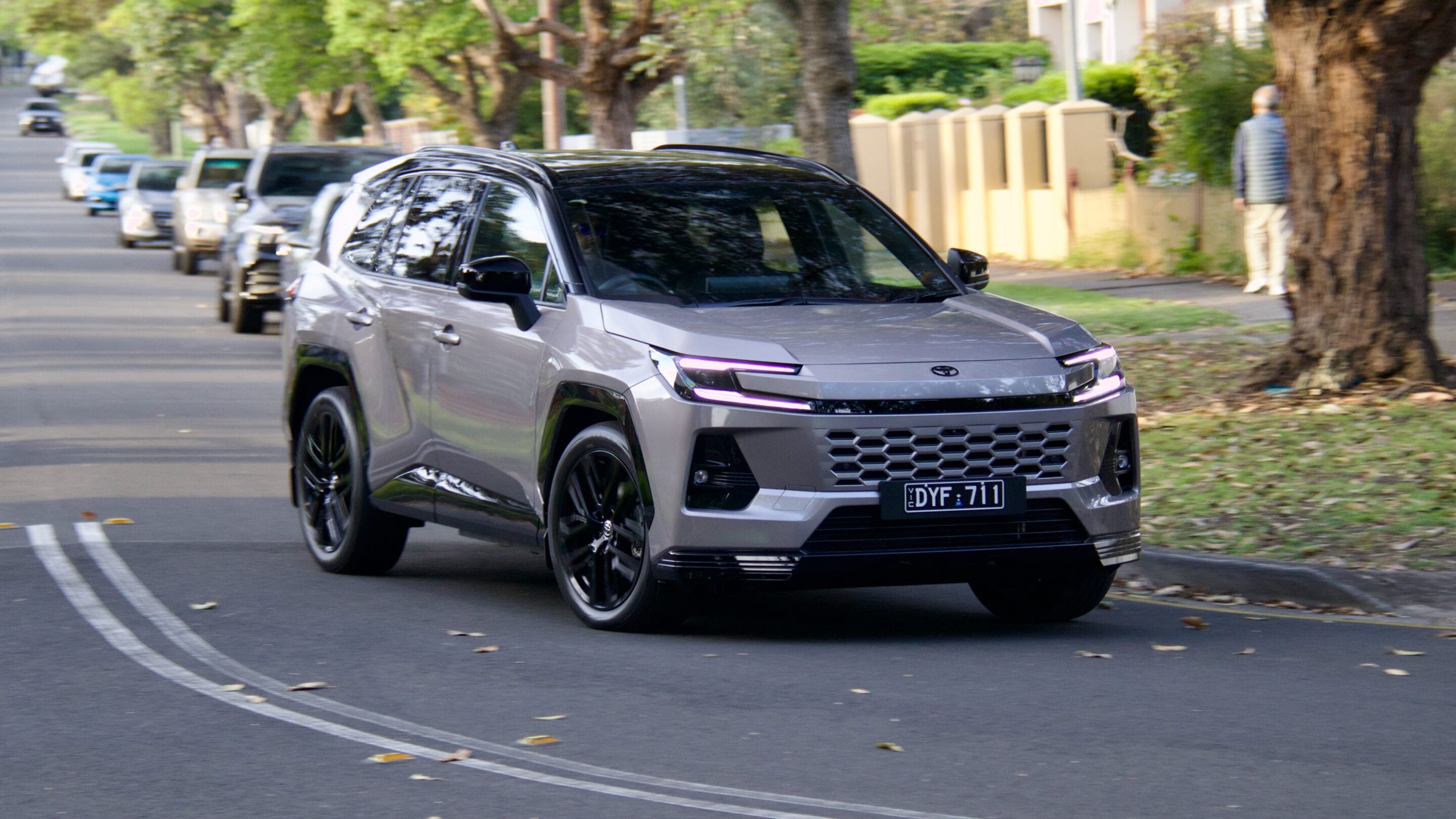
In a lot of ways, we think the PHEV is the RAV4 drivetrain to choose. Its added performance is great, as are its charging statistics, while it also feels more modern than the hybrid. It’s taken Toyota Australia a long time to get here, but its first plug-in hybrid is finally available locally and we hope there are more to come.
RAV4 XSE PHEV standard features:
- 20-inch black alloy wheels (with a space-saver spare)
- Dusk-sensing automatic all-LED exterior lighting
- Rain-sensing automatic wipers
- Keyless entry with push button start
- Sunroof
- Rear privacy glass
- Roof rails
- Heated and auto-folding mirrors
- Electric tailgate
- Synthetic leather and suede seat upholstery
- 10-way driver/8-way front passenger electric seat adjustment with driver’s memory settings
- Heated and ventilated front seats
- Leather-wrapped steering wheel
- Dual-zone automatic climate control with rear air vents
- 12.3-inch digital driver’s display
- 12.9-inch touchscreen with online services and over-the-air updates
- Satellite navigation with live traffic
- Wireless Apple CarPlay and Android Auto
- AM/FM/DAB+ digital radio
- Bluetooth calling and audio streaming
- Six-speaker sound system
- 5x USB-C charging ports
- Wireless phone charger
- Embedded drive recorder
- EV, HEV and auto powertrain modes
- Eco, normal, sport, snow and trail driving modes
- Hill descent control
- 8x airbags
- Autonomous emergency braking with pedestrian and daytime cyclist detection
- Intersection Turn Assist and Emergency Steering Assist
- Lane keeping assistance with adaptive lane guidance
- Adaptive cruise control with traffic jam assist
- Blind-spot monitoring with front and rear cross-traffic alert
- Safe exit assist
- Driver attention monitoring
- Auto high beam
- Traffic sign recognition
- Front and rear parking sensors
- 360-degree camera
Toyota RAV4 XSE PHEV AWD specifications:
| Price | From $64,015 plus on-road costs |
|---|---|
| Powertrain | 2487cc naturally aspirated four-cylinder petrol engine + two electric motors + 22.7kWh lithium-ion battery |
| Combined power output | 227kW |
| Transmission | e-CVT automatic, all-wheel drive |
| Claimed combined fuel consumption | 0.7L/100km (with a full battery) |
| Fuel type/tank size | 95 RON premium unleaded, 55 litres |
| Claimed EV driving range | 113km (WLTP) |
| Peak DC fast charging speed | 50kW |
| Claimed 10-80% fast charge time | 28 minutes |
| Dimensions (L/W/H/WB) | 4600/1855/1685/2690mm |
| Kerb weight | 2030kg |
| Boot capacity | 655 litres (to the roof, rear seats up) |
| Warranty | Five-year/unlimited km (car – extendable to seven years on the driveline with dealer servicing), up to 10-year/unlimited km (EV battery with annual health checks) |
| Five-year service cost | $1625 |
| On sale | Now |
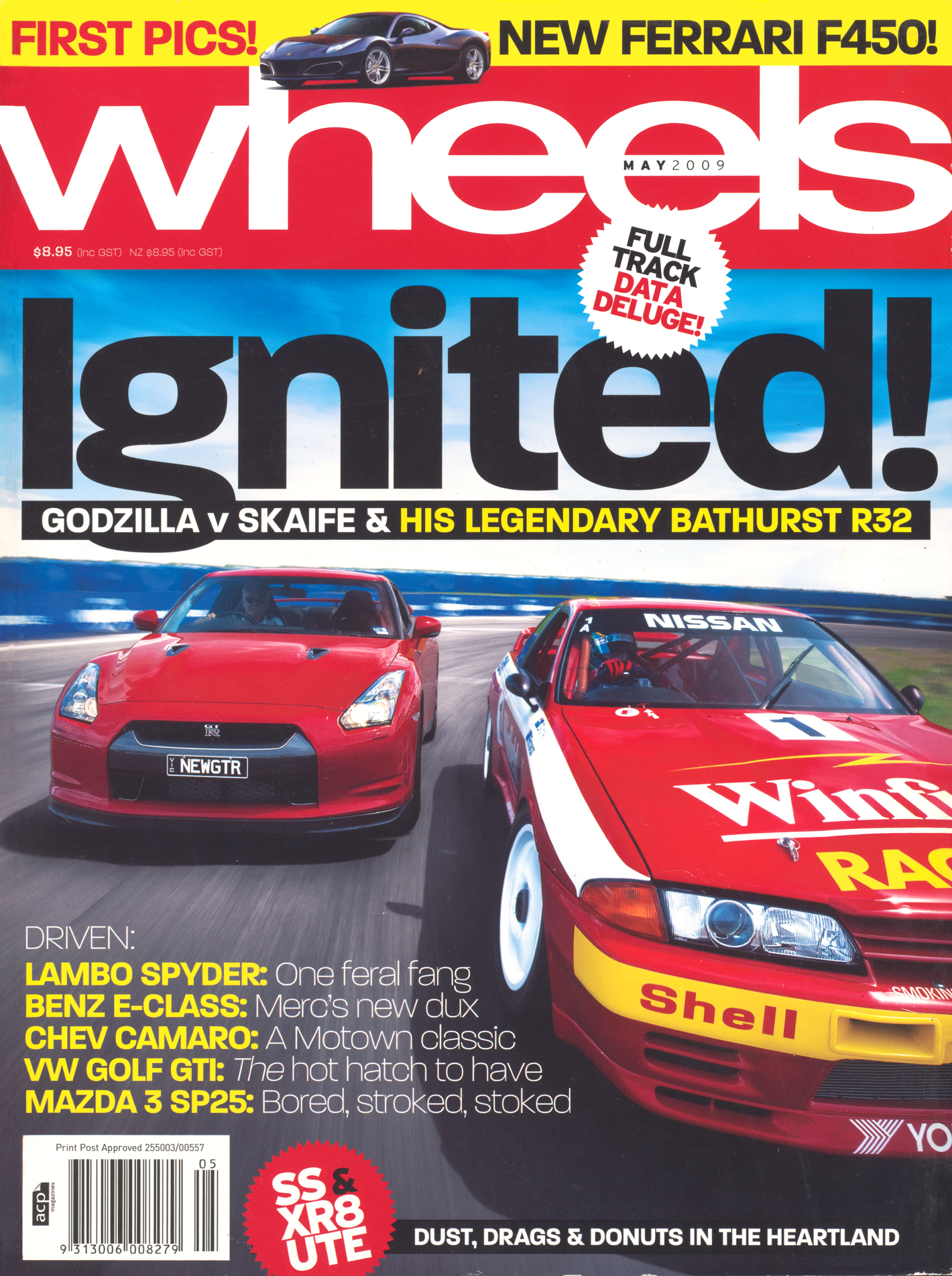
Seventeen years after Mark Skaife steered the Fred Gibson GT-R to the controversial “pack of arseholes” victory at the 1992 Bathurst 1000, Wheels got him back behind the tiller of Godzilla once more to find out how he reckoned it stacked up against the R35. It was one hell of a reunion…
First published in the May 2009 issue of Wheels magazine, Australia’s best car mag since 1953. Subscribe here and gain access to 12 issues for $109 plus online access to every Wheels issue since 1953.
A dense, black cloud front seemed to be marching towards the motor racing circuit with Wagnerian menace. It had its rival on the ground: an awesome automotive force, a twin-turbocharged, all-wheel drive powerhouse that has already sat the most revered of European rivals on their rear ends.
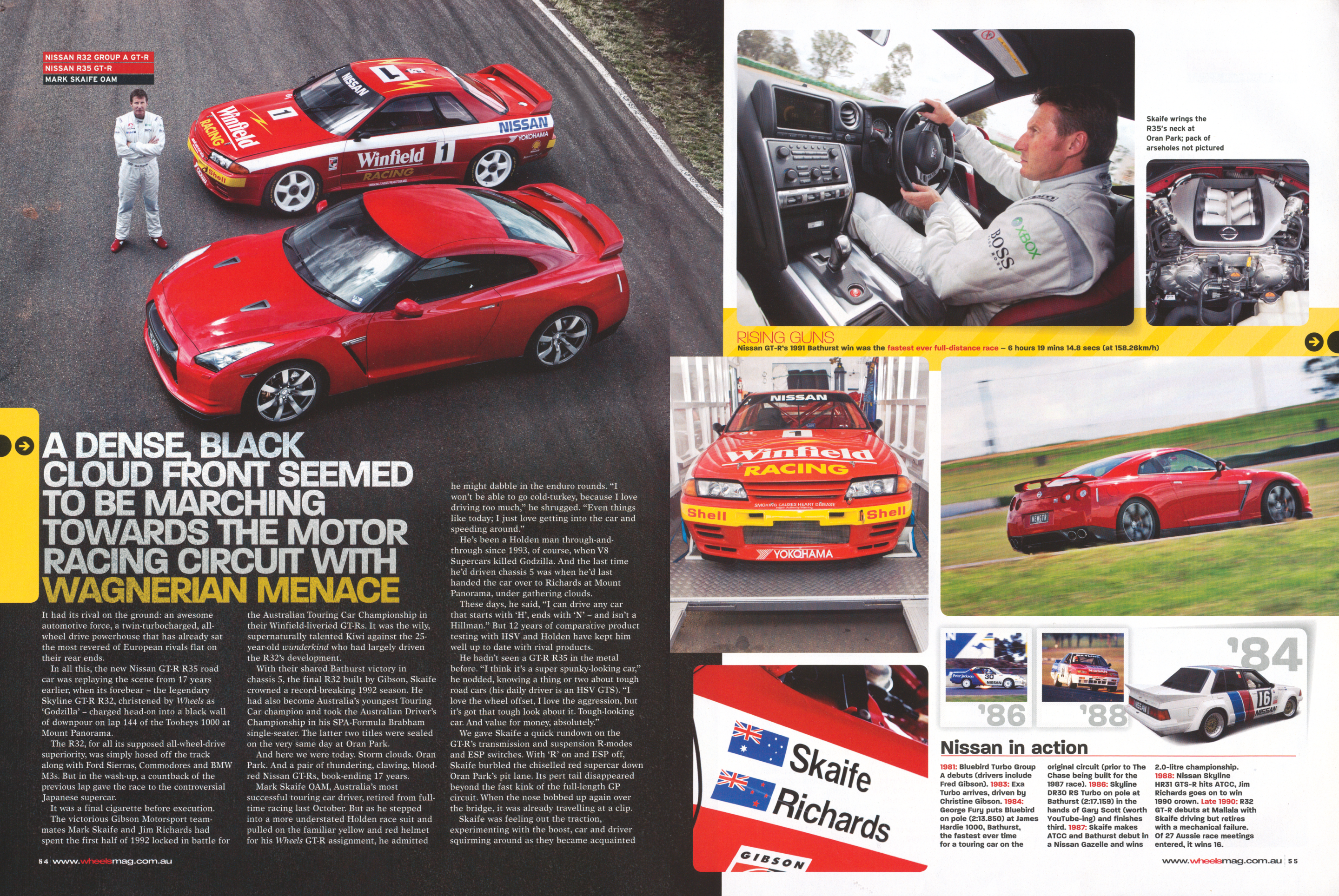
In all this, the new Nissan GT-R R35 road car was replaying the scene from 17 years earlier, when its forebear – the legendary Skyline GT-R R32, christened by Wheels as ‘Godzilla’ – charged head-on into a black wall of downpour on lap 144 of the Tooheys 1000 at Mount Panorama.
The R32, for all its supposed all-wheel-drive superiority, was simply hosed off the track along with Ford Sierras, Commodores and BMW M3s. But in the wash-up, a countback of the previous lap gave the race to the controversial Japanese supercar.
It was a final cigarette before execution.
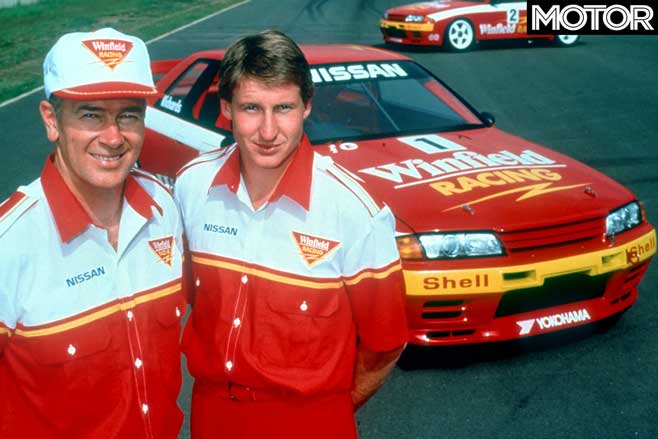
The victorious Gibson Motorsport team-mates Mark Skaife and Jim Richards had spent the first half of 1992 locked in battle for the Australian Touring Car Championship in their Winfield-liveried GT-Rs. It was the wily, supernaturally talented Kiwi against the 25-year-old wunderkind who had largely driven the R32’s development.
With their shared Bathurst victory in chassis 5, the final R32 built by Gibson, Skaife crowned a record-breaking 1992 season. He had also become Australia’s youngest Touring Car champion and took the Australian Driver’s Championship in his SPA-Formula Brabham single-seater. The latter two titles were sealed on the very same day at Oran Park.
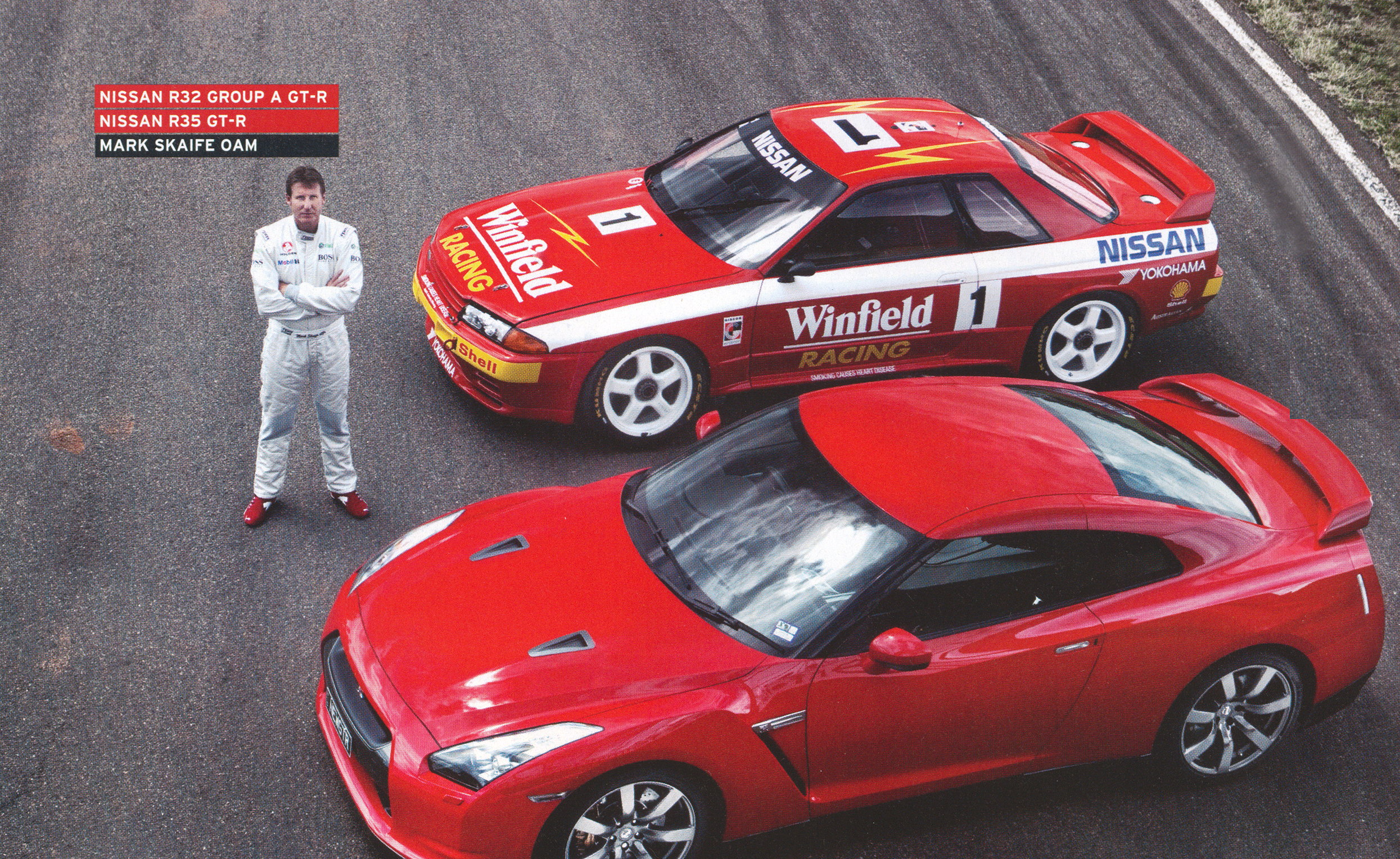
And here we were today. Storm clouds. Oran Park. And a pair of thundering, clawing, blood-red Nissan GT-Rs, book-ending 17 years.
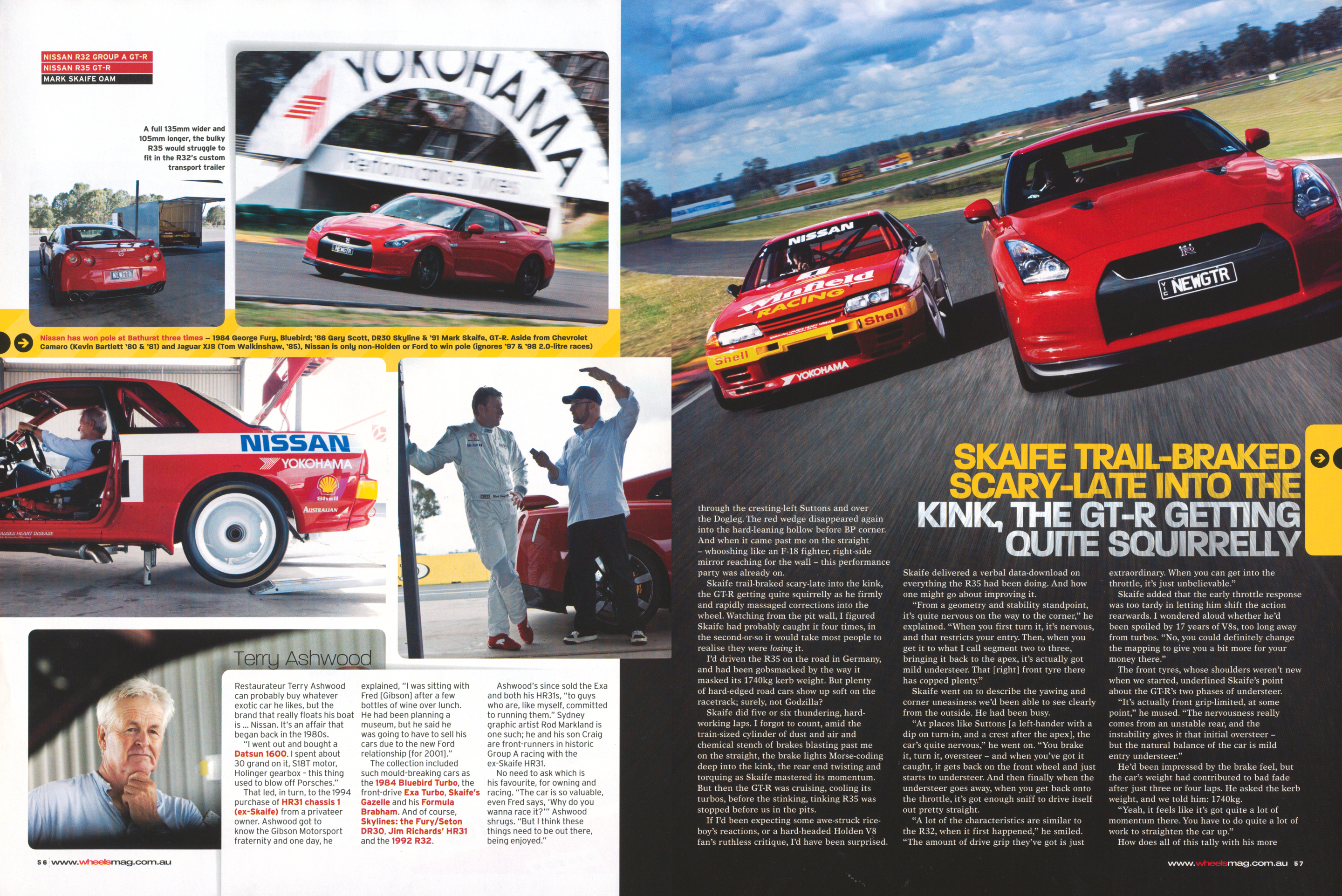
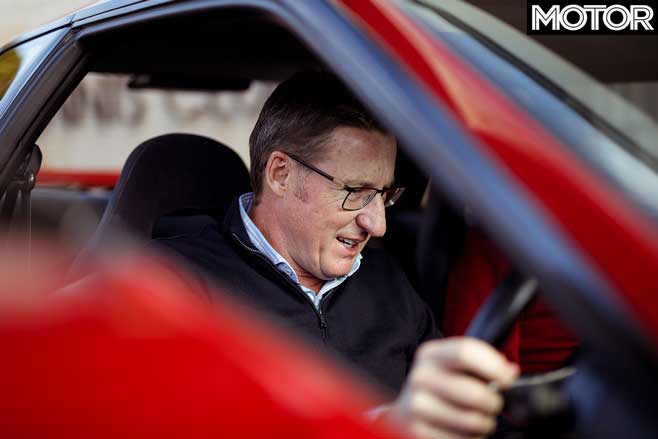
Mark Skaife OAM, Australia’s most successful touring car driver, retired from full-time racing last October. But as he stepped into a more understated Holden race suit and pulled on the familiar yellow and red helmet for his Wheels GT-R assignment, he admitted he might dabble in the enduro rounds. “I won’t be able to go cold-turkey, because I love driving too much,” he shrugged. “Even things like today; I just love getting into the car and speeding around.”
He’s been a Holden man through-and-through since 1993, of course, when V8 Supercars killed Godzilla. And the last time he’d driven chassis 5 was when he’d last handed the car over to Richards at Mount Panorama, under gathering clouds.
These days, he said, “I can drive any car that starts with ‘H’, ends with ‘N’ – and isn’t a Hillman.” But 12 years of comparative product testing with HSV and Holden have kept him well up to date with rival products.
He hadn’t seen a GT-R R35 in the metal before. “I think it’s a super spunky-looking car,” he nodded, knowing a thing or two about tough road cars (his daily driver is an HSV GTS). “I love the wheel offset, I love the aggression, but it’s got that tough look about it. Tough-looking car. And value for money, absolutely.”
We gave Skaife a quick rundown on the GT-R’s transmission and suspension R-modes and ESP switches. With ‘R’ on and ESP off, Skaife burbled the chiselled red supercar down Oran Park’s pit lane. Its pert tail disappeared beyond the fast kink of the full-length GP circuit. When the nose bobbed up again over the bridge, it was already travelling at a clip.
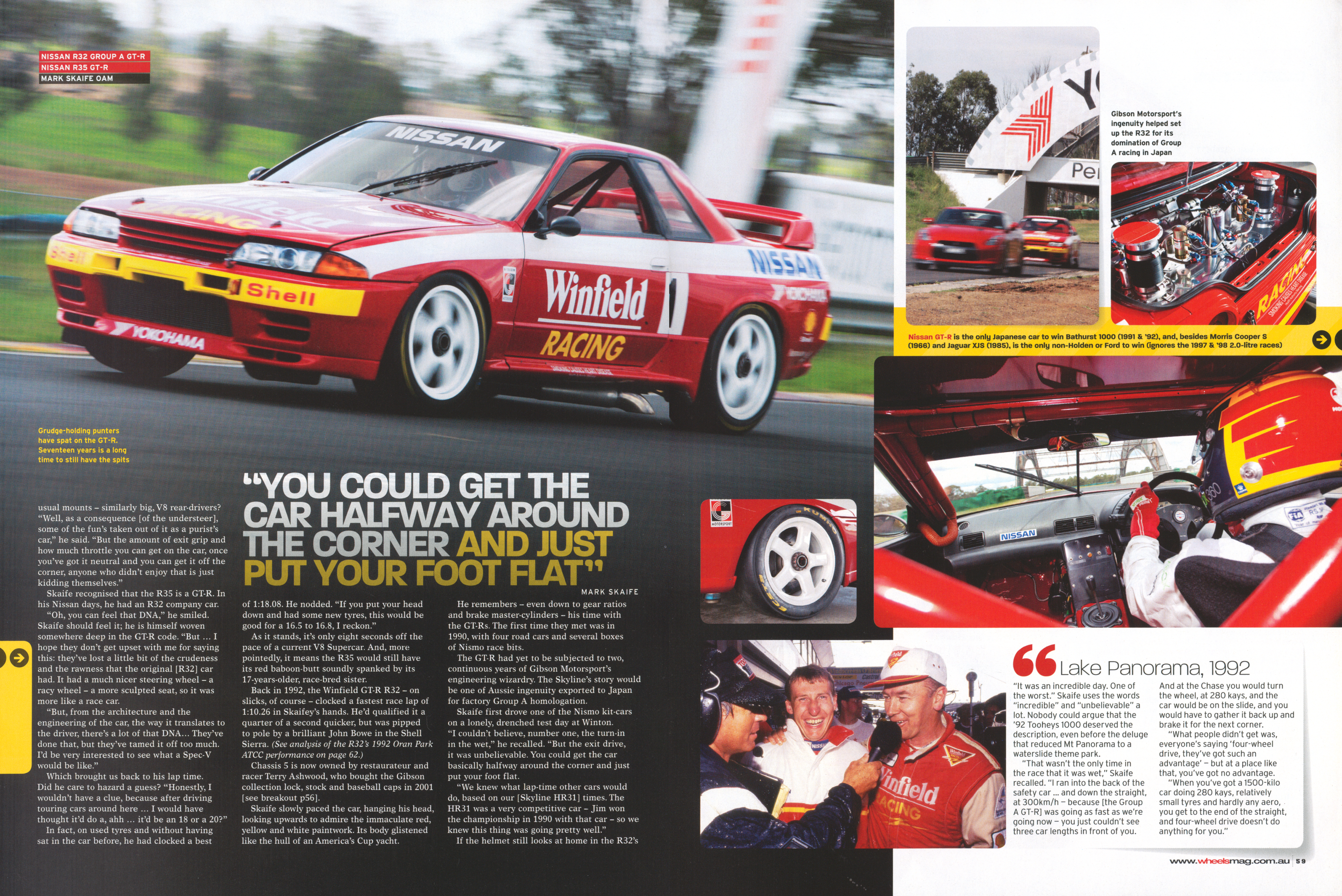
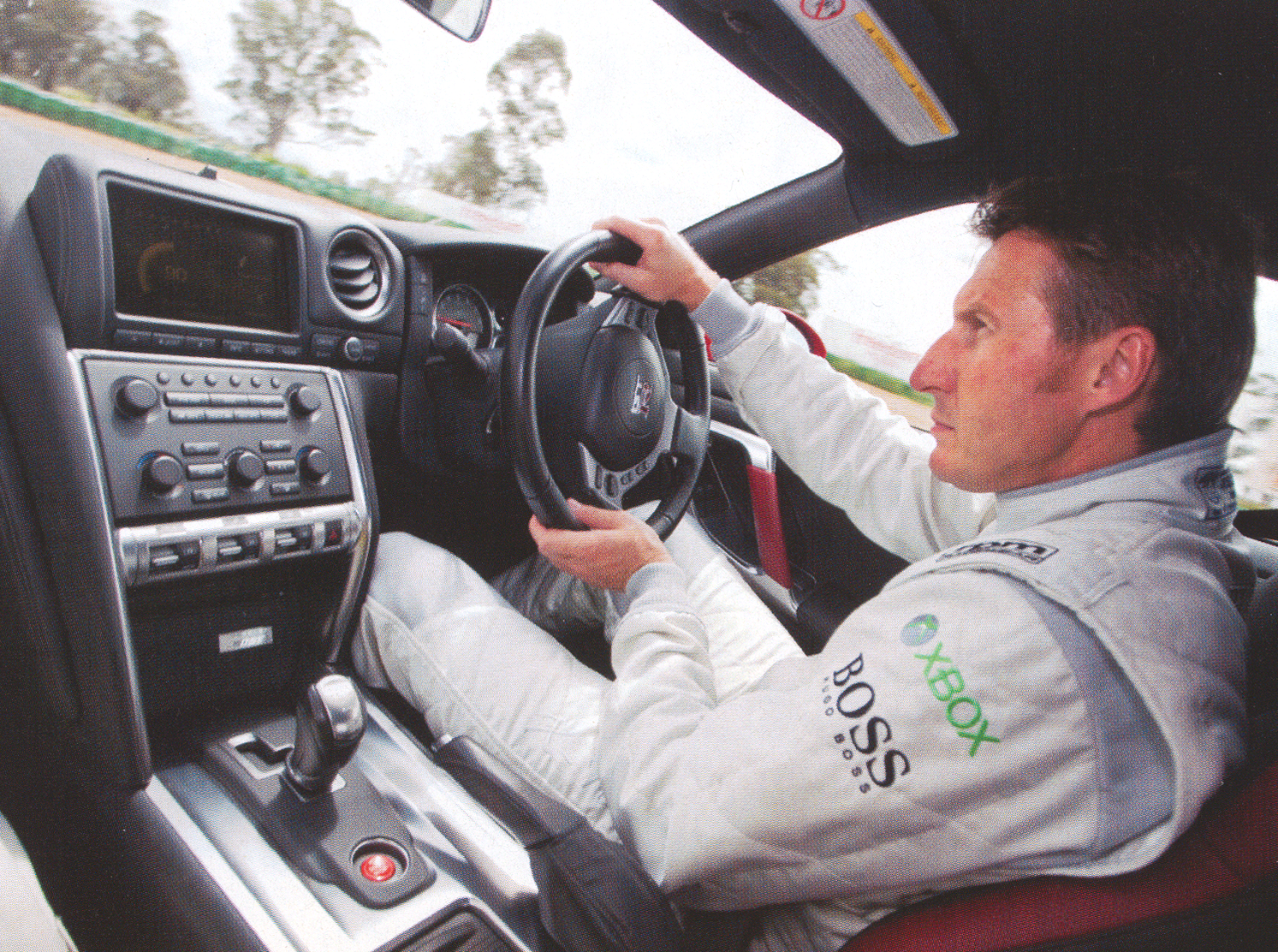
Skaife was feeling out the traction, experimenting with the boost, car and driver squirming around as they became acquainted through the cresting-left Suttons and over the Dogleg. The red wedge disappeared again into the hard-leaning hollow before BP corner. And when it came past me on the straight – whooshing like an F-18 fighter, right-side mirror reaching for the wall – this performance party was already on.
Skaife trail-braked scary-late into the kink, the GT-R getting quite squirrelly as he firmly and rapidly massaged corrections into the wheel. Watching from the pit wall, I figured Skaife had probably caught it four times, in the second-or-so it would take most people to realise they were losing it.
I’d driven the R35 on the road in Germany, and had been gobsmacked by the way it masked its 1740kg kerb weight. But plenty of hard-edged road cars show up soft on the racetrack; surely, not Godzilla?
Skaife did five or six thundering, hard-working laps. I forgot to count, amid the train-sized cylinder of dust and air and chemical stench of brakes blasting past me on the straight, the brake lights Morse-coding deep into the kink, the rear end twisting and torquing as Skaife mastered its momentum. But then the GT-R was cruising, cooling its turbos, before the stinking, tinking R35 was stopped before us in the pits.
If I’d been expecting some awe-struck rice-boy’s reactions, or a hard-headed Holden V8 fan’s ruthless critique, I’d have been surprised. Skaife delivered a verbal data-download on everything the R35 had been doing. And how one might go about improving it.
“From a geometry and stability standpoint, it’s quite nervous on the way to the corner,” he explained. “When you first turn it, it’s nervous, and that restricts your entry. Then, when you get it to what I call segment two to three, bringing it back to the apex, it’s actually got mild understeer. That [right] front tyre there has copped plenty.”
Skaife went on to describe the yawing and corner uneasiness we’d been able to see clearly from the outside. He had been busy. “At places like Suttons [a left-hander with a dip on turn-in, and a crest after the apex], the car’s quite nervous,” he went on. “You brake it, turn it, oversteer – and when you’ve got it caught, it gets back on the front wheel and just starts to understeer. And then finally when the understeer goes away, when you get back onto the throttle, it’s got enough sniff to drive itself out pretty straight.
“A lot of the characteristics are similar to the R32, when it first happened,” he smiled. “The amount of drive grip they’ve got is just extraordinary. When you can get into the throttle, it’s just unbelievable.”
Skaife added that the early throttle response was too tardy in letting him shift the action rearwards. I wondered aloud whether he’d been spoiled by 17 years of V8s, too long away from turbos. “No, you could definitely change the mapping to give you a bit more for your money there.”
The front tyres, whose shoulders weren’t new when we started, underlined Skaife’s point about the GT-R’s two phases of understeer.
“It’s actually front grip-limited, at some point,” he mused. “The nervousness really comes from an unstable rear, and the instability gives it that initial oversteer – but the natural balance of the car is mild entry understeer.”
He’d been impressed by the brake feel, but the car’s weight had contributed to bad fade after just three or four laps. He asked the kerb weight, and we told him: 1740kg.
“Yeah, it feels like it’s got quite a lot of momentum there. You have to do quite a lot of work to straighten the car up.”
How does all of this tally with his more usual mounts – similarly big, V8 rear-drivers? “Well, as a consequence [of the understeer], some of the fun’s taken out of it as a purist’s car,” he said. “But the amount of exit grip and how much throttle you can get on the car, once you’ve got it neutral and you can get it off the corner, anyone who didn’t enjoy that is just kidding themselves.”
Skaife recognised that the R35 is a GT-R. In his Nissan days, he had an R32 company car.
“Oh, you can feel that DNA,” he smiled. Skaife should feel it; he is himself woven somewhere deep in the GT-R code. “But … I hope they don’t get upset with me for saying this: they’ve lost a little bit of the crudeness and the rawness that the original [R32] car had. It had a much nicer steering wheel – a racy wheel – a more sculpted seat, so it was more like a race car.
“But, from the architecture and the engineering of the car, the way it translates to the driver, there’s a lot of that DNA… They’ve done that, but they’ve tamed it off too much. I’d be very interested to see what a Spec-V would be like.”
Which brought us back to his lap time. Did he care to hazard a guess? “Honestly, I wouldn’t have a clue, because after driving touring cars around here … I would have thought it’d do a, ahh … it’d be an 18 or a 20?”
In fact, on used tyres and without having sat in the car before, he had clocked a best of 1:18.08. He nodded. “If you put your head down and had some new tyres, this would be good for a 16.5 to 16.8, I reckon.”
As it stands, it’s only eight seconds off the pace of a current V8 Supercar. And, more pointedly, it means the R35 would still have its red baboon-butt soundly spanked by its 17-years-older, race-bred sister.
Back in 1992, the Winfield GT-R R32 – on slicks, of course – clocked a fastest race lap of 1:10.26 in Skaifey’s hands. He’d qualified it a quarter of a second quicker, but was pipped to pole by a brilliant John Bowe in the Shell Sierra.
Chassis 5 is now owned by restaurateur and racer Terry Ashwood, who bought the Gibson collection lock, stock and baseball caps in 2001.
Skaife slowly paced the car, hanging his head, looking upwards to admire the immaculate red, yellow and white paintwork. Its body glistened like the hull of an America’s Cup yacht.
He remembers – even down to gear ratios and brake master-cylinders – his time with the GT-Rs. The first time they met was in 1990, with four road cars and several boxes of Nismo race bits.
The GT-R had yet to be subjected to two, continuous years of Gibson Motorsport’s engineering wizardry. The Skyline’s story would be one of Aussie ingenuity exported to Japan for factory Group A homologation.
Skaife first drove one of the Nismo kit-cars on a lonely, drenched test day at Winton. “I couldn’t believe, number one, the turn-in in the wet,” he recalled. “But the exit drive, it was unbelievable. You could get the car basically halfway around the corner and just put your foot flat.
“We knew what lap-time other cars would do, based on our [Skyline HR31] times. The HR31 was a very competitive car – Jim won the championship in 1990 with that car – so we knew this thing was going pretty well.”
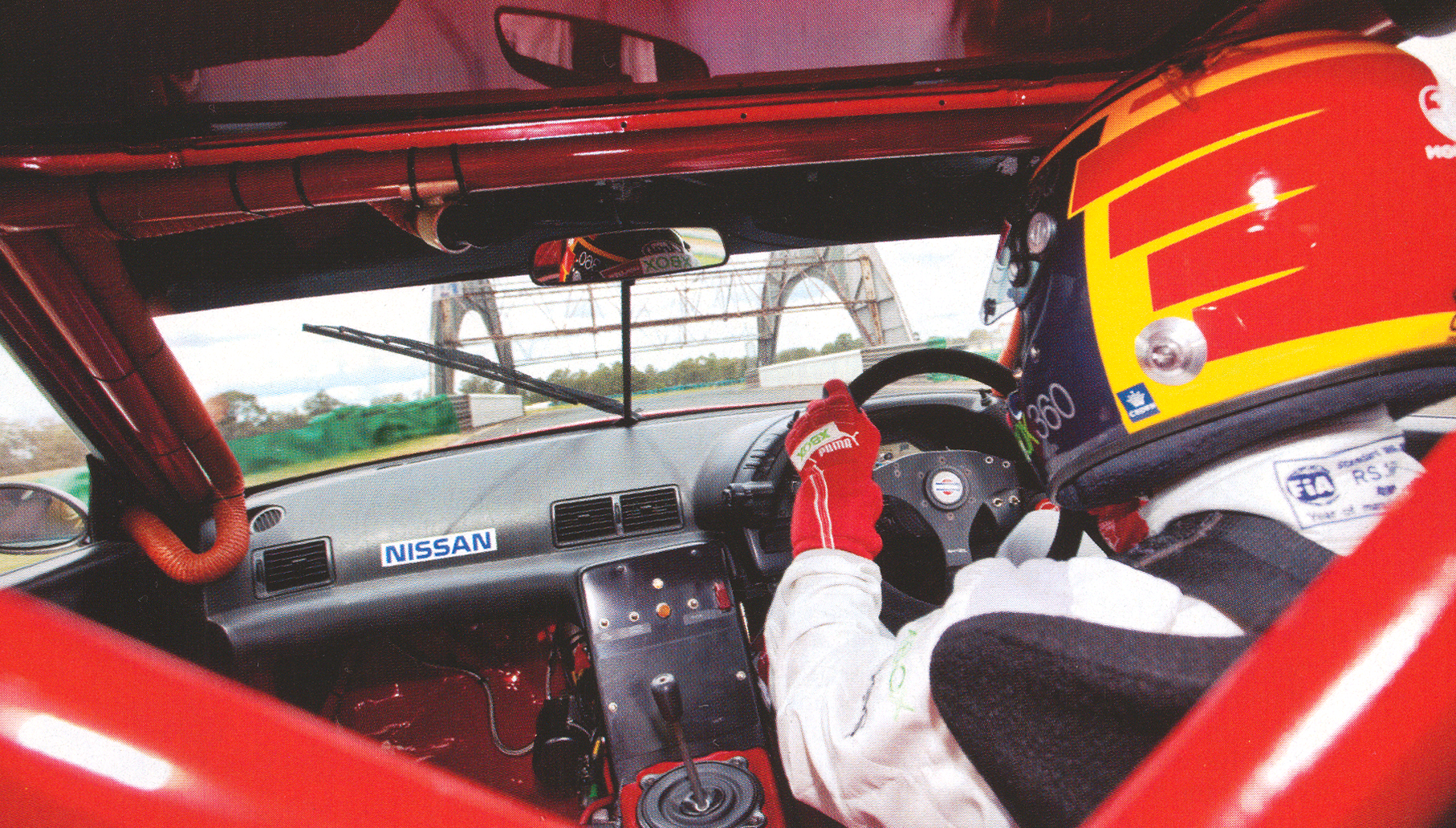
If the helmet still looks at home in the R32’s cockpit, it’s because Skaife’s colour scheme dates back to his Winfield days. While he strapped in, owner Ashwood hooked up the external battery and fired the gorgeously finished, 2.6-litre in-line six into life.
The under-bonnet view looks more street-machine than Formula One: hand-wrapped heat shielding tape, braided steel hose, polished aluminium and anodised fittings. Steel-tube “bridges” straddle the cast-aluminium cam covers to support the Inconel exhaust manifold against turbo temperatures of 1000 degrees C.
Skaife reckoned the R32’s power steering to be 40 percent heavier than the R35 road car’s. The new one wasn’t pushing against slick tyres and 5.9 degrees of knock-kneed negative camber. But even the steering wheel itself was special; after all, Skaife helped create it.
“There’s a bit of crudeness,” he smiled from the cockpit. “There’s a lot of stuff that was really modern for the era, and now not. Like the gear lever, and where it is. We never bent the lever and put it where we wanted it … It’s a lot more road-car-y, and that’s essentially what they were.”
Skaife did three or four laps in the R32, dabbing brakes as he left the pit-lane, then giving the car an 80 percent thrashing for a similar portion of each lap. He was deferring to the car’s age and value, but owner Ashwood had also asked him to shake it down for that weekend’s Phillip Island Classic.
The barking note from the side-exit pipe was a reminder that touring cars don’t need a V8 to sound great.
“I felt very comfortable straight away,” Skaife grinned when he came back to the pits, remembering the familiar click-click-clicking of the American-made Electramotive engine management. “A lot of nice memories come back, from just the feel of it and the sounds and the things that were part of what made the car very special.
“You know, so many of the intrinsic, engineering things that we did with that car, as soon as you get in and drive it, poof – they just come back. I mean, the way that car turns at the corner is unbelievable. In fact, it would be the best car on turn-in that I would have driven in 10 years or more. It’s unbelievable.”
Skaife admits to a special emotional attachment to this car. “When you’re a professional race driver you try not to get too attached to the cars – because you pretty easily don’t have one!” he reflected. “But definitely, cars that you’ve had great results with, and cars that have meant a lot to you…” He nominates this, and HRT chassis 45 (2002’s VY) as the two stand-outs of his career.
And this car, R32 chassis 5, was the ultimate product of 10 years of pioneering experience in preparing turbocharged Nissans; experience that had made Gibson Motorsport one of the most respected Nissan racing developers in the world. And Gibson fed its findings straight back to the factory, adding to the very fabric from which the latest R35 has been cut.
This is the car, and that was the race, that made the GT-R great.
Chery has confirmed that the Stockman ute will have a thumping 350kW and 800Nm of grunt when it goes on sale, just after announcing that customers can get three years of free servicing and a $2000 gift if they order soon.
The official specs show that the Stockman will feed that power to all four wheels through a 2.5-litre turbo-diesel Super Hybrid powertrain. The ICE engine will make 140kW and 450Nm, with a 34kWh lithium iron phosphate battery giving it an electric-only driving range of up to 96km on the WLTP cycle – beating two of its biggest rivals in the BYD Shark 6 Performance and Ford Ranger Hybrid.
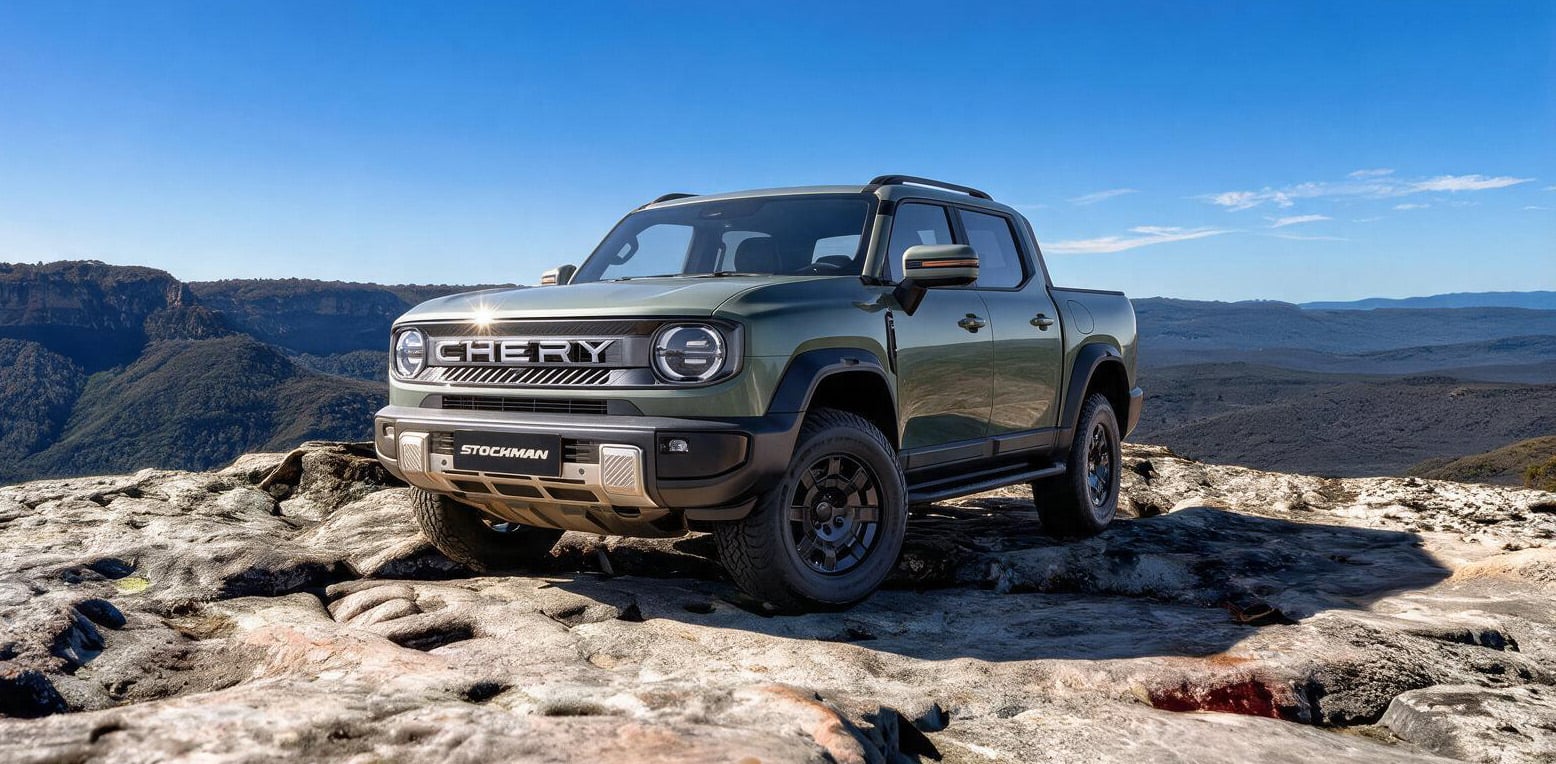
Braked towing capacity is 3495kg, which is just 5kg short of the Shark 6 and Ranger Hybrid. Unbraked towing capacity is 750kg, kerb weight is 2735kg and gross vehicle mass is 3500kg, with a payload of 765kg.
Off-road gear features front, centre and rear differential locks, plus all-terrain tyres, 4H, 4L and Intelligent 4WD driving modes. Terrain modes cover snow, mud, sand and rock, and the fuel tank comes in at 80 litres, with fuel consumption claimed at 1.1L/100km on the combined cycle and energy consumption of 31.1kWh/100km.
Ground clearance is 247mm, and the departure and approach angles are 25 and 30 degrees respectively. Maximum towball download is 350kg, and the Stockman’s dimensions are 1890mm tall, 5450mm long, 2010mm wide, with a wheelbase of 3250mm.
Inside, there’s a 14-speaker sound system, 10.25-inch LCD instrument cluster and 15.6-inch LCD touchscreen. Buyers will get seven total USB outlets, leatherette seat upholstery, and eight-way power driver’s seat, heated and ventilated front pews, a heated steering wheel, and dual-zone climate control.
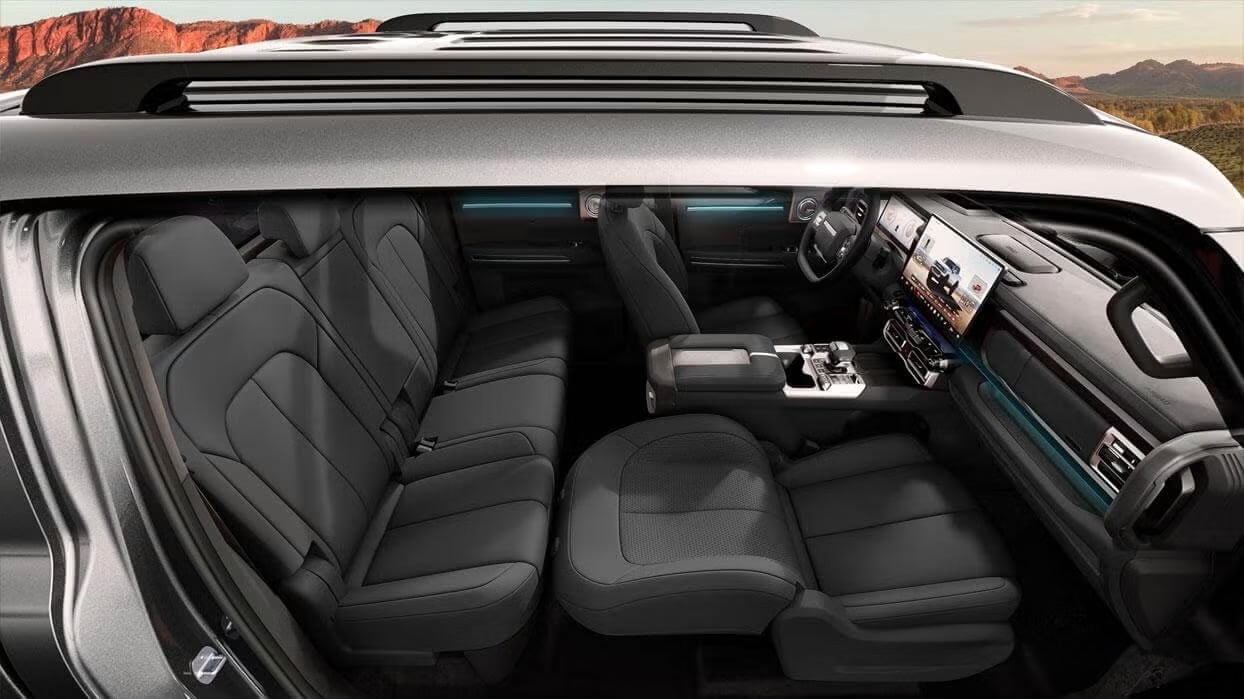
Suspension is double wishbone up front, leaf spring out back, it rides on 17-inch alloy wheels and the tub measures 1560mm wide, 1560mm long and 500mm deep. Serpentine green is the standard exterior colour, with optional Obsidian, White Opal and Sandstone finishes.
On September 1, Chery revealed the first examples will reach customers from February 1 next year. Buyers who reserve their vehicle online from October 1 will get a $2000 Bunnings gift card and three years or 45,000km of free scheduled servicing.
Mitsubishi Motors Australia has revealed more local details for its new ASX VR-e small electric SUV ahead of its arrival in local showrooms in late 2026. Four models will be offered from launch, with rear-wheel-drive LS, Aspire and Exceed grades, plus a high-performance dual-motor GSR flagship.
All versions use a 57.7kWh LFP battery, although Mitsubishi is yet to confirm driving range or Australian pricing. The single-motor versions send 171kW and 350Nm to the rear wheels and can accelerate from 0-100km/h in a claimed 6.8 seconds. In the GSR, adding a second electric motor at the front axle increases outputs to 342kW and 700Nm, cutting the 0-100km/h time to just 3.9 seconds, making the ASX VR-e GSR the fastest-accelerating Mitsubishi ever officially sold down under.
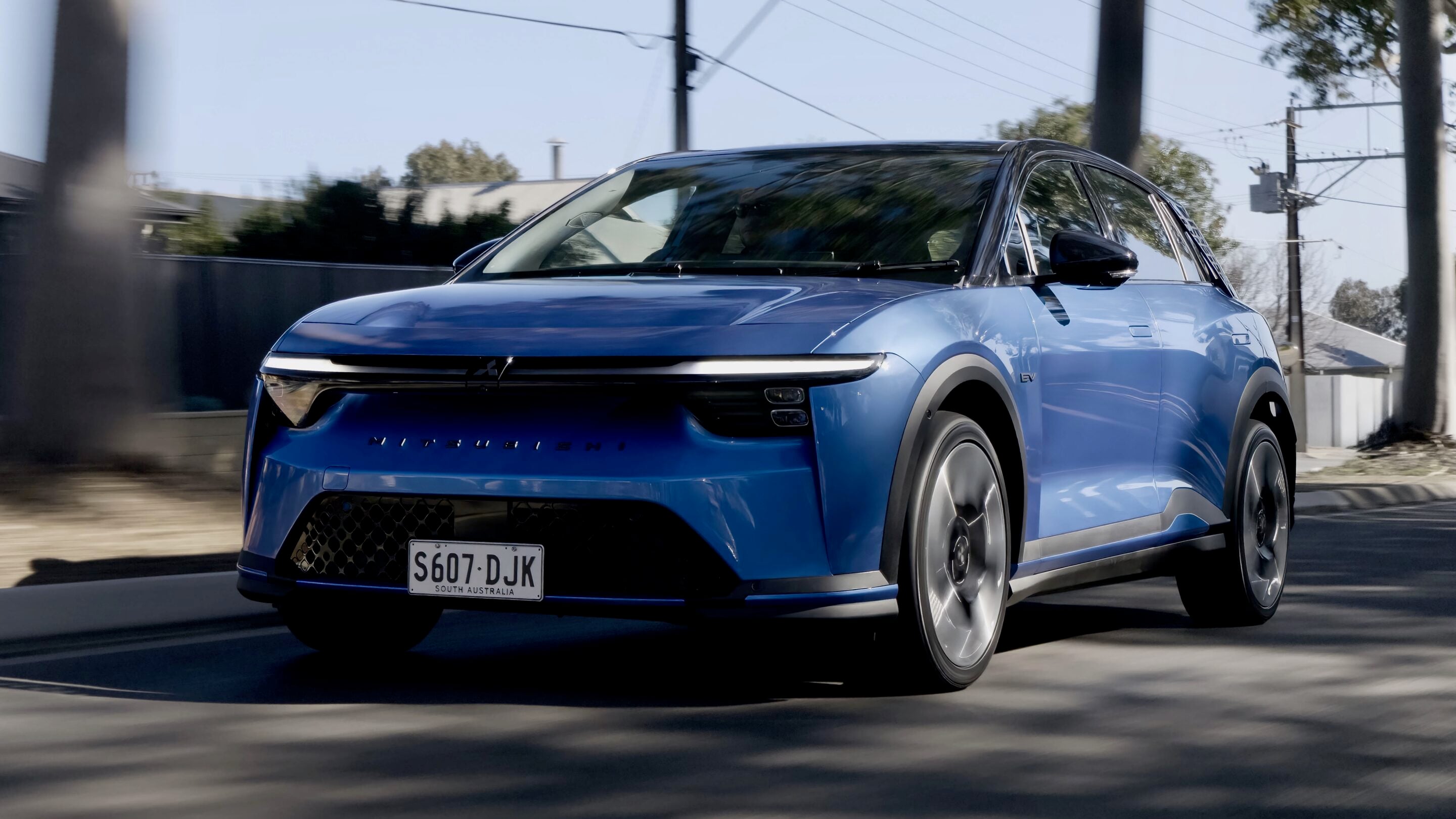
Eco, comfort and sport driving modes are standard, while the GSR can actually its torque distribution in Sport mode from a 50:50 front-to-rear split to a more rear-biased 30:70 arrangement. The steering is also adjustable with light, standard and heavy settings as well.
The ASX VR-e measures 4315mm long, 1885mm wide and 1535mm tall, with a relatively long 2800mm wheelbase, making it the same length as the outgoing Kia Seltos. Its exterior was designed by Italian styling house Pininfarina, with aerodynamic features including an ‘S-Duct’ through the front bodywork, air curtains, active grille shutters and flush-fitting door handles.
As for charging capability, the ASX VR-e can be DC fast charged at up to 134kW, while AC charging is limited to 6.6kW. Vehicle-to-load (V2L) functionality is also standard.
Inside, every ASX VR-e features a 15.6-inch central touchscreen and 9.2-inch digital instrument display, along with wireless Apple CarPlay and Android Auto, live services and over-the-air updates. Mitsubishi has retained physical switches for frequently used functions such as the climate control, demisters and hazard lights, while a customisable favourites button provides quick access to another chosen function.
As for other standard features, the entry-level LS also features 18-inch alloy wheels, dual-zone automatic climate control, five-stage regenerative braking with a full one-pedal mode and a six-speaker sound system.
Safety equipment includes autonomous emergency braking, adaptive cruise control, lane keeping assistance, blind-spot monitoring, rear cross-traffic alert, traffic-sign recognition and driver monitoring, while Aspire grades and above add adaptive high beam.
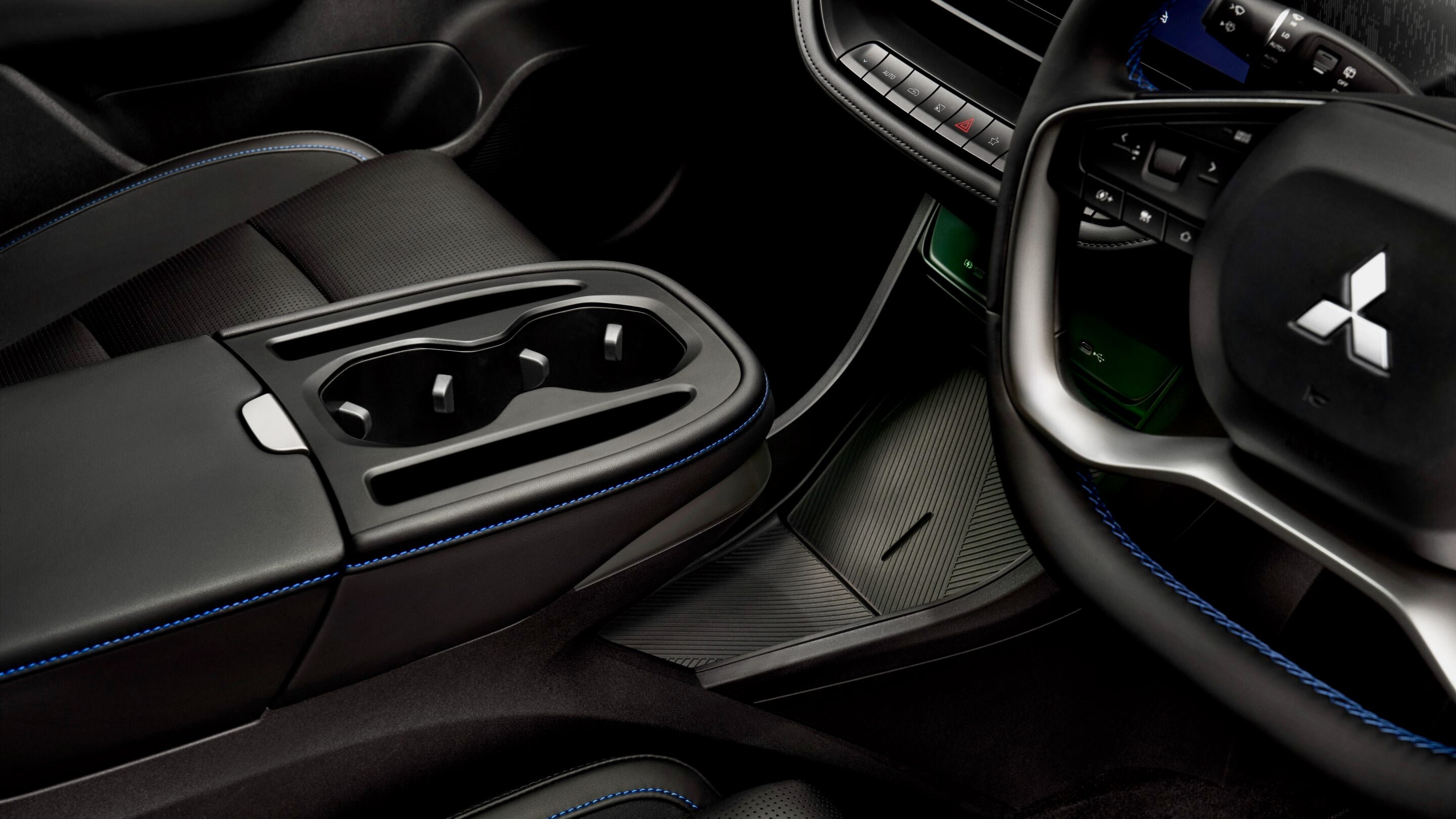
Stepping up to the Aspire adds artificial leather upholstery, heated and ventilated front seats, electric front seat adjustment, 64-colour ambient lighting, an electric frunk, 360-degree camera, additional parking sensors and remote parking assistance. The Exceed further adds 20-inch two-tone wheels, a panoramic glass roof, hands-free electric tailgate and 12-speaker SEAS audio system.
Sitting at the top of the range, the GSR not only features its more powerful dual-motor all-wheel-drive system but also artificial leather and microsuede upholstery, blue stitching and a selection of two-tone exterior finishes.
Australian pricing, driving range and further specifications are expected to be announced closer to the Mitsubishi ASX VR-e’s showroom arrival in late 2026.
